

 rotate(10)'/%3E%3Cpath d='M.038.113v.15l.15.088.15-.088v-.15L.188.025l-.15.088Z' stroke='%23c44900' stroke-width='.0375' transform='rotate(10)'/%3E%3C/svg%3E)
Student, Staff & Faculty Guidelines
We all have an individual choice to make every day on whether or not we are going to participate in efforts to save our planet and communities. No matter your relationship to UTRGV, we hope you’ll join us in learning about sustainable development, putting ideas into action, and spreading the word about sustainable solutions to our changing world. There are several clubs and organizations at UTRGV that seek to develop a more sustainable atmosphere on campus and in our community. Choose from a variety of environmental issues, societal issues, or economic issues.
Joining a student organization is a great way to network with like-minded individuals. Joining a Sustainability Related student organization ensures that you and your new friends will be making an impact on the world. If you don't see anything that you are interested in you can search the VLink Student Organization Directory and if you still don't find what you are looking for then lead the way and create your own organization.
The process is simpler than you think, and UTRGV will help every step of the way to make sure you exercise your power of advocacy, learn how to start your own organization at UTRGV. You can also and should join external organizations that aim to further the cause of sustainable development. Together with other passionate individuals, you can make a difference.
Below are some clubs and some organizations that can help you continue to support sustainable goals during your semesters at UTRGV and after graduation.
Sustainability Guides for Students
Sustainability Related Clubs And Organizations
American Society of Landscape Architects
American Society of Landscape Architects -- Founded in 1899, the American Society of Landscape Architects (ASLA), a 501(c)(6) organization, is the national professional association for landscape architects, representing more than 15,000 members in 49 professional chapters and 72 student chapters. Members of the Society use the “ASLA” suffix after their names to denote membership and their commitment to the highest ethical standards of the profession.
Arbor Day Foundation
The Arbor Day Foundation is a 501(c)3 nonprofit conservation and education organization. Founded in 1972, the centennial of the first Arbor Day observance in the 19th century, the Foundation has grown to become the largest nonprofit membership organization dedicated to planting trees, with over one million members, supporters, and valued partners. The impact we make on our world is accomplished through our conservation and education programs.
The Association for the Advancement of Sustainability in Higher Education (AASHE)
The Association for the Advancement of Sustainability in Higher Education (AASHE) is a non-profit 501(c)(3) membership organization that empowers higher education faculty, administrators, staff and students to be effective change agents and drivers of sustainability innovation. The Campus Sustainability Hub has a wealth of resources for higher education institutions. More information be for student resources.
Green America
Green America is a national, 501(c)(3) not-for-profit, membership organization founded in 1982 (Formerly known as "Co-op America" until January 1, 2009). Our mission is to harness economic power—the strength of consumers, investors, businesses, and the marketplace—to create a socially just and environmentally sustainable society.
Green Seal
Green Seal provides science-based environmental certification standards that are credible, transparent and essential to helping manufacturers, purchasers and consumers make responsible choices that positively impact business behavior and improve quality of life. Thousands of products and services in hundreds of categories have been certified to meet Green Seal standards. Green Seal provides public education and guidance for creating a more sustainable world.
Habitat for Humanity
Habitat for Humanity partners with people in your community, and all over the world, to help them build or improve a place they can call home. Habitat homeowners help build their own homes alongside volunteers and pay an affordable mortgage. With your support, Habitat homeowners achieve the strength, stability and independence they need to build a better life for themselves and for their families. Through our 2020 Strategic Plan, Habitat for Humanity will serve more people than ever before through decent and affordable housing.
International Society of Sustainability Professionals (ISSP)
Empowering professionals to advance sustainability in organizations and communities throughout the globe. The International Society of Sustainability Professionals (ISSP) is the world's leading professional association of sustainability professionals. We work to make sustainability standard practice through empowering professionals to advance sustainability in organizations and communities around the globe. As a professional association, ISSP improves the skills of sustainability practitioners through education, knowledge sharing, research, and professional credentials.
Texas Regional Alliance for Campus Sustainability
The Texas Regional Alliance for Campus Sustainability (TRACS) is a network of faculty members, students, and sustainability professionals supporting higher education in Texas by implementing climate change and sustainability solutions across campus operations, academic curriculum, and off-campus fields of influence. TRACS facilitates collaboration between higher education institutions through a variety of means including the Annual TRACS Summit. TRACS is supported by volunteer members representing Texas colleges and universities.
The Sierra Club
Founded by legendary conservationist John Muir in 1892, the Sierra Club is now the nation's largest and most influential grassroots environmental organization -- with more than two million members and supporters. Our successes range from protecting millions of acres of wilderness to helping pass the Clean Air Act, Clean Water Act, and Endangered Species Act. More recently, we've made history by leading the charge to move away from the dirty fossil fuels that cause climate disruption and toward a clean energy economy. For more information, see our Mission Statement and Strategic Plan Overarching Visionary Goals.
US Green Building Council
The U.S. Green Building Council (USGBC) is committed to transforming the way our buildings are designed, constructed and operated through LEED — the top third-party verification system for sustainable structures around the world. Home for the LEED, or Leadership in Energy and Environmental Design, is changing the way we think about how buildings and communities are planned, constructed, maintained and operated. Leaders around the world have made LEED the most widely used third-party verification for green buildings, with around 1.85 million square feet being certified daily. USGBC is a nonprofit organization.
World Wildlife Fund
For 50 years, WWF has been protecting the future of nature. The world’s leading conservation organization, WWF works in 100 countries and is supported by more than one million members in the United States and close to five million globally. WWF's unique way of working combines global reach with a foundation in science, involves action at every level from local to global, and ensures the delivery of innovative solutions that meet the needs of both people and nature.
Zero Waste
The U.S. Zero Waste Business Council mission is to educate, inform and document the performance of Zero Waste Businesses using scientific methods to help businesses and communities become more healthy and sustainable. The U.S. Zero Waste Business Council will create a solid foundation that advances the integrity and credibility of Zero Waste. Zero Waste businesses save money, are more efficient, manage risk, reduce litter and pollution, cut greenhouse gases, reinvest resources locally, create jobs and add more value for their business and the community.
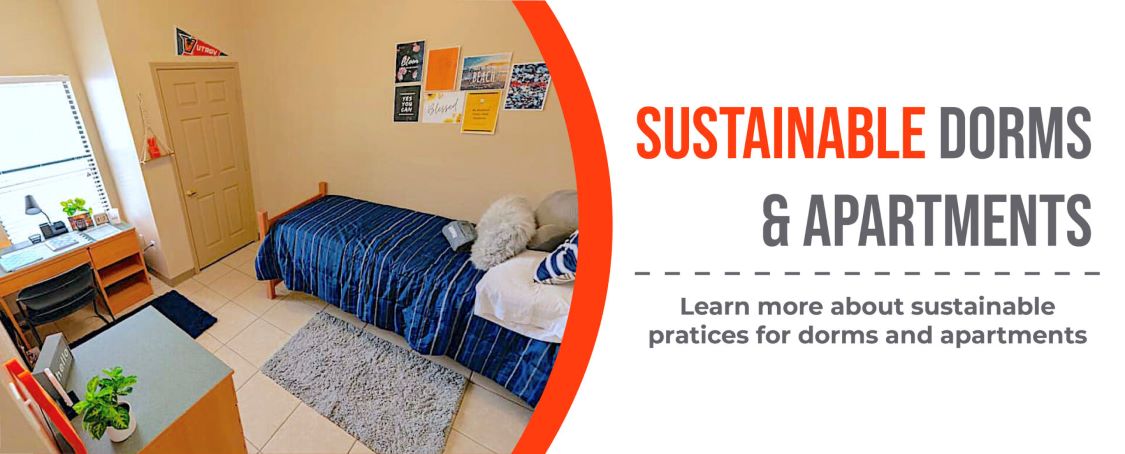
Sustainable Dorms and Apartments
When it comes to sustainability, it’s all about the small things—the habits we build and carry out every day.
Whether it’s conserving energy, supporting local initiatives, or choosing responsible products, each action contributes to a more balanced and resilient future. The three pillars of sustainability—environmental care, economic responsibility, and social equity—guide our efforts to create thriving communities and ecosystems. From national leaders to college freshmen, everyone has a role to play in shaping a campus and a world that works for both people and the planet.
Education
- Support your fellow students in their sustainability research! Learn about what sustainability research is being conducted or has already been done.
- Watch movies, read books, and attend conferences on sustainability topics that interest you. Direct your learning on sustainable development so that you can teach others!
Reuse and Reduce
- Get the most out of your purchases by following manufacturer’s instructions and being gentle with your belongings. With a little extra care, you can prolong having to replace items.
- Learn to make small repairs to extend the life of your things, such as mending wires or cables, re-attaching buttons, patching holes, or mending hems.
- Make the change to reusable bags. Tote bags are both fashionable and eco-friendly.
- Re-use items when you can. Glass jars that once held sauce, jams, or other preserves make excellent containers for your left-overs or as storage around the house. Learn more about safely storing food without plastic.
- Honor abuelas (grandmothers) by finding a second use for plastic containers, like storing salsa or beans in the tubs that butter came in.
Recycle
- Recycling is a habit. Start by placing a bin or bag for paper/cardboard next to your trash. At the end of the week, take it to your local recycling center.
- Once you have that habit down, add another bin for plastics! Rinse your plastic items after use (they don’t have to be spotless) to prevent odors and pests.
- Repeat for glass and other categories of recycling offered by your recycling center.
- Return the bag full of plastic bags you have at home to grocery stores that have bag recycling programs.
- Composting is the next step in sustainable waste management. Make your own under-the-counter composting bin to dispose of your organic trash!Compost can be donated to gardeners or spread on your lawn to feed the earth.
- The Marie Kondo trend has everyone emptying out their closets of unwanted clothes. We're all for sparking joy, but don’t throw that perfectly good clothing away when it can be used by someone else! Donate it to an organization, sell it to a thrift store or online, hold a garage sale, or host a clothing swap party with your friends and classmates.
Shopping
- Buy energy efficient bulbs to save electricity (and save you money, as they last longer, too!)
- Look for safer choice products for cleaning your home. They’re made in sustainable ways and limit the use of harmful chemicals.
- Go thrifting. Second-hand items are in vogue; nobody will notice if it’s new or not. It’s new to you! Learn about and educate your friends about the problem of “fast fashion!”
- Ask for an electronic receipt instead of a printed one, and make sure you’re signed up for e-notifications instead of mail, to save trees.
Utilities
- Be conscious of every drop. Shorter showers save you money and help preserve a limited global resource. The Navy has figured out how to make it happen!
- Beware energy vampires! Unplug electronics like TV’s, computers, and game consoles when not in use to keep them from sucking up electricity (that costs money) even when they’re not visibly on!
- Be smart about the thermostat. Try closing the blinds and curtains during the hottest part of the day and using ceiling fans in the summer, and use space heaters and dressing in layers in the winter, to stay comfortable while maintaining a low energy cost.
- Do full loads of laundry only; wash on cold to keep your clothes from shrinking and saving energy that it takes to heat the water.
Transportation
- Use public transportation. You can make a day trip to South Padre Island for free using UTRGV routes!
- Bike around campus. If you don’t have one, make use of UTRGV’s bike-share program.
- Walk to nearby places to get some sun, exercise, and scenery.
- Carpool when possible. Get to know your classmates and ride together!
Health and Safety
- Stay hydrated. Carry a reusable water bottle to prevent plastic waste. You do not have to buy a new bottle to be your ‘reusable water bottle.’ You can start re-using any glass, metal, or hard plastic bottle that you have at home.
- Quit smoking. UTRGV is a smoke-free campus, and offers assistance for quitting.
- Feed yourself healthy food, like organic fruits and veggies. Make sure you’re meeting your dietary needs. The UTRGV Food Pantry has free food to give to students who need groceries at their home or dorm – do not hesitate to show up; they will set you up with nourishment.
- Be a Hero! Join the Super Hero Project, a university-wide initiative to promote the idea that individual Vaqueros have the power to prevent high-risk behavior and harm.
- Donate blood. Student organizations often host blood drives on campus. Help save lives!
Connect
- Follow UTRGV OFS on social media for news, raffles, event info, and educational resources.
- Sign up to volunteer or participate in a sustainability event. Learn about sustainability and get some cool SWAG!
- Join a student group. Volunteer work with your group can go on your resume and may help you in your career search.
- Go on a nature excursion with other students! Explore day, weekend, and extended trip options.

Sustainable Habits for Computer Lab Users
Sustainable Computer Lab Habits
- I explain sustainable lab habits and rules with users new to the lab.
- I include an “only print if necessary” message in my email footer.
- I share energy-efficient printers and use tools like Find-Me Cloud Printing and vPrint Wireless Printing.
- I save my work often to external hard drives, flash drives, or cloud storage services because data is not stored on the lab computers, and computers automatically log out idle users for their digital safety. Our lab uses smart power strips to power down devices that are not being used and to protect against voltage spikes.
- I set electronics to enter energy-saving modes. I turn my computer off only when instructed to, such as over long holidays. (Some computers must be on 24/7 for security updates to be installed automatically.)
- I do not eat or drink in the lab to ensure the continued functionality of the lab equipment.
- I turn off lights when the room is not in use and have reminder signs by the light switches.
- I allow natural lighting to help illuminate the room or operate the lab under low lighting if it allows occupants to work comfortably and safely. (Natural daylight has been shown to reduce stress and promote human health and potential.)
Sustainable Printing Tips
- I only print what is necessary to conserve my limited print credits.
- I share digital versions of “handouts” instead of printing them for the group.
- I share energy-efficient printers and use tools like Find-Me Cloud Printing and vPrint Wireless Printing.
- I check that lab printer settings are set to double-sided, black and white.
Lab Waste Tips
- I re-purpose misprinted documents as scratch paper, or place them in the recycling bin rather than trash.
Sustainable Science Lab Guide
Sustainable Science Lab Habits
- I introduce new lab users to sustainable lab practices, including waste reduction, energy conservation, and safe chemical handling.
- I label shared equipment with usage guidelines to reduce wear, prevent misuse, and extend lifespan (economic sustainability).
- I use timers and signage to remind users to turn off hot plates, water baths, and fume hoods when not in use.
- I consolidate lab tasks to minimize energy-intensive equipment use (e.g., centrifuges, autoclaves).
- I use smart power strips or occupancy sensors to reduce phantom energy draw from idle lab instruments.
- I avoid unnecessary refrigeration or freezing of samples and regularly defrost units to improve energy efficiency.
- I do not eat or drink in the lab to maintain safety and prevent contamination of sensitive equipment and samples.
- I turn off lights when the lab is unoccupied and encourage the use of natural light when possible to reduce energy use and promote well-being (social sustainability).
Sustainable Chemical And Material Use
- I follow green chemistry principles when selecting reagents and protocols to reduce hazardous waste.
- I purchase chemicals in quantities appropriate to actual use to avoid excess storage and disposal costs.
- I share surplus reagents and consumables with neighboring labs or through campus redistribution programs.
- I use refillable or reusable containers for buffers, solvents, and cleaning agents when safe and feasible.
- I label and segregate waste streams clearly to ensure proper disposal and minimize environmental harm.
Sustainable Lab Waste Tips
- I reuse clean pipette tip boxes, reagent bottles, and packaging materials for storage or transport.
- I repurpose misprinted lab worksheets or data logs as scratch paper or note pads.
- I recycle cardboard, plastics, and paper in designated bins and ensure lab-specific waste (e.g., gloves, tubes) is disposed of according to safety protocols.
- I participate in glove recycling programs or explore biodegradable alternatives when available.
Sustainable Printing And Documentation
- I only print lab protocols or datasheets when absolutely necessary and encourage digital access via tablets or shared drives.
- I format documents for double-sided, black-and-white printing and include “print only if needed” messages in lab communications.
- I share digital versions of lab handouts, safety sheets, and training materials to reduce paper use and improve accessibility.
Sustainability Guides for Staff
Sustainable Habits for the Office
Sustainable Office Habits
- I explain sustainable office habits with new employees during on-boarding.
- I include an “only print if necessary” message in my email footer.
- I share energy-efficient printers and use tools like Find-Me Cloud Printing and vPrint Wireless Printing.
- I save my work often to UTRGV-approved cloud storage services like OneDrive for my digital safety.
- I use smart power strips to power down devices that are not being used and to protect against voltage spikes.
- I set electronics to enter energy-saving modes. I turn my computer off only when instructed to, such as over long holidays. (Some computers must be on 24/7 for security updates to be installed automatically.)
- I do not eat or drink around computers or printers to ensure the continued functionality of equipment.
- I turn off lights when the room is not in use and have reminder signs by the light switches.
- I allow natural lighting to help illuminate the room or operate under low lighting if it allows occupants to work comfortably and safely. (Natural daylight has been shown to reduce stress and promote human health and potential.)
Sustainable Printing
- I only print what is necessary to conserve supplies and natural resources.
- I share digital versions of “handouts” instead of printing them for the group.
- I share energy-efficient printers and use tools like Find-Me Cloud Printing and vPrint Wireless Printing.
- I check that office and computer printer settings are set to double-sided, black and white.
Sustainable Office Supply Purchasing
- I purchase items whose chain of production involves processes that are not harmful to people, animals, or the environment. I purchase from companies with a stated goal of reducing their negative environmental and social impacts as much as possible.
- I purchase electronics that are certified for their sustainability. All desktop and laptop computer systems purchased from Dell are Energy Star certified and Apple electronics are Energy Smart certified; this reduces energy consumption by as much as 78%. UTRGV’s Dell computers are also certified Gold by the Electronic Product Environmental Assessment Tool (EPEAT).
- I look for surplus resources within UTRGV instead of purchasing new furniture or electronics.
- Our lab purchases products with reduced toxic or hazardous chemicals, including office supplies such as screen cleaners and ink.
- I purchase and use printer paper that is Forest Stewardship Council(FCS)-Certified or recycled. (Look for the “Green” or “Recycled” icon on iShop.
Sustainable Office Waste Management
- I explore options for reuse of unwanted office items. All computers and furniture replaced by new ones are collected by UTRGV’s surplus department to be used elsewhere on campus, or donated/recycled.
- I contact UTRGV’s IT department to securely erase data from hard drives and other storage media before contacting surplus.
- I recycle used toner and ink cartridges safely by submitting a pickup request to waste@utrgv.edu.
- I re-purpose misprinted documents as scratch paper, or place them in the recycling bin rather than trash.
Sustainable Event Planning
Think Sustainable
As the event’s organizer, you are in the unique position to consider purchasing, waste, and more. You can make sure your event makes only positive impacts!
USE THIS CHECKLIST TO INCLUDE SUSTAINABILITY IN YOUR PLANNING:
DIGITAL PLANNING cuts down on paper waste and even helps eliminate little mistakes! I let technology help me stay organized.
Three Weeks Before Event
- I make digital lists. I use electronic applications or a spreadsheet to keep track of guests, vendors, raffle items and more.
- Inspect and reserve the venue. I look for dry-erase boards, blackboards, or electronic projectors to replace flip charts and handouts, and access to outlets if guests will need to charge laptops.
- Send Save the Date/invitation/RSVP. I use electronic communication to share who, what, when, where, and why about the event to my guests. I include a message about who to contact for accessibility or diet concerns, and other questions guests may have.
- I order promotional/giveaway items that can be useful to guests for long after your event. In addition to thinking careful of what to buy, consider where you buy it. Purchasing power makes a statement! By shopping from companies that make a commitment to sustainability, I support their goals and encourage other suppliers to demonstrate environmental stewardship.
Two Weeks Before Event
While making all the arrangements for your event, I don’t forget that your guests are making arrangements of their own to attend. ENSURE THEIR COMFORT.
- I learn about my guests. Now is the time to collect information on dietary restrictions, allergies, as well as travel limitations or necessary accommodations.
- I plan the menu and contact the caterer. Food that is vegetarian, local, and organic is the most sustainable, so I ask if those options are available. We discuss strategies for reducing unnecessary waste (coffee stirrers, paper doilies, straws, and plastic serving-ware that cannot be recycled). Sodexo, UTRGV’s food service provider, is the recognized global sustainability leader in its market sector and offers these options.
- I set up video/teleconferencing. If the venue allows, I provide video or teleconferencing for participants who cannot or would like to avoid travel to the venue.
One Week Before Event
- I plan for unavoidable printing. Paper supplies like place cards or menus are printed on post-consumer recycled paper and use both sides of each sheet of paper.
- I send a reminder email. Individuals forget about events as time goes on, so I’m not afraid to remind them. I get those RSVP’s!
- I line up the water coolers or pitchers to be provided to guests, or ensure that the caterers will provide liquid refreshments.
Three Days Before Event
- I contact guests by phone. I divide the guest list among my event planning team/organization and confirm attendance or leave a short message to every invitee. I let caterers know final headcount
Day of Event / After Event
Sustainable development means considering the whole life cycle of things. Hosting a sustainable event means thinking through to the cleanup!
- I set up waste flow. I make sure large, labeled recycling bins are clearly and conveniently placed adjacent to all trash cans. I set up a convenient drop-off point for all unwanted handouts and accessories.
- I collect reusable items and donate surplus. Plastic name tags and other unused items can be stored for reuse or donated to another organization.
- I donate leftover food and beverages to a food bank. UTRGV has a food pantry that will distribute the food to students and the community.
- If I decorated with flowers, I encourage your event’s guest to take the centerpieces home . It’s better to reuse and recycle than to generate landfill waste. I also explore ways to donate them to nursing homes, hospitals, and other organizations.
- I offset the environmental impact of the event by purchasing emission offsets . Carbon offsets are a form of trade that funds projects that reduce greenhouse gas emissions.
Sustainability Guides for Non-Students
Sustainable Classrooms Guide for Faculty
Empowering faculty to lead by example in creating environmentally conscious, socially inclusive, and economically responsible learning spaces.
Environmental Sustainability Practices
- I minimize paper use by sharing syllabi, readings, and assignments digitally through Blackboard or email.
- I encourage students to submit work electronically and provide feedback using digital tools.
- I turn off classroom lights and projectors when not in use and promote natural lighting when possible.
- I ensure classroom electronics (computers, monitors, document cameras) are set to energy-saving modes.
- I report HVAC or lighting inefficiencies to Facilities to support energy conservation.
- I avoid single-use items during class activities and encourage reusable materials when feasible.
Economic Sustainability Practices
- I select open educational resources (OERs) or low-cost textbooks to reduce financial barriers for students.
- I consolidate printing needs and use double-sided, black-and-white settings when printing is necessary.
- I coordinate with colleagues to share classroom supplies and teaching materials across departments.
- I promote resource-sharing platforms and encourage students to reuse or donate supplies at semester’s end.
Social Sustainability Practices
- I foster inclusive discussions that respect diverse perspectives and lived experiences.
- I integrate sustainability topics into course content where relevant, connecting theory to real-world impact.
- I support student-led sustainability initiatives and encourage civic engagement through coursework.
- I create a respectful, accessible learning environment that supports mental well-being and academic success.
- I model ethical behavior and environmental responsibility to inspire students beyond the classroom.
Every UTRGV Office Can Be A Sustainable Office
Every department and office at UTRGV plays a vital role in advancing sustainability—whether by reducing resource use, supporting student success, or fostering inclusive and resilient campus practices. From energy efficiency to equitable access and responsible budgeting, our collective efforts reflect the three pillars of sustainability: environmental stewardship, economic responsibility, and social well-being. Help UTRGV strengthen its commitment to a thriving, sustainable campus!
I Can Help In 3 Steps
- Complete the sustainability assessment below and submit your results to the Office for Sustainability.
- Incorporate sustainable habits into your daily work and encourage your colleagues to do the same. Small changes build lasting impact.
- Become a Sustainability Leader! Collaborate with OFS to transform your office into a model of environmental, economic, and social sustainability.
I Understand Sustainability
The three pillars of sustainability—environmental stewardship, economic responsibility, and social equity—provide a practical framework for assessing and improving our workplace practices. These principles guide individuals and institutions toward a more resilient and thriving future.
I have identified how my office contributes to sustainability across these pillars. I recognize that sustainability is embedded in UTRGV’s Strategic Plan and reinforced by UT System policy, and I align my daily actions with these institutional priorities.
- I share sustainability updates and best practices during staff meetings and new employee orientations.
- I place signage and reminders in key office areas to promote sustainable habits and awareness.
I Practice And Demonstrate Sustainable Habits At Work
Living sustainably means maintaining balanced mental and physical health while working and playing throughout life. Engaging healthy habits can make work more enjoyable as well as safe and efficient!
- I participate in sustainability events such as Arbor Day, Earth Fest; cultural celebrations hosted by UTRGV; and health initiatives like the Health Fair and UTRGV Living Well Program.
- I stay active and hydrated. A sedentary lifestyle is an office worker’s biggest health risk. Every hour or so, I encourage my co-workers to stretch or walk for five minutes, and take a water break.
- I pack a lunch in a reusable container. Eating out every day is expensive, often unhealthy, and leaves a larger carbon footprint than cooking at home.
- I encourage walking and cycling to work as well as the use of public transportation. I carpool to meeting off-campus.
- When hosting events, my office or department asks Sodexo, UTRGV’s Dining Service provider, for sustainable options such as healthy meals (reduced sugar, salt, etc.) and reusable dinnerware to reduce waste.
I Do My Part To Help UTRGV Save Energy And Water
All individuals can make small changes to help our communities. Sustainable utility use habits can help direct my departments budget into things that are more important in the long run. I do my part to help UTRGV meet its system-wide reduction goals.
- I have changed the settings on my computers and printers to print double-sided and to enter saving-modes. I reduce my margins to print more material per page
- My office opens windows blinds to allow natural lighting. In addition to providing more light, natural daylight has been shown to reduce stress and promote human health and potential.
- My task lighting (desk lamps, etc.) uses LED bulbs.
- My office uses smart power strips to pull down small electronics that are not being used to reduce standby poor usage. Consider that microwaves and coffee pots are only used a few times a day .
- I turn off lights when not in use and have placed reminder stickers or signs by lights switches.
- I share central, energy-efficient refrigerator rather than individual mini-fridges. I have a policy for cleaning and maintaining a safe fridge environment. I regularly take home my reusable containers.
- I have eliminated space heaters, and report temperature issues to facilities management.
- I report leaks and dripping faucets to facilities management.
I Reduce, Reuse, And Recycle To Cut Down On Waste
“Out of sight” does not mean “out of mind” when you are living and working sustainably. The whole life-cycle of materials must be considered. I look die ways to cut down on waste.
- I share digital versions of documents and meeting agendas instead of printing them for the group, and reduce printing whenever possible. I include a “only print if necessary” message in my email footers.
- I have designated area for sharing office supplies. I reuse the blank sides of scrap paper as notepads.
- My office uses reusable kitchen products (ceramic or glass cups/plates and metal utensils) instead of purchasing disposable products (single serve pod products, cutlery, paper, and Styrofoam plates or cups, etc.) My office uses a water cooler or water fountain to refill reusable cups instead of purchasing plastic water bottles.
- I explore options for reuse of office items, furniture or electronics. All computers replaced by new ones are replaced by UTRGV’s surplus department to be used elsewhere. I contact UTRGV’s IT department to securely erase data from hard drives and other storage media first.
- I recycle and manage recycling by ensuring proper placement and labeling of bins. I recycle used toner and ink cartridges safely by submitting a pickup request to waste@utrgv.edu
My Office Makes Sustainable Office Supply Purchases
I use my departments purchasing power to make a statement! By shopping form companies that make a commitment to sustainability, I support their goals and encourage other suppliers to demonstrate environmental stewardship.
- I purchase and use printer paper that is Forest Stewardship Council (FSC)-Certified, 100% Recycled Post-Consumer Paper or made of an alternative to trees such as cotton, banana, tobacco, citrus, coffee, bean, hemp, flax, bamboo, bagasse and recycled fabrics. (Look for the “Green” or “Recycled” icon when looking for products on iShop.)
- I look for surplus resources before purchasing new office furniture and electronics. If buying new, I purchase ENERGY STAR or EPEAT certified electronics and ethically soured furniture.
- I purchase items whose chain of production involves processes that are not harmful to people, animals or the environment. I purchase from companies with a stated goal of reducing their environmental and social impacts as much as possible.
- If I must use disposable products, I look for sustainable alternatives like wood or bamboo utensils or biodegradable/computable tableware.
- Ai purchase in bulk to reduce wasteful packaging and prefers packaging that is recycled/recyclable.
- I consolidate orders and eliminate purchase orders below $100. Consolidating orders reduces packaging and reduces the emissions and energy associated with transporting my purchases to campus.
- My office purchases products with reduced toxic or hazardous chemicals, including cleaning supplies.
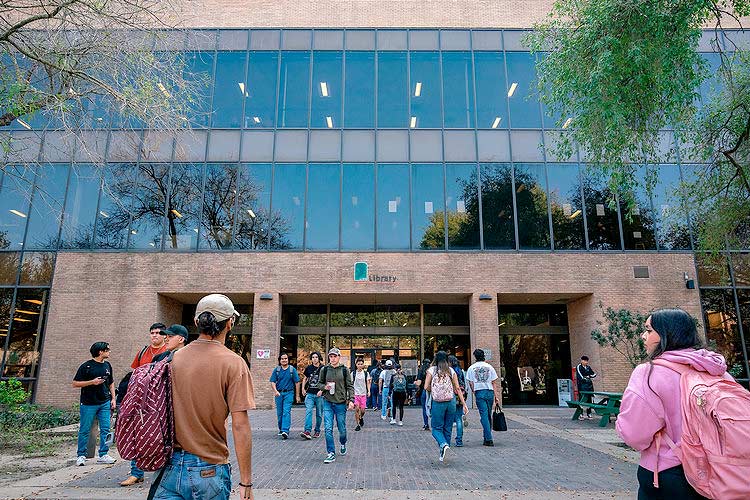

The UTRGV library offers an online database specifically for sustainability-related articles, books, and journals. The Library Campus Sustainability HUB (LCS-HUB) offers a variety of resources for educators and scholars to dive into all the sustainability-related content they need for research and findings.
The Office for Sustainability actively creates yearly reports for each of our sustainability initiatives for each respective fiscal year. Our reports are offered in a visual pdf form that contains in-depth information regarding any significant updates done on campus grounds and illustrates in detail the progress of our projects and campus initiatives. Follow the link above to browse our archived reports.
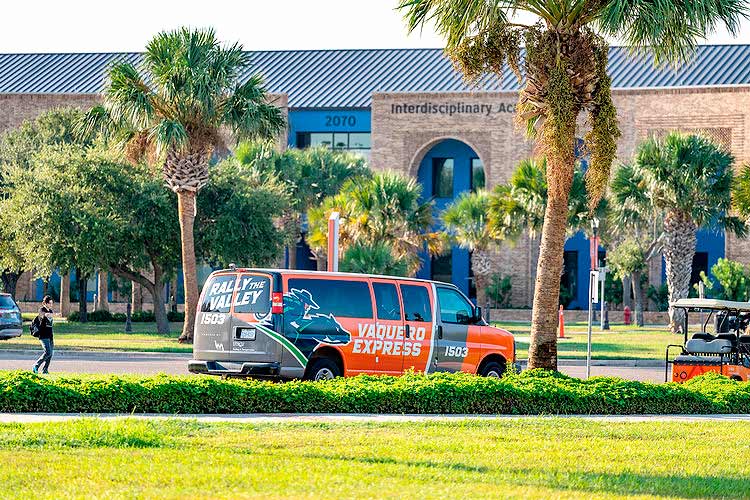
Parking & Transportation Services operates the Vaquero Express bus service on the Brownsville and Edinburg campuses through the Vaquero Express public transportation system. In addition, Vaquero Express routes connect those campuses with Harlingen and Weslaco, and serve the Visual Arts Building in Edinburg, the McAllen Teaching Site, and Rio Grande City (via Valley Metro's Green Line at STC). All routes operated by the University are FREE to use and open to the general public.
The Office for Sustainability is proud to showcase our in-house content, such as our Sustainability Adelante podcast and Instagram series, YouTube webinars, and all other related UTRGV-sustainability events and information. To be kept up-to-date with all information, content updates and events be sure to follow our socials platforms.