Your Favorite Influencer Didn't Get a Master's Degree. Should You Listen to Them?
Wednesday, July 01, 2026 | 1:00 PM
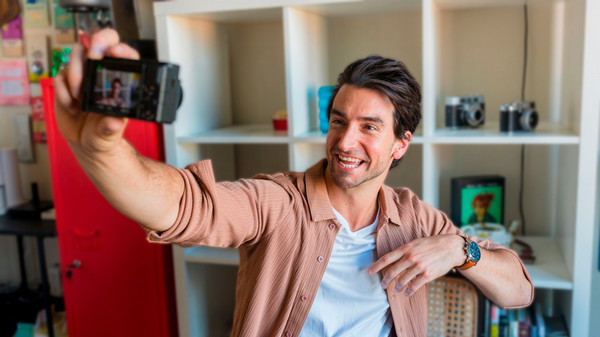
You've seen the videos. Someone with a ring light, or gorgeous home office, and 800,000 followers looks straight into the camera and says something like this: "I never finished my graduate degree. I never got my MBA. And I make more money than most people with a doctorate. Graduate degrees are a waste, If you ask me.”
That’s a bold statement. It's also incomplete.
The Algorithm Doesn't Show You the Full Picture
Here's the thing about influencer success stories: you only hear them because they worked. The person who skipped grad school, started a business, and struggled for ten years before quietly going back to a 9-to-5 isn't making content about it. The one who built a following, lost brand deals when the market shifted, and had no professional credentials to fall back on isn't going viral.
These kinds of stories are gaining a lot of traction right now and are influencing how young people think about their careers and education.
According to a 2024 Pew Research Center survey, about a third of Americans say they get news and information from social media influencers. Among adults under 30, that number is even higher. When the loudest voices on your feed are telling you that degrees are overrated, it does start to shape how you think about education, and what the algorithm doesn’t tell you is those voices represent a tiny slice of what’s really happening.
Here's what we do know (with data) about an education:
Workers with a master's degree earned a median of $1,840 per week in 2024, compared to $1,543 for those with a bachelor's degree, according to the U.S. Bureau of Labor Statistics. Master's degree holders also experienced lower unemployment rates — 2.2% compared to 2.5% for bachelor's degree holders. Those aren't influencer numbers. Those are labor market numbers, across millions of workers, across every industry.
Building on a Platform You Don't Own
Let's talk about something that doesn't come up enough in the "skip grad school" conversation: that social media platform can die out, or get removed from the app store.
In early 2025, TikTok, the platform where many of these influencers built their entire audience and income, went dark in the United States for nearly 24 hours as a federal ban took effect. Everyone remembers where they were when TikTok went dark, and for a brief but very real moment, creators who had spent years building followings of hundreds of thousands of people watched their livelihoods disappear overnight. The ban was paused, but the message was clear: a platform can be taken away faster than a degree ever could.
An audience is not an asset you own. An algorithm can change. A platform can be regulated, banned, or simply fall out of fashion , ask anyone who built their career on Vine, or who had a thriving Facebook page before organic reach collapsed. The influencers telling you to skip school built their success on infrastructure they don't control, in a media landscape that changes constantly.
A graduate degree, on the other hand, is yours. Nobody can take it away.
Career Advice Only Works in Context
Here's what the "I didn't get a degree and I'm doing great" narrative almost never includes: what that person actually does for a living.
If your goal is to become a content creator, a drop shipper, or a personal brand, then yes a master's degree is probably not the most direct path there. But if you want to work in healthcare administration, engineering, public policy, counseling, finance, data science, or education ( fields where credentials aren't optional, they're required) then taking career advice from someone whose job is to have a large following is a little like asking your favorite food blogger whether you need medical school.
The people hiring for those roles are not watching social media to decide what qualifications matter. They're looking at transcripts, licenses, experience and credentials. And in many of those fields, a graduate degree is not a nice-to-have: it's the entry point.
So What's the Right Question?
The question is not "did this influencer get a master's degree?" The right question is: what do you want to do with your career, and what does that path actually require?
For a lot of careers, the answer still points toward graduate education. Not because a degree guarantees success (nothing does) but because it builds the kind of specialized knowledge, professional credibility, and long-term earning potential that a viral video simply can't replicate.
UTRGV offers more than 50 programs across online, accelerated online, and campus-based formats, designed for students who are working, raising families, and building real careers in the Rio Grande Valley and beyond. And for new and re-admitted students, the Grad Momentum Incentive offers up to $2,000 to help you get started.
Your favorite influencer didn't plan to go viral. It just happened. A graduate degree doesn't leave your future up to an algorithm, your education is something that's yours to keep.
Explore graduate programs at UTRGV today!
Source:
https://www.pewresearch.org/journalism/2024/11/18/americas-news-influencers/
https://www.bls.gov/careeroutlook/2025/data-on-display/education-pays.htm
Have a question or concern about this article? Please contact us.