Your Resume Says What You’ve Done. Can an E-Portfolio Show What You Can Do?
Monday, September 21, 2026 | 8:00 AM
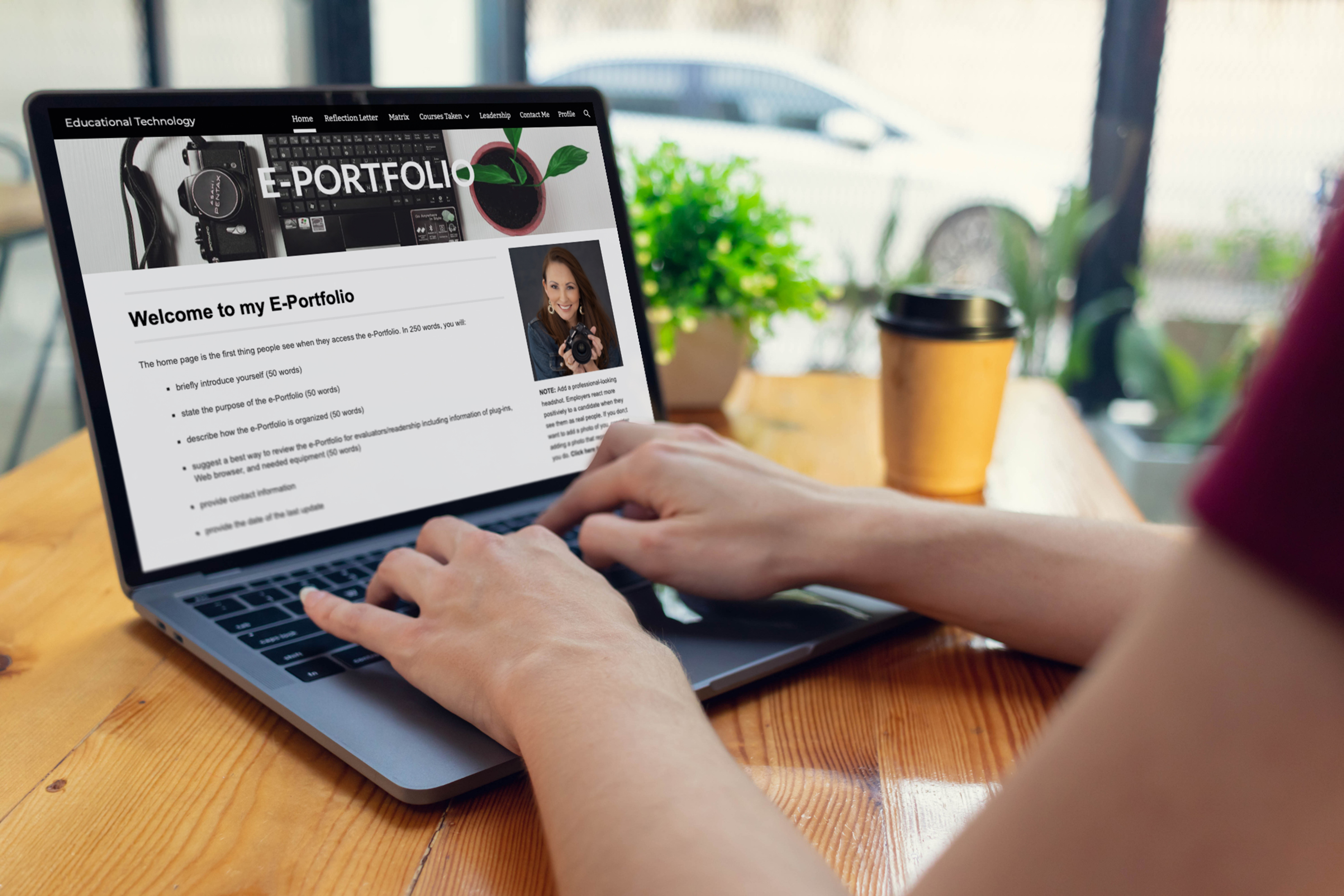
You spent years building your skills. You completed projects, solved problems, learned new technology, and developed knowledge in your field.
Then you apply for a job and try to fit all of that onto one or two pages.
What a résumé does is that it gives employers a glimpse of your education, experience, skills, and accomplishments. But if you list instructional design, technology integration, project management, or another skill, do you do what everyone else does, and just type it on a sheet of paper? Is it the best way to show this new employer what skills you have?
An e-portfolio can help answer that question.
By bringing together projects, work samples, presentations, reflections, and other evidence of your abilities, an e-portfolio can complement your résumé and give employers a visual example of what you know and what you can do.
“I Have That Skill” Is One Thing. Showing It Is Another.
Look at almost any job posting and you will find a list of skills employers want. The challenge for applicants is demonstrating those skills during the hiring process.
That matters as more employers adopt skills-based hiring.
According to the National Association of Colleges and Employers (NACE) , 70% of participating employers reported using skills-based hiring, up from 65% the previous year. NACE also found that employers want candidates to provide examples of how they have applied their skills.
In NACE's full report, 26.9% of responding employers identified creating a skills portfolio with accomplishments and work samples as one way candidates can demonstrate their abilities.
Writing "instructional design" on your résumé tells an employer you have experience in that area. An e-portfolio can show a project you developed, explain the problem you addressed, and present the final product.
Your Best Work Shouldn't Be Buried in a Folder Somewhere
Think about the amount of work you produce during college or graduate school.
You may complete presentations, research projects, videos, lesson plans, case studies, assessments, reports, or digital projects. You submit them, receive a grade, and move on to the next course.
But some of that work can have a life beyond the classroom.
An e-portfolio allows you to select projects that represent your abilities and organize them for an audience outside your program. Remember, the goal is not to upload every assignment. Instead, a piece of work should help someone understand what you created, why you created it, the skills you used, and what you learned.
A finished project can show the result. Your explanation can show how you approached the work. Projects collected over time can also document how your skills developed throughout your graduate education.
What If You Started Building Your Portfolio on Day One?
Students in UTRGV's Master of Education in Educational Technology do not wait until graduation to begin thinking about their e-portfolios.
Students begin creating their portfolios in their first course and continue adding projects, research, data, and reflections throughout the program. In their final practicum, they present the completed portfolio in place of a traditional comprehensive examination.
And the portfolio is not created only for faculty review.
From the beginning, students develop it with potential employers in mind. By graduation, students have a collection of work that documents their knowledge, abilities, professional growth, and accomplishments.
That gives the work completed in graduate school another purpose. An assignment does not necessarily have to end when the course does. It can become part of how you present your skills to employers later.
Could an E-Portfolio Make a Difference in Your Job Search?
An e-portfolio cannot guarantee an interview or job offer. Hiring decisions involve experience, qualifications, interviews, competition, and an employer's needs.
What it can provide is another way for an employer to evaluate you.
Consider two candidates who list similar skills. Both can discuss those abilities during an interview, but one can also direct the employer to projects demonstrating how those skills were applied.
That can be useful in educational technology, where instructional materials, digital learning experiences, presentations, assessments, and technology projects can provide evidence that is difficult to communicate through a list of qualifications alone.
The Degree Goes on Your Résumé. The Work Can Go With You.
If you are considering graduate school, career potential matters too.
Educational technology can connect to careers involving curriculum, instruction, training, technology integration, and learning design. One related occupation is instructional coordinator, which typically requires a master's degree and related work experience, according to NACE.
BLS reports that instructional coordinators earned a national median annual wage of $77,440 in May 2025 and projects about 23,100 openings each year, on average, from 2025 through 2035. These national figures represent one related occupation and do not guarantee outcomes for program graduates.
Want to learn more about the MED in Educational Technology? Learn More HERE.
Source:
https://www.bls.gov/ooh/education-training-and-library/instructional-coordinators.htm?
Have a question or concern about this article? Please contact us.