
 rotate(10)'/%3E%3Cpath d='M.038.113v.15l.15.088.15-.088v-.15L.188.025l-.15.088Z' stroke='%23c44900' stroke-width='.0375' transform='rotate(10)'/%3E%3C/svg%3E)
Preliminary Analysis of Speed & Ease of Use of Technologically-Aided Transcription Methods
After conducting trials of the transcription methods in the fall, the research team performed a preliminary analysis of the findings, focusing on the speed and ease of use of three methods: ExpressScribe, SpeechNotes, and Stream.
Speed
We calculated the average time each research assistant (RA) took to transcribe the four interview audio files using each method. Some RAs, such as Student E, took longer than others, while others, such as Student C, completed the transcriptions more quickly across all methods. This variation is normal and to be expected (see below).
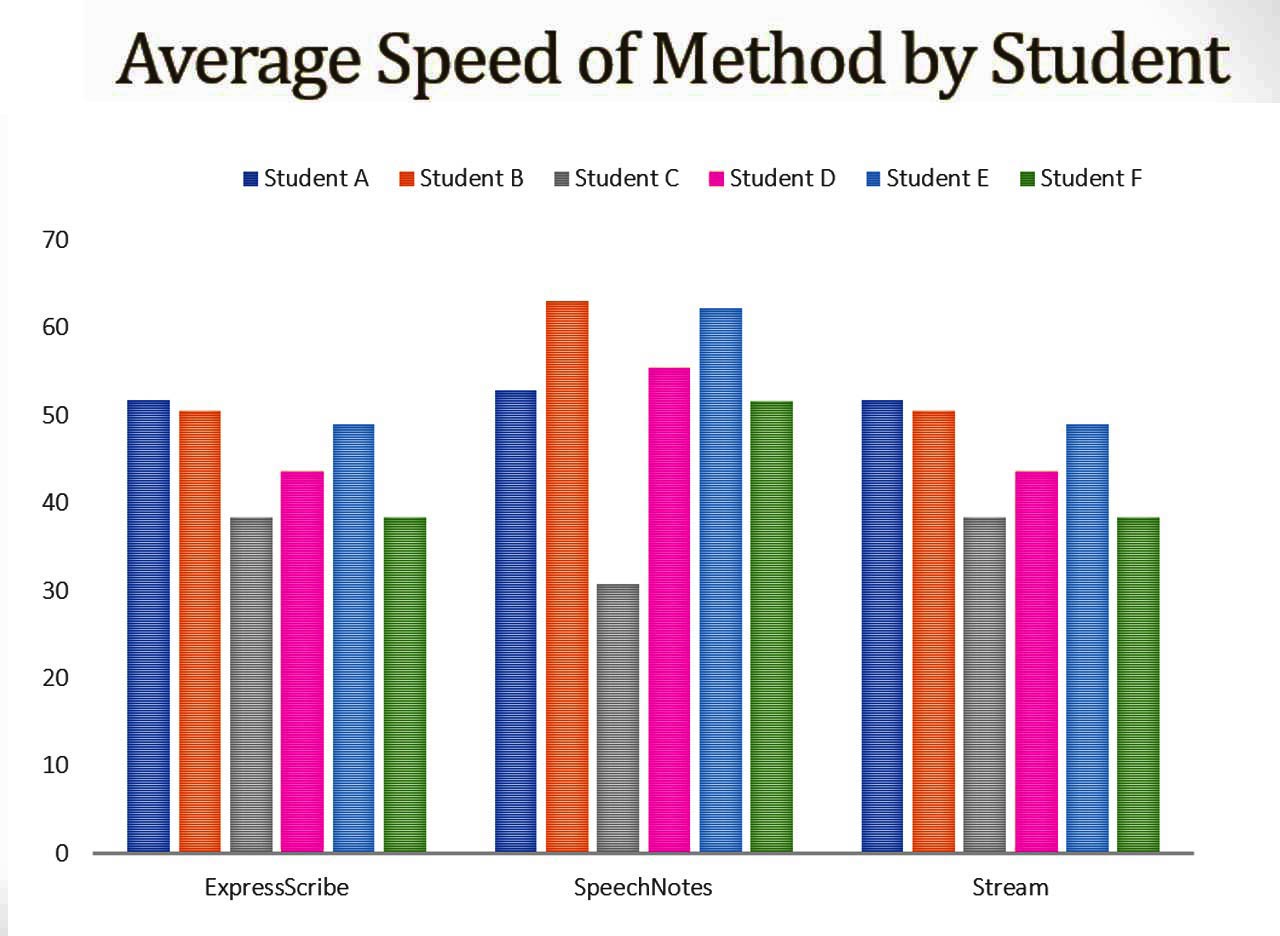
As expected, transcription times also varied depending on the trial number, as students became more familiar with the methods; the order in which the methods were used, as students became more familiar with the transcription process; and the audio file itself, as some recordings were quieter or contained more background noise. This is a preliminary analysis, and we will examine these factors in greater detail in future analyses.
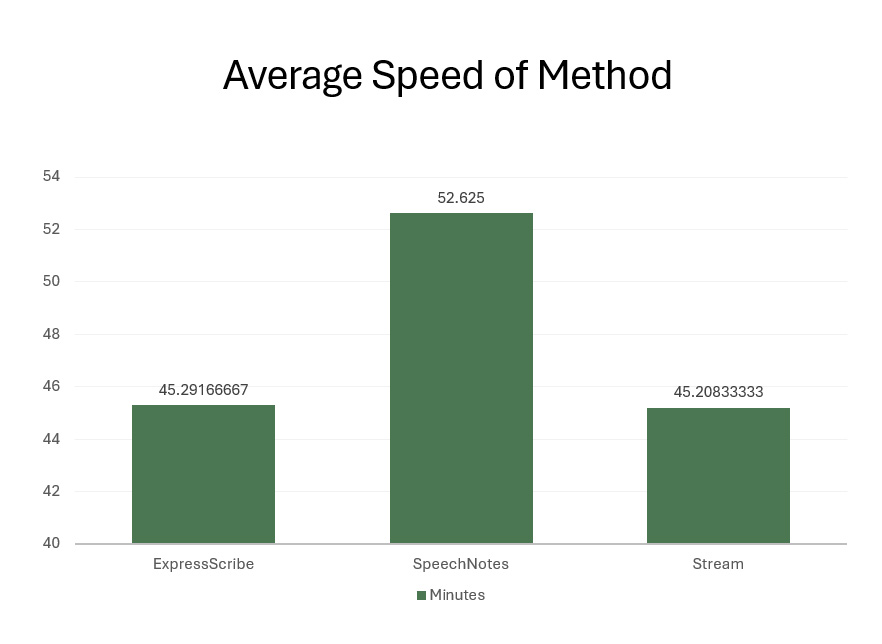
Overall, the average time required to transcribe each audio file was 52.6 minutes for SpeechNotes, compared with 45.2 minutes for Stream and 45.3 minutes for ExpressScribe (see below). We found this result somewhat surprising. However, three students had previous experience with ExpressScribe and had practiced using it, which may have influenced the results. Additionally, ExpressScribe combines audio playback, timestamping, and editing within a single program, whereas Stream requires a multistep process.
Ease of Use
1. All students preferred ExpressScribe.
In terms of perceived ease of use, all students preferred ExpressScribe. Although this was somewhat surprising, we note again that three students had previous experience with the software.
Additionally, only two students had previously completed a full hour of transcription. Working with a two-minute audio file is very different from the tedious process of transcribing longer recordings or working with more than 40 hours of data. Because the students worked with only two-minute audio files, they may not have had an accurate picture of what it would be like to spend hours transcribing large amounts of data using ExpressScribe. Based on this limited experience, they may not have fully appreciated the benefits of its features, which might become more apparent to someone with substantial transcription experience.
One student who had transcribed substantial amounts of data had never used software for this purpose. Instead, they had simply typed into a Word document while listening to the audio. For this student, the transcription software represented a significant technological improvement.
2. Students unanimously disliked Speechnotes.
In contrast, all students disliked SpeechNotes. This finding is consistent with the longer transcription times observed with this method. Students also reported that, for some of them, the software did not capture audio played from their own devices or other devices, requiring them to repeat or re-voice the audio. Even then, some students continued to experience difficulties. One student suggested that these issues might have been related to Spanish being their second language (L2). This is another factor worth considering in future analyses.
3. Students' perceptions of Stream improved with practice.
Students reported that they liked Stream more as they gained experience using it. This improvement may have been related to their increased familiarity with Stream's built-in editor, compared with editing downloaded transcript files. The multistep process of creating a video, uploading it to Stream, and running the script may also have influenced their initial experiences with the tool.
Next Steps
In spring 2021, we will hold Corpus Internship classes at both UTRGV and the University of Arizona (UA). As part of this grant-funded project, we will analyze the ease of use and accuracy of these methods with students enrolled in the classes.
In light of these preliminary results, we are considering asking students to transcribe a full hour of audio using each method, or at least to work with longer audio segments. We believe this may help us better understand the effects of initial training and students' varying levels of experience with manual transcription.
We also plan to have research assistants or members of the research team complete certain steps in advance, such as creating videos, uploading them to Stream, and downloading the resulting transcripts. The team can then run an initial script to remove extraneous lines from the transcripts, simplifying the editing process for students. A second script can be used to consolidate the lines by speaker.
We will also work with Ms. Jessica Draper to further revise the script so that it can automatically separate lines containing multiple speaker turns. She will rework the script in R so that it can process multiple files within a folder in a single run. We will share the script and the process in detail in a future blog post once they have been finalized.
As we continue this work, we will document our progress and findings in future posts on the CoBiVa blog.