
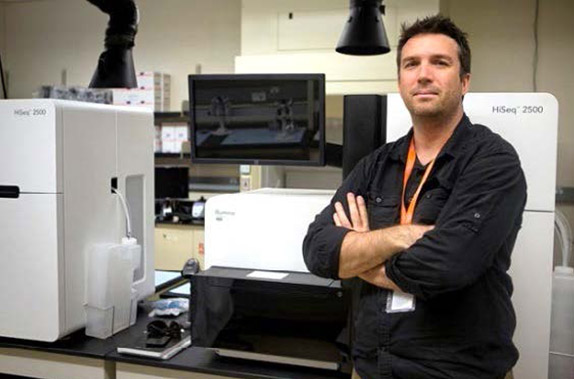
A trip to Nepal for most people is a once-in-a-lifetime mountain climbing adventure. For Dr. Matthew Johnson, however, it is a twice-a-year excursion for his research into diabetes-related eye diseases. Johnson, a Texas transplant from Queensland, Australia, is an associate professor and biomedical research scientist at The University of Texas Rio Grande Valley South Texas Diabetes and Obesity Institute (STDOI). Along with a 21- person team of researchers led by STDOI Founding Director Dr. Sarah Williams-Blangero, formerly chair of the Department of Genetics at the Texas Biomedical Research Institute in San Antonio, Johnson relocated with other TBOI personnel to the Valley earlier this year with the newly created research institute. "We are looking at genetic risk factors influencing eye health and disease, and are fortunate that Dr. Williams-Blangero and another key member of the STDOI research group, Dr. John Blangero, have established two strong subject cohorts," Johnson said. "One is a population of large Mexican- American families in the San Antonio area, and the other, the one I primarily work with, is in Jiri, Nepal." Jiri is a region that lies about 120 miles east of the Nepalese capital of Kathmandu, and consists of eight villages. Of the 4,500 - 5,000 residents of the area, more than 2,500 have participated in past research projects lead by Dr. Williams-Blangero, and all individuals can be linked into one large family pedigree. "This provides us with a goldmine of information for genetics research," Johnson said. "Understanding the genetics 'behind' blindness and poor vision in understudied populations from the developing world - like the Jirels of Nepal - is an important step in the fight against reducing the global burden associated with poor eye health and disease." Johnson also is leading the effort to establish a long-term project on eye health and disease in Mexican-American families of San Antonio.