
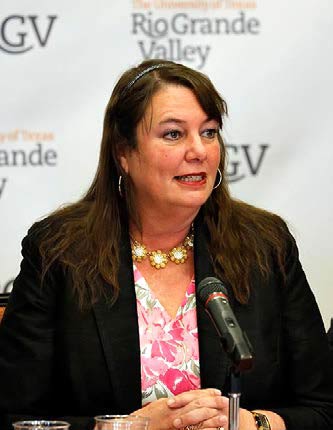
In October of 2014, I became the Founding Director of an exciting new research organization, the South Texas Institute for Diabetes and Obesity (STDOI), that would become part of the new University of Texas Rio Grande Valley. The STDOI provided myself and my colleagues a once in a lifetime opportunity to join the leadership of a new emerging medical school and to focus research in a way that could have a very positive impact on the local community in addition to having an impact on some of the most pressing public health issues facing the nation today. 21 faculty and staff joined the STDOI in early 2015 to initiate the research efforts that ultimately will improve health in the South Texas region.
The Rio Grande Valley is an area where diabetes, obesity, and associated health issues are reaching crisis levels. That makes it an ideal location for the types of long-term, multidisciplinary studies in which STDOI investigators specialize. Basic research takes many years to achieve the ultimate goal of developing new ways for preventing and treating disease. However, discoveries that occur during the research process can improve clinical care and can improve our understanding of the biological pathways that underlie the major public health problems of diabetes and obesity prior to the identification of new treatments and preventions.
The focus of the researchers working in the STDOI is on genetic studies of diabetes and obesity. Through studies of large extended families we can identify genes in the causal pathways that influence disease. This opens up a window into the pathophysiology of the disease. There are many points at which one can interrupt the causal pathway of a given disease, and knowledge of the genes involved in the pathway may provide novel targets for drug development.
Over the past 25 years, STDOI researchers have worked with large extended Mexican American families in San Antonio to find genes influencing heart disease, diabetes, obesity, and psychiatric disease in the population. Mexican Americans have a lifetime risk of diabetes of between 25 and 30%, which was the reason we focused our work on Mexican American families. Many of the 3500 participants who have collaborated with us in our studies have relatives in the Rio Grande Valley. Now we have a great opportunity to expand our study families through new recruiting efforts here. One of the very attractive possibilities associated with the move of our research group to the Valley was the chance to develop intervention studies that will allow us to look at the genetic basis of differential response to treatment, be it behavioral or pharmacological, while simultaneously providing health improving interventions.
The STDOI team includes individuals who have been pioneers in the whole genome sequencing studies that are the great hope for genetic research today. STDOI scientists have extensive experience in translational work focused on drug target development, work that we hope ultimately will lead to new, more efficacious drugs for treating diabetes, obesity, and related disorders. The research team possesses the full range of skills required for long-term genetic population studies, from direct sampling of the individuals who participate in our studies, to medical assessments, to whole genome sequencing, to complex statistical analysis, to characterizing the actual functional consequences of the genes that we discover. The group also includes leaders in advanced imaging genomics. Our investigators were trailblazers in using MRI and other imaging modalities to identify genetic risk factors for depression and even for obesity-related behaviors and food preferences.
The research group has been highly successful in generating funding. STDOI investigators collectively generated over $200 million in funding from the National Institutes of Health between 2000 and 2014, and have brought over $13.8 million in NIH funding to UTRGV or one of its legacy institutions during the first 18 months of operation.
With the support of the UT system and UTRGV, our research team has established a number of unique resources that have dramatically improved research capabilities in the region. We developed a major high performance computing system with 11,000 processors dedicated to genetic analysis; it is one of the largest clusters devoted to human genetic analysis in the world. We developed state of the art high throughput whole genome sequencing capabilities in the STDOI laboratories in Brownsville. We also established a major program in stem cell biology. Our techniques using adult stem cells derived from blood cells allow us to generate specialized cells such as brain cells, liver cells, and heart cells. The approaches allow us to conduct studies that cannot be done on a large scale on cells from biopsies collected from study volunteers. Additionally, we have established a breeding and research colony of laboratory opossums, Monodelphis domestica. These animals are uniquely suited for research on skin cancer, correlates of heart disease, fatty liver disease, and spinal cord injury, and will facilitate collaborations with investigators from diverse disciplines.
The STDOI research programs provide numerous opportunities for collaboration with students, postdoctoral scientists, and investigators from across the institutions represented in the Valley, especially UTRGV and the UTHealth School of Public Health. The global nature of science is evident at the STDOI, which collaborates with over 70 institutions throughout the world. Working with UTRGV, we are building a world-class research center focused on diabetes and related disorders in Mexican Americans, as well as on health disparities and minority health issues.
UTRGV President Guy Bailey noted that "as UTRGV and the School of Medicine come to fruition, we are focusing on connecting science and research with the South Texas community. We are working to create the best possible outcomes for our patients." The mission of the STDOI, to advance the health of South Texas and the world through cutting edge research on diabetes, obesity, and related disorders, is well aligned with Dr. Bailey's vision. The work being conducted at STDOI holds promise for development of novel drugs and treatments that can positively impact the lives and health of the people in this region, and of countless others around the world who struggle with diabetes, obesity and heart disease.
This first report from the STDOI presents the great progress achieved during the first 18 months after the Institute became staffed and operational in January 2015. I thank the School of Medicine's Founding Dean Francisco Fernandez, UTRGV President Bailey, UTRGV Provost Havidan Rodriguez, former Chancellor Francisco Cigarroa and UT System for the amazing opportunity to lead the South Texas Diabetes and Obesity Institute. On behalf of the STDOI, I express our thanks to UTRGV, UT System, our colleagues at the UTHealth School of Public Health, H-E-B, the McAllen Medical Center Foundation, Dr. Jean MacCluer, Dr. Bennett Dyke, and all the other donors, colleagues and friends who have supported the Institute throughout its initial phase of development. In addition, we are grateful to Dr. Steven Lieberman, new Interim Dean of the School of Medicine, for his continuing support of the STDOI. We remain committed to improving the health of the region through research and achieving even greater things in the years to come.
Sincerely,
Sarah Williams-Blangero, Ph.D.
Director, South Texas Diabetes and Obesity Institute
Director, Edinburg Regional Academic Health Center