By Karen Villarreal
RIO GRANDE VALLEY, TEXAS – JAN. 28, 2026 – Dr. Javier La Fontaine, dean of the UTRGV School of Podiatric Medicine, has made it his goal to keep diabetic patients from losing their toes, feet and legs to untreated infections known as diabetic foot-related osteomyelitis. Through his research into early detection techniques, he’s finding other avenues to help patients suffering with this bone infection.
For decades, he has researched the potentially deadly soft-tissue foot infection seen in patients with diabetes, which can spread from non-healing chronic ulcers, or skin wounds, deeper into the bone.
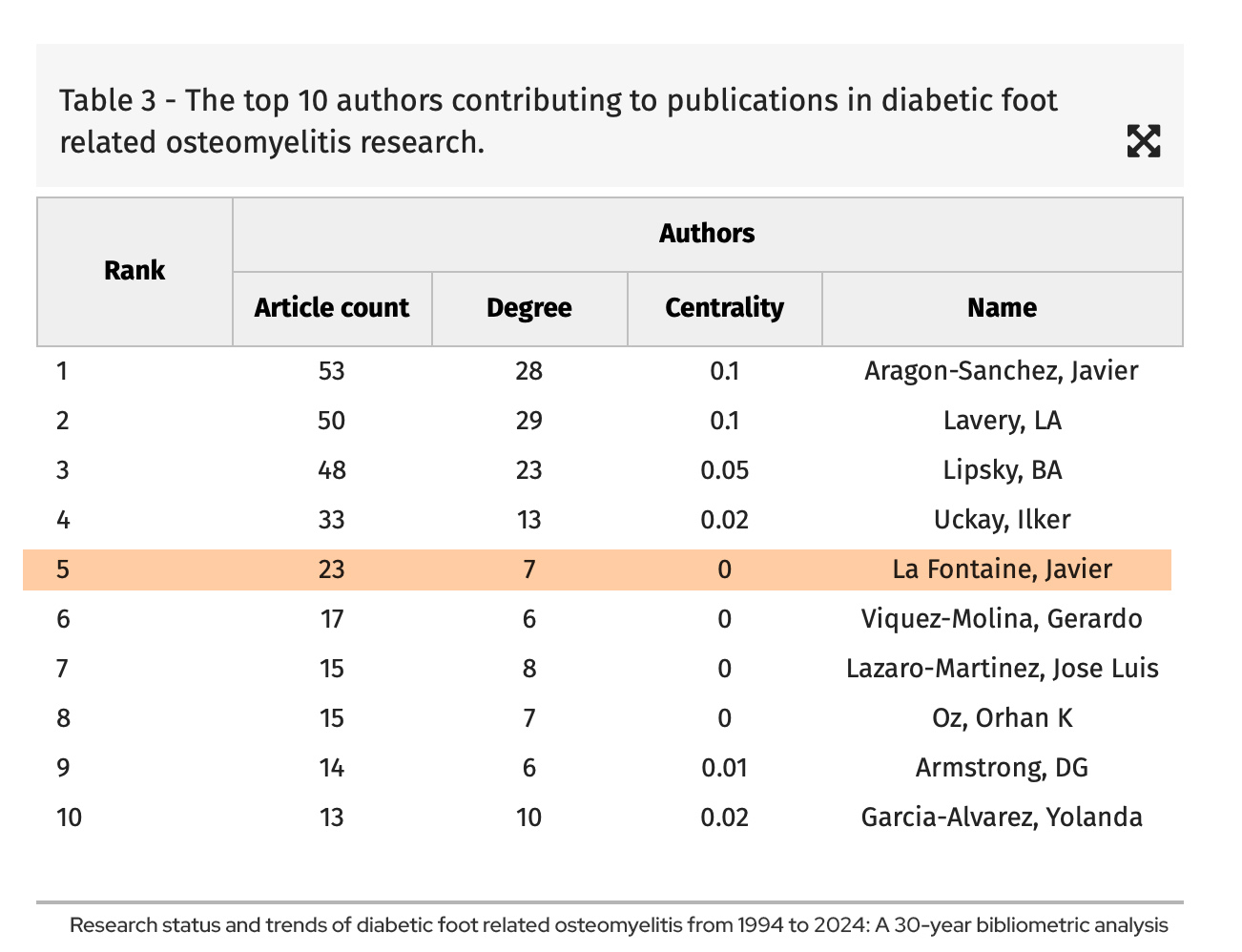
“Typical ‘treatment’ is amputation,” said La Fontaine, whose expertise on the topic was recognized in 2025 by a study published in the journal, Medicine. He ranked as the number five contributor worldwide to the topic of osteomyelitis, or bone infection, with 23 studies to his name to date.
The 2025 bibliometric study based its findings on a review of the past 30 years of literature available on diabetic foot-related osteomyelitis, and aimed to identify research hotspots and collaboration trends. The body of research grew from 25 relevant articles published in 2000, to a significant 140 published in 2022.
La Fontaine collaborated on many of those articles even before joining UTRGV, with Dr. Lawrence A. Lavery from the University of Texas Southwestern Medical Center (UTSW) in Dallas – listed in the same study as the second-most published author on diabetic foot related osteomyelitis.
La Fontaine said he experienced a “citation burst” between 2016 and 2021, and their research focus became of interest in the podiatric medicine arena starting about 2013. He was surprised when he found out he was listed as a global expert, since their work began more than 10 years ago.
“It’s a good reminder that even though you don’t find out right away, you can make worldwide impact by doing good research,” said La Fontaine, who is still adding to his global ranking by coauthoring UTRGV SOPM studies.
THEORY INTO PRACTICE
Through the School of Podiatric Medicine, La Fontaine, faculty and students are putting the latest research into practice – working on bringing down the lower-limb amputation rates in the Rio Grande Valley to match other border communities in the state.
- Like the rate of diabetes itself, diabetes-related lower-limb amputation rates in 2023 were higher in the Valley than the state average of 5% of every 10,000 hospital discharges.
- Of those 10,000 discharged patients, Hidalgo reported 6.8% were for lower-limb amputation; Cameron reported 7.8%, Starr reported 11%, and Willacy reported 12.9%.
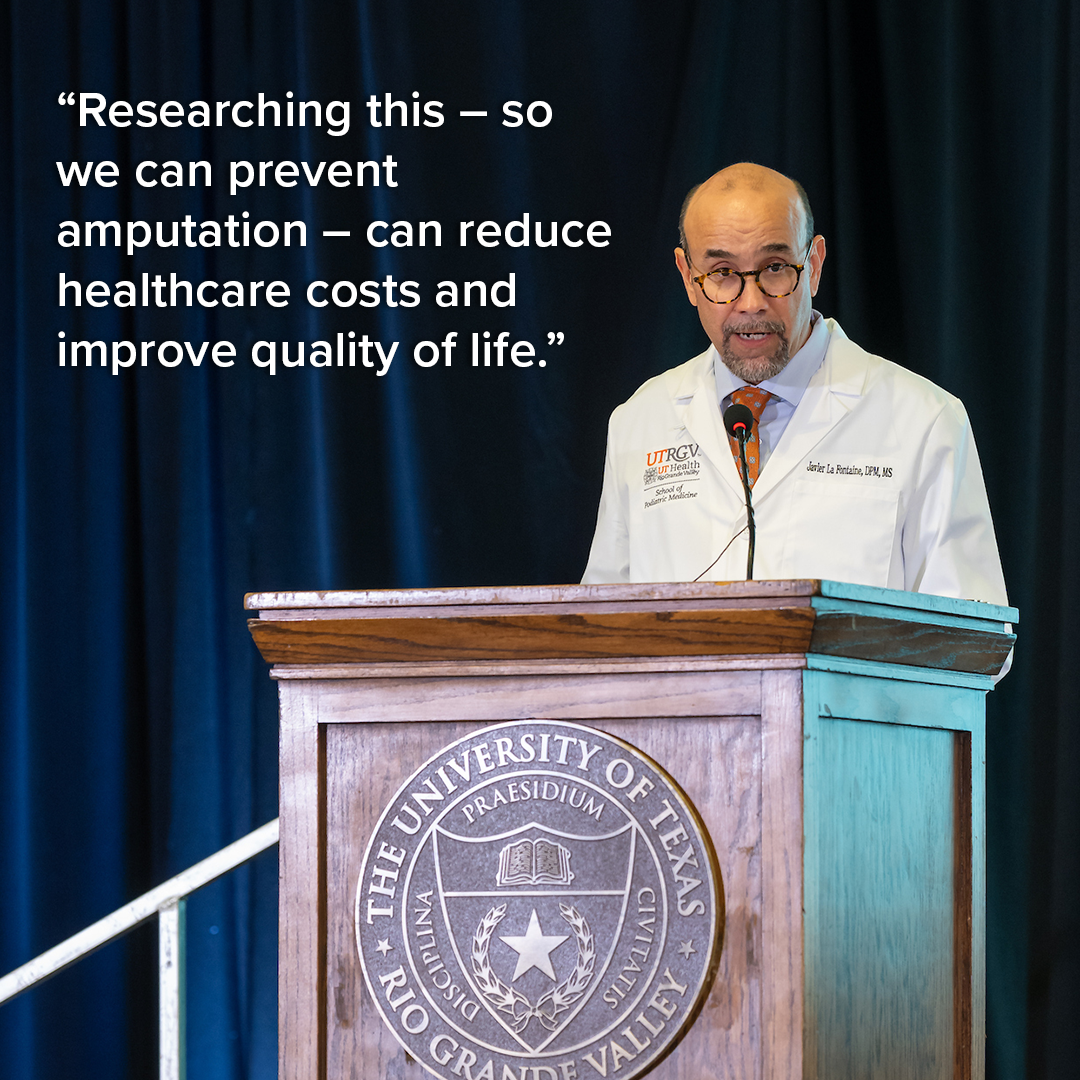
“Researching this so we can prevent amputation can reduce healthcare costs and improve quality of life, but also save lives.”
In 2021, La Fontaine contributed to a study that calculated the $9 billion annual cost of diabetic foot care in the United States alone. Among the study’s findings:
- Diabetic foot care costs totaled more than that of breast or colorectal cancers.
- The amputation procedure increased life expectancy by only two years in half of the diabetic subjects studied.
- And only 56% of those with ulcerative infections were found to survive five years after initial onset of the foot ulcer.
Seeking alternatives, he and co-researchers found that early diagnosis is possible through screening and bone biopsies – at which point, intravenous antibiotics can still treat the infected tissue.
“With this research, we can change lives – without resorting to amputation,” La Fontaine said.
In 2025, Texas Senate Bill S.B.1677 was filed and passed, directing the Texas Department of State Health Services to conduct a study on the prevention and reduction of diabetes-related amputation by September 2026.
Still, major changes to the standard of care have been slow to manifest, he said, as the topic has been largely understudied despite the need and surge of interest in the past 20 years.
“I hope it inspires the students I work with every day,” La Fontaine said. “We have many students here at the UTRGV School of Podiatric Medicine who are interested in research and have a lot of potential to change podiatric medicine.”
To learn more about UTRGV School of Podiatric Medicine, visit https://www.utrgv.edu/school-of-podiatric-medicine/.
ABOUT UTRGV
Celebrating its 10th anniversary during the 2025-26 academic year, The University of Texas Rio Grande Valley is on a mission to serve the Rio Grande Valley and beyond via an innovative and unique education dedicated to student access and success. As one of the country’s largest Hispanic-Serving Institutions and Seal of Excelencia-certified university, UTRGV has earned national recognition for its academic excellence, social mobility, and student success since opening in fall 2015. Ranked among the Best Colleges for Your Tuition (and Tax) Dollars in 2025 by Washington Monthly (No. 7 nationally; No. 1 in Texas), UTRGV continues to break enrollment records, launch new academic and athletics programs, and progress toward achieving R1 research status. Additionally, UTRGV holds the Carnegie Community Engagement Classification, awarded in 2020 and 2025, reflecting its commitment to strengthening community ties and addressing local challenges.
The only university in Texas with schools of Medicine and Podiatric Medicine, UTRGV’s regional footprint spans South Texas — with locations, teaching sites, and centers established in Edinburg, Brownsville, Rio Grande City, McAllen, Weslaco, Harlingen, Laredo, Port Isabel and South Padre Island.