By Maria Gonzalez
RIO GRANDE VALLEY, TEXAS — NOV. 16, 2026 – The University of Texas Rio Grande Valley will lead laboratory testing and cybersecurity research as part of a project selected for up to $11.16 million in federal funding to advance technology that detects freight railcar problems before they cause derailments.
The U.S. Department of Transportation’s Federal Railroad Administration (FRA) recently announced the funding selection through its Consolidated Rail Infrastructure and Safety Improvements (CRISI) Program.
Led by the Brotherhood of Railroad Signalmen (BRS), the project will bring together university researchers technology developers and railroad workers to strengthen early detection of mechanical failures, improve the reliability of railway monitoring systems and support efforts to reduce derailment risks across the United States.
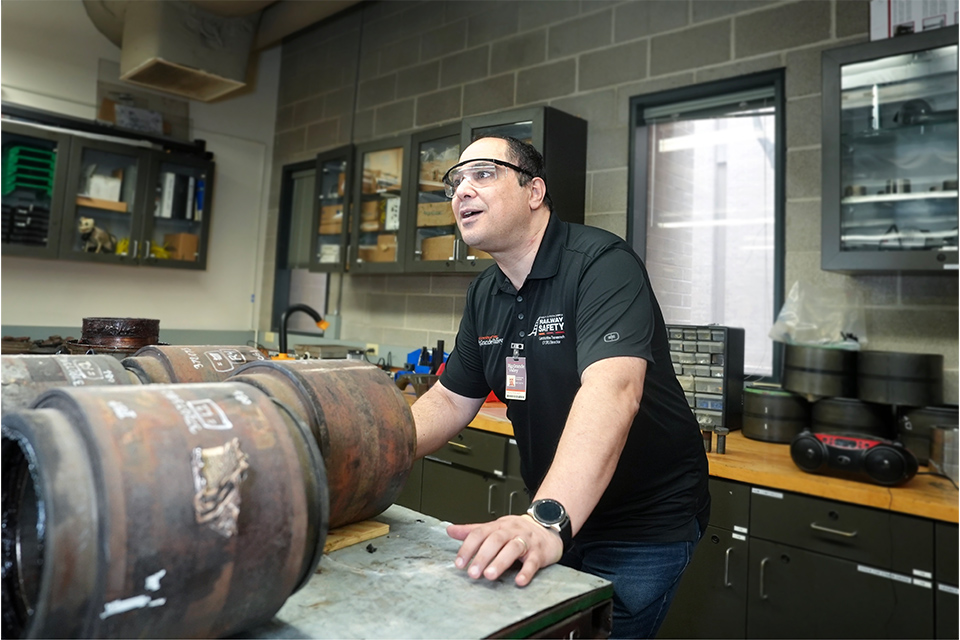
UTRGV’s University Transportation Center for Railway Safety (UTCRS), led by Dr. Constantine Tarawneh, Louis A. Beecherl Jr. Endowed Professor and senior associate dean for research and graduate programs in UTRGV’s College of Engineering and Computer Science, will oversee laboratory testing, contribute to system verification and lead research into securing the technology against cyber threats.
“This award reflects the national significance of the research being conducted at UTRGV and the expertise our faculty bring to critical transportation challenges,” said Dr. Can Saygin, interim provost and executive vice president for Academic Affairs, senior vice president for Research and dean of the Graduate College at UTRGV.
“Through partnerships with federal agencies, industry and labor organizations, we are advancing technologies that can improve railway safety while creating opportunities for our researchers and students to contribute to solutions with national impact.”
BUILDING ON EARLIER RESEARCH
The newly selected project, NexGenPOST2 Phase II, builds on a $9.7 million federal initiative announced in 2024 and formalized through a partnership agreement in January 2025.
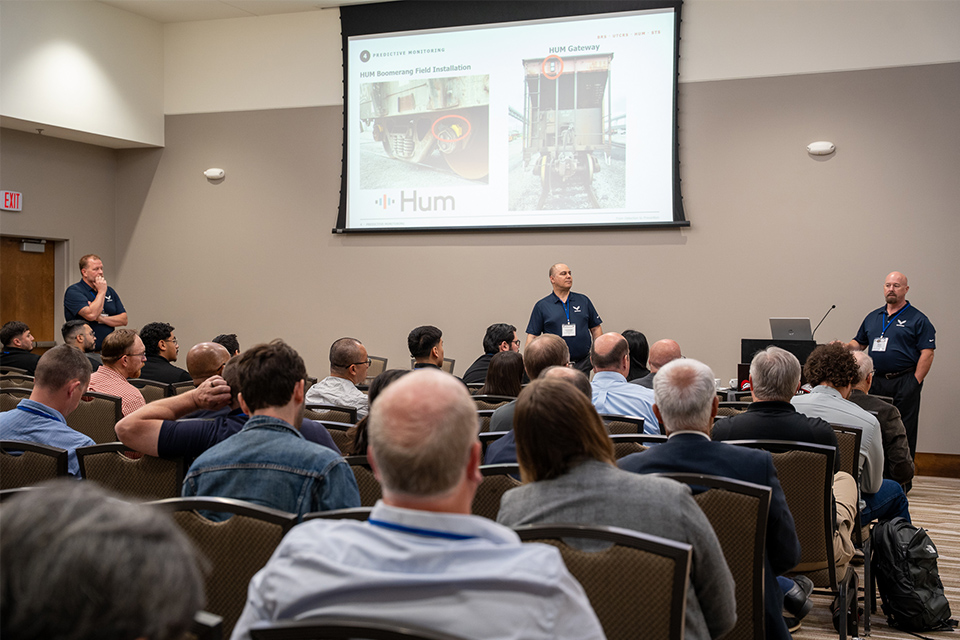
That first phase brought together UTRGV, BRS, Hum Industrial Technology Inc. and ENSCO Inc. to develop and test technologies capable of monitoring the condition of railroad wheels and bearings while trains are operating.
During Phase I testing, onboard sensors detected bearing defects as small as 0.09 square inches, below the 0.14-square-inch condemnable threshold identified in the project’s technical documentation.
The results demonstrated the technology’s ability to identify early signs of bearing deterioration. The next phase will focus on verifying performance under a wider range of operating conditions, including revenue service, and advancing the technology toward broader railroad use.
“The goal is to identify bearing and wheel problems before they develop into failures that can cause derailments,” said Tarawneh, founding director of UTCRS and distinguished teaching professor of mechanical engineering at UTRGV, who serves as the project’s lead university investigator.
“Our research has demonstrated that onboard monitoring technology can detect defects at an early stage. This next phase will allow us to expand testing, verify the system’s performance under different operating conditions, and move closer to practical implementation.”
EXPANDING TESTING AND CYBERSECURITY RESEARCH
Under the two-year project, UTRGV researchers will evaluate next-generation wireless sensors designed to continuously monitor railcar bearings and wheels. The sensors collect information such as temperature and vibration, helping identify mechanical changes that could indicate developing equipment problems.
Unlike traditional wayside detectors, which measure railcar conditions as trains pass fixed locations, onboard sensors can continuously collect information while railcars are in service.
Researchers also will examine how the monitoring technology can communicate safety information through railroad networks, including Positive Train Control (PTC), a system designed to prevent certain train accidents.
A major component of UTRGV’s work will focus on cybersecurity, drawing on expertise developed through the university’s National Science Foundation-funded Center for Multidisciplinary Research Excellence in Cyber-Physical Infrastructure Systems (MECIS), also directed by Tarawneh.
Dr. Jorge Castillo, UTRGV assistant professor of cybersecurity, will lead the development of a framework designed to assess the reliability and integrity of monitoring data, identify potential cyber threats and support secure maintenance decisions. Dr. Jazmin Ley, UTRGV assistant professor of mechanical engineering, will contribute expertise in structural and vibration analysis and onboard sensor validation.
“Detecting a mechanical problem is only part of the challenge. We also need to make sure the information collected by these systems is accurate, secure and reaches the people responsible for making safety decisions,” Tarawneh said.
“By combining our expertise in bearing research, sensor testing and cybersecurity, we can help verify that these technologies perform reliably and securely before they are deployed more broadly across the rail industry.”
A NATIONAL PARTNERSHIP
The project will include research, testing and workforce development activities in Edinburg and Austin, Texas; Front Royal, Virginia; St. Louis, Missouri; and Pueblo, Colorado.
The national collaboration includes five principal participating organizations, each contributing specialized expertise:
- Brotherhood of Railroad Signalmen (BRS): The lead recipient, responsible for project management, workforce development, training and implementation. Jeremy Farr, BRS director of research, serves as the project lead.
- UTRGV: Leads laboratory testing, cybersecurity research and system verification through UTCRS. The university’s research team includes Tarawneh, Castillo and Ley.
- Hum Industrial Technology Inc.: Responsible for onboard sensor hardware, software development and technology integration, with CEO Byron Porter and Chief Technology Officer Dr. Brent Wilson contributing their expertise.
- ENSCO Inc.: Responsible for controlled field testing and evaluating onboard monitoring systems against existing wayside detection technology at the FRA’s Transportation Technology Center in Pueblo, Colorado.
- Hill International Inc.: Provides Positive Train Control technical expertise through railroad signal specialist Mark Dingman.
Approximately $9.39 million of the federal funding for the BRS-led project will be allocated to UTRGV and its participating project partners.
“This second phase represents an important step toward bringing advanced monitoring technology into everyday railroad operations,” said Jeremy Farr, BRS director of research.
“Our partnership with UTRGV has been instrumental in advancing the research and testing needed to identify potential bearing and wheel failures before they lead to derailments. By combining that research with cybersecurity protections and hands-on workforce training, we aim to provide railroad workers with reliable tools to improve safety across the nation’s rail network.”
The project also will expand research and training opportunities for faculty and students at UTRGV, The Valley’s University.
The Phase II selection is part of a $2.3 billion federal investment in 105 rail infrastructure and safety projects announced by the Department of Transportation.
“One of the most important aspects of this partnership is bringing together university researchers, technology developers, and the railroad workforce,” Tarawneh said. “Each partner contributes expertise that is necessary to move this technology forward. For our students and researchers at UTRGV, it also creates opportunities to work on real engineering problems with applications across the national rail network.”
To learn more about UTRGV’s railway safety research and partnerships, visit www.utrgv.edu/railwaysafety.
ABOUT UTRGV
Celebrating its 10th anniversary during the 2025-26 academic year, The University of Texas Rio Grande Valley is on a mission to serve the Rio Grande Valley and beyond via an innovative and unique education dedicated to student access and success. As one of the country’s largest Hispanic-Serving Institutions and Seal of Excelencia-certified university, UTRGV has earned national recognition for its academic excellence, social mobility, and student success since opening in fall 2015. Ranked among the Best Colleges for Your Tuition (and Tax) Dollars in 2025 by Washington Monthly (No. 7 nationally; No. 1 in Texas), UTRGV continues to break enrollment records, launch new academic and athletics programs, and progress toward achieving R1 research status. Additionally, UTRGV holds the Carnegie Community Engagement Classification, awarded in 2020 and 2025, reflecting its commitment to strengthening community ties and addressing local challenges.
The only university in Texas with schools of Medicine and Podiatric Medicine, UTRGV’s regional footprint spans South Texas — with locations, teaching sites, and centers established in Edinburg, Brownsville, Rio Grande City, McAllen, Weslaco, Harlingen, Laredo, Port Isabel and South Padre Island.