By Heriberto Perez–Zuñiga
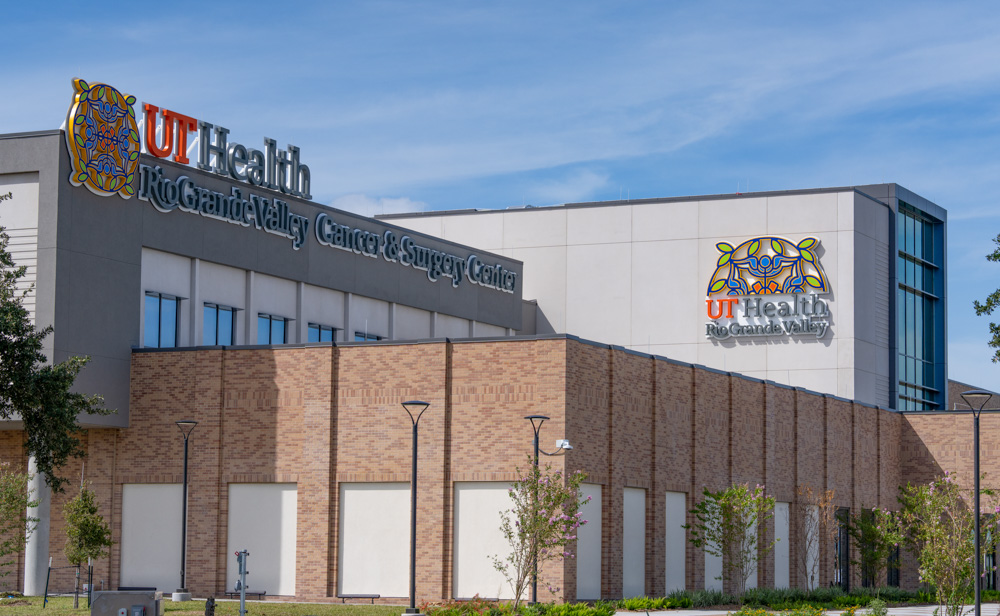
RIO GRANDE VALLEY, TEXAS – OCT. 6, 2026 – Women in the Rio Grande Valley now have access to expanded breast imaging services at the UT Health RGV Cancer and Surgery Center in McAllen, including technology designed to help detect cancers that mammograms may miss in women with dense breast tissue.
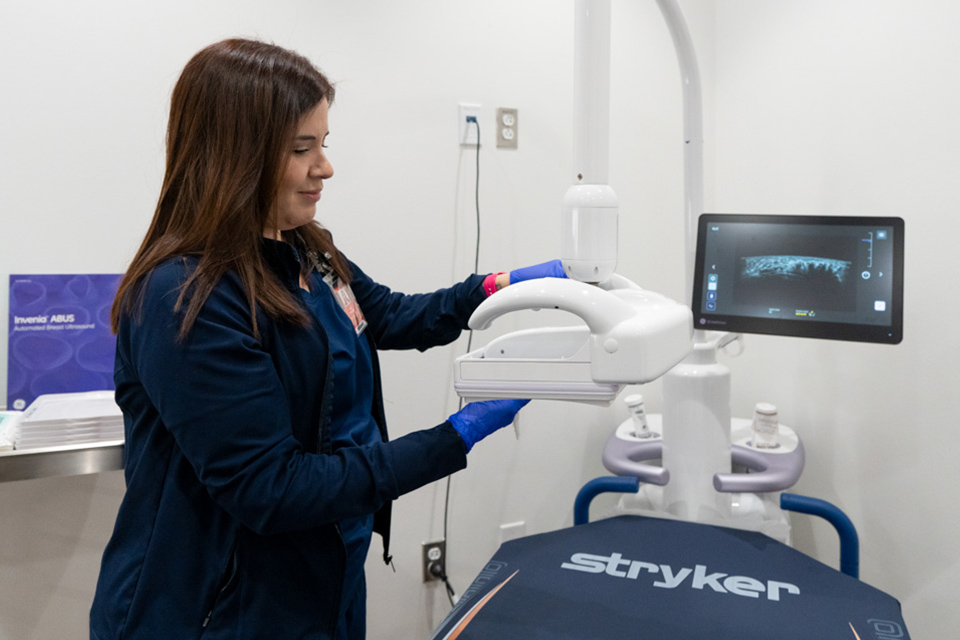
The center offers 3D mammography and an Automated Whole Breast Ultrasound System (ABUS), which supplements mammography for women with dense breast tissue. Together, the services give patients more options for breast cancer screening close to home.
According to the American Cancer Society, about one in eight women in the United States will develop breast cancer during their lifetime, underscoring the importance of screening and early detection.
DESIGNED BY WOMEN, FOR WOMEN
The center’s GE Pristina mammography system was developed by a team of female engineers and designers with patient comfort in mind, said Joe Lopez, director of Diagnostic Imaging at UT Health RGV.
“This system prioritizes patient comfort while delivering exceptional quality with some of the lowest radiation doses among FDA-approved 3D mammography systems,” Lopez said. “We’re making the latest technology available to Valley patients, reducing anxiety and creating an overall better experience.”
The center also offers Automated Whole Breast Ultrasound System (ABUS), which Lopez described as one of the few such systems available in the region. He said the technology can enhance breast cancer detection in women with dense breast tissue by up to 35% when used alongside mammography.
“Nearly 40% of women have dense breast tissue, and traditional mammograms can miss cancers in these cases,” Lopez said. “This system covers the entire breast at once, reducing scan time while providing standardized, comprehensive imaging that gives us much better information.”
Women whose mammogram reports indicate dense breast tissue can discuss with their healthcare provider whether supplemental screening, such as ABUS, is appropriate based on their individual risk factors.
EARLY DETECTION AND CARE CLOSE TO HOME
Dr. Diane Nguyen, medical director of the UT Health RGV Cancer and Surgery Center, said screening plays an important role in identifying breast cancer before it advances.
“Mammograms are very important because they can help detect breast cancer early, when it can be treated more effectively, and help prevent advanced or late-stage breast cancer,” Nguyen said.
Nguyen also serves as division chief of oncology and holds the Robert J. Kleberg, Jr. and Helen C. Kleberg Foundation Chair in Medical Oncology at the UTRGV School of Medicine.
The American College of Radiology (ACR) and the Society of Breast Imaging recommend annual mammograms beginning at age 40 for women at average risk. Screening can identify breast cancer before symptoms develop, when treatment may be more effective.
For women with certain risk factors, screening may need to begin earlier. Nguyen said those factors can include a personal history of breast or ovarian cancer, a BRCA mutation, a family history of breast cancer or prior radiation to the chest.
Women also should discuss breast changes with their healthcare provider, including lumps in the breast or underarm, changes in breast size or shape, or unexplained breast pain. For patients who need further evaluation or treatment, Nguyen said the center brings multiple services together close to home.
“A breast cancer diagnosis can be overwhelming for patients and their families,” Nguyen said. “That is why having comprehensive care available close to home is so important. At UT Health RGV, patients can receive the imaging, surgery, radiation and medical oncology care they need without having to travel long distances for treatment.”
MEETING NATIONAL IMAGING STANDARDS
UT Health RGV follows the ACR’s recommendation for annual mammography screening. Patients should discuss screening timing and frequency with their healthcare provider based on individual risk factors, family history and personal health goals.
The center is ACR-accredited in mammography and ultrasound, reflecting its adherence to nationally recognized standards for imaging quality and patient safety.
“Achieving ACR accreditation is an important milestone for our breast imaging program and reflects our commitment to quality, safety and best practices in mammography,” said Anne Hernandez, lead mammography technologist at UT Health RGV. “Maintaining these standards helps ensure that our patients receive care that meets nationally recognized benchmarks for excellence in breast imaging.”
The UT Health RGV Cancer and Surgery Center is located at 1400 N. Commerce Center St. in McAllen. To ask about imaging availability, eligibility, insurance coverage or payment options for mammography and ABUS services, call 1-833-UTRGVMD (1-833-887-4863). For more information, visit UTHealthRGV.org.
UTRGV — The Valley’s University
The University of Texas Rio Grande Valley is The Valley’s University, deeply rooted in the communities it serves and committed to improving lives and expanding opportunities across the region. From keeping a high-quality education affordable and expanding healthcare services to preparing the workforce, advancing research, and supporting economic growth, UTRGV is putting its people, expertise and resources to work for the Rio Grande Valley. The Valley and UTRGV rise together, building a healthier, stronger and more prosperous region.