By Heriberto Perez–Zuñiga
RIO GRANDE VALLEY, TEXAS – OCT. 22, 2026 – Why does a particular cancer affect some communities more than others? How does a disease develop? And what can researchers learn that could lead to better ways to detect or treat it?
At the UTRGV School of Medicine, researchers are working to answer those questions as they study cancers and other health conditions affecting people across the Rio Grande Valley.
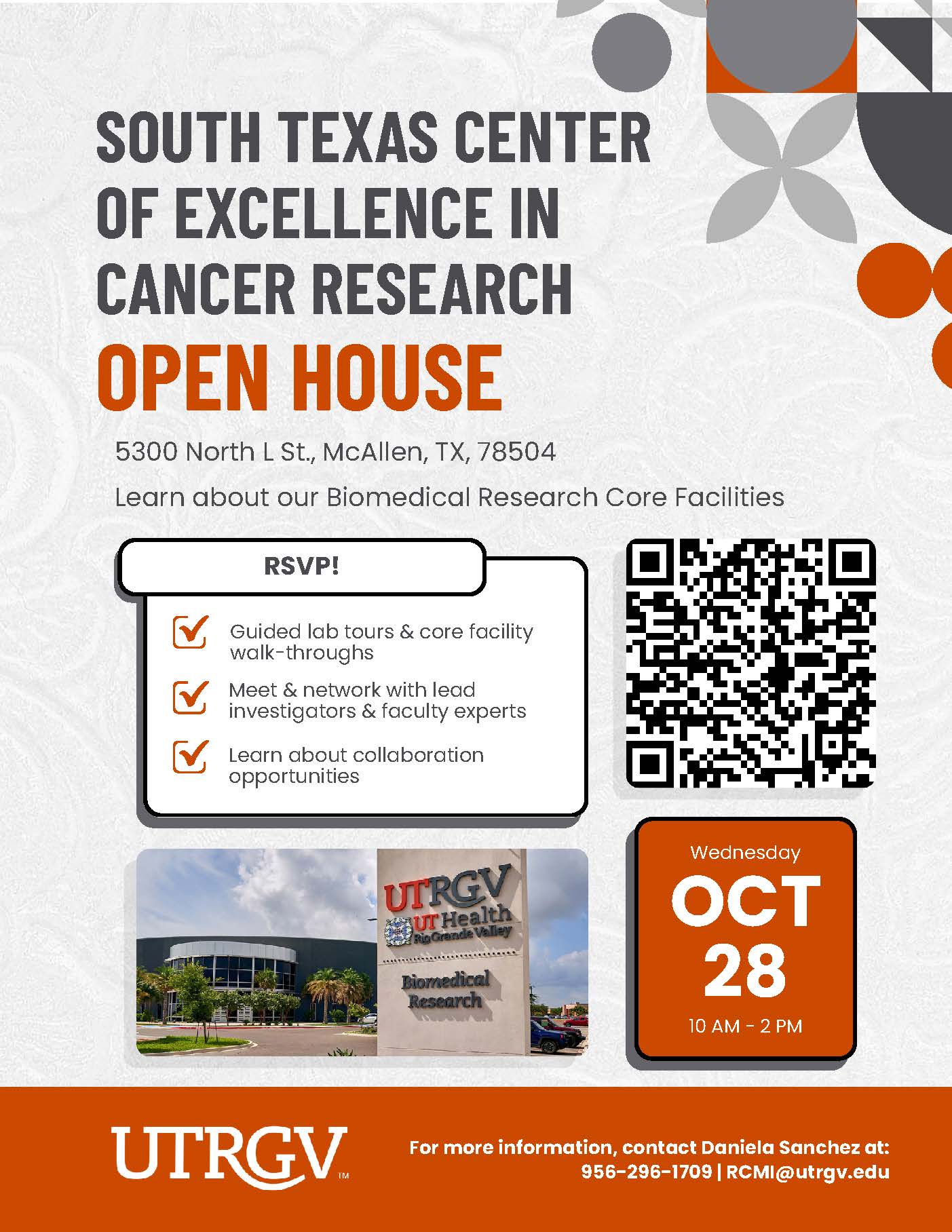
The South Texas Center of Excellence in Cancer Research (ST-CECR) will open its doors to the community on Wednesday, Oct. 28, inviting students, researchers and community members to learn more about the work happening in its research facilities.
The open house will offer guided tours, facility walk-throughs and opportunities to meet investigators and faculty experts. It will also highlight the resources available to scientists and students exploring new questions in cancer research.
Dr. Subhash Chauhan, ST-CECR director, said the event will give visitors a chance to learn how research can help address regional health challenges.
"We invite the community to visit our facilities, meet our researchers and learn how cancer research is helping us better understand health challenges in the Rio Grande Valley," said Chauhan. "We also want students and aspiring scientists to see the opportunities available to them here at the UTRGV School of Medicine, across the Valley, and how they can become part of this work."
RESEARCHING PREVALENT RGV CANCERS
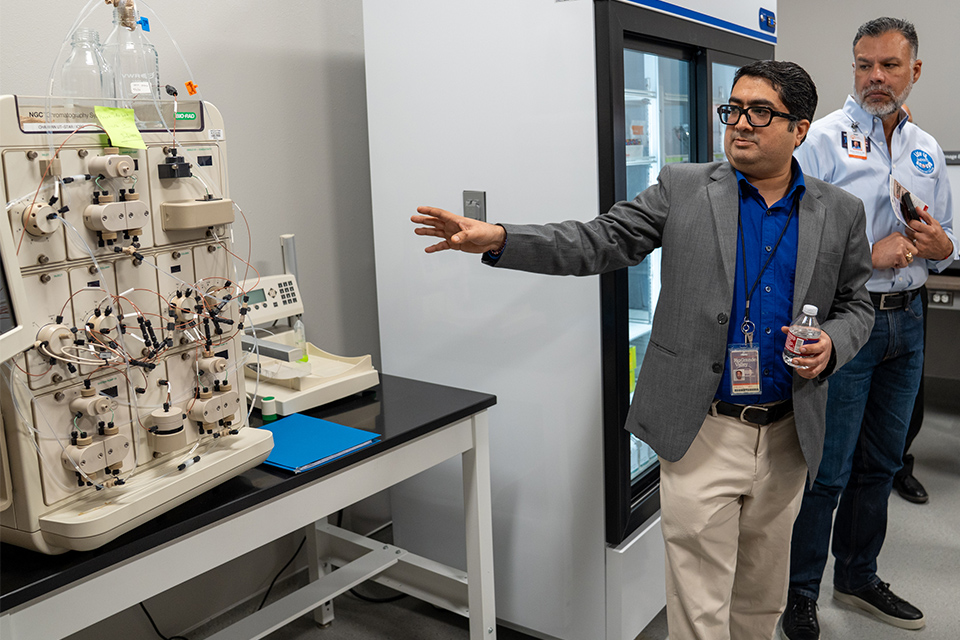
Researchers at the UTRGV School of Medicine study more than 15 types of cancer, using specialized equipment and laboratory resources to better understand how diseases develop and respond to potential treatments.
Dr. Murali M. Yallapu, professor in the Division of Immunology and Microbiology at the UTRGV School of Medicine, said the ST-CECR facility offers technologies to study proteins, DNA and RNA, along with resources for genomics, proteomics and multi-omics, allowing researchers to examine biological systems through multiple types of data.
Additional capabilities include histopathology, biomarker discovery, small-animal PET/CT and confocal imaging, giving investigators different ways to study disease and evaluate potential research questions.
These tools help researchers investigate disease-associated biological changes, identify potential biomarkers, and explore questions that may inform future approaches to cancer prevention, diagnosis and treatment.
That work has particular importance in the Rio Grande Valley, where researchers are examining cancers that affect local communities, including prostate, cervical, liver and colorectal cancers.
Bianca Jimenez, laboratory technician at the UTRGV School of Medicine, said the facility's specialized equipment gives researchers the tools they need to investigate cancer and health disparities affecting the region.
"We're one of the only cancer research facilities that's located within a 250-mile radius," Jimenez said. "We're able to translate that into looking into cancer health disparities that are local to the Valley."
The work begins in the laboratory, where researchers study cells and other models to better understand disease. Their findings may eventually contribute to new approaches to cancer prevention, diagnosis and treatment.
OPPORTUNITIES FOR FUTURE SCIENTISTS
The facility also gives students opportunities to gain research experience and learn how scientific discoveries begin. Undergraduate, graduate and medical students, along with other researchers, can request access to specialized shared equipment and receive staff guidance as they develop and carry out their projects.
Jimenez said gaining research experience as an undergraduate helped her find a path toward a career connecting science and medicine. For students interested in science like her, she said, getting involved in research can start by reaching out to faculty and asking about available opportunities.
The center also introduces younger students to laboratory research through tours and potential summer shadowing experiences for high school students.
ATTEND THE OPEN HOUSE
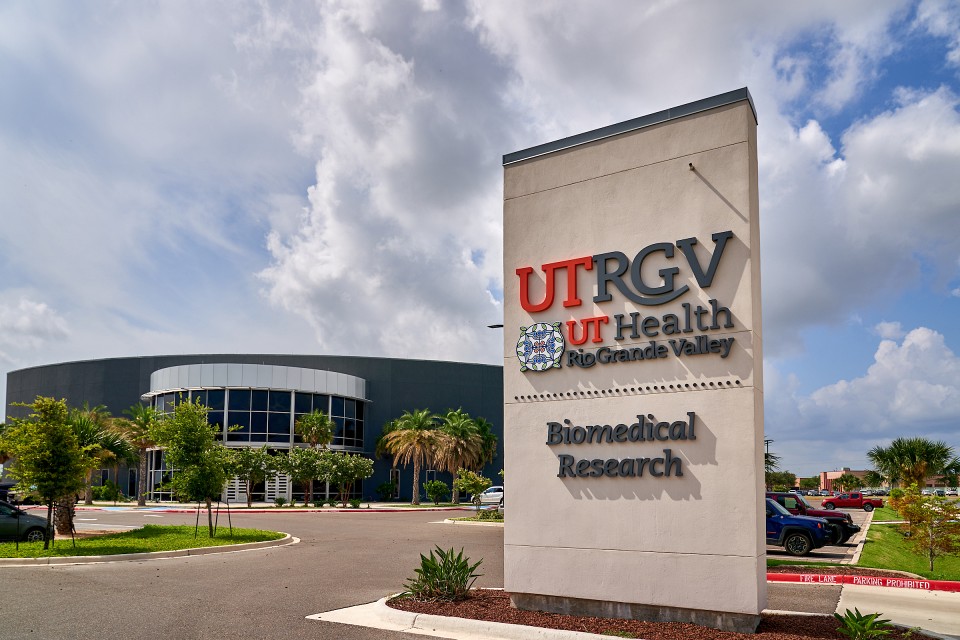
The open house will take place from 10 a.m. to 2 p.m. Wednesday, Oct. 28, at the UTRGV Biomedical Research Building, 5300 N. L St., in McAllen.
Students, researchers and community members are invited to explore the facilities, connect with faculty and learn how to get involved in research at ST-CECR.
For more information, email rcmi@utrgv.edu or call 956-296-1709.
UTRGV — The Valley's University
The University of Texas Rio Grande Valley is The Valley's University, deeply rooted in the communities it serves and committed to improving lives and expanding opportunities across the region. From keeping a high-quality education affordable and expanding healthcare services to preparing the workforce, advancing research, and supporting economic growth, UTRGV is putting its people, expertise and resources to work for the Rio Grande Valley. The Valley and UTRGV rise together, building a healthier, stronger and more prosperous region.