By Karen Villarreal
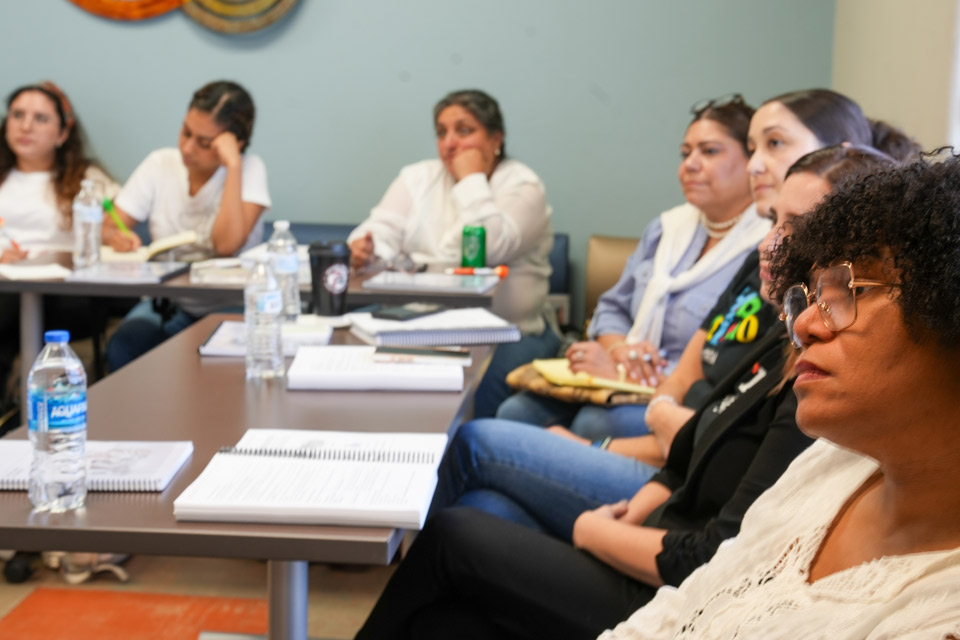
RIO GRANDE VALLEY, TEXAS – OCT. 20, 2026 – Cynthia Vale, a long-time autism advocate on behalf of her 19-year-old son, Samuel, traveled from Rio Grande City to the UTRGV Psychology Clinic’s BeChilDLab in Edinburg to participate in the lab’s Caregiver Skills Training (CST) program.
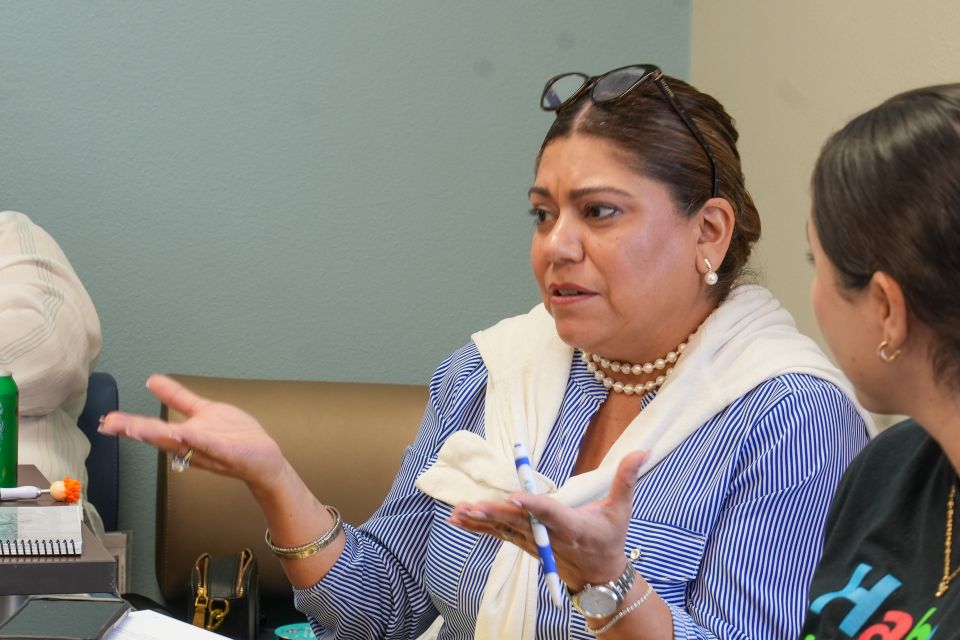
“As a community, we need to help each other, and lift each other up,” said Vale, who remembers feeling overwhelmed by her son’s diagnosis but credits early intervention, awareness, and Caregiver Skills Training (CST) for his success today.
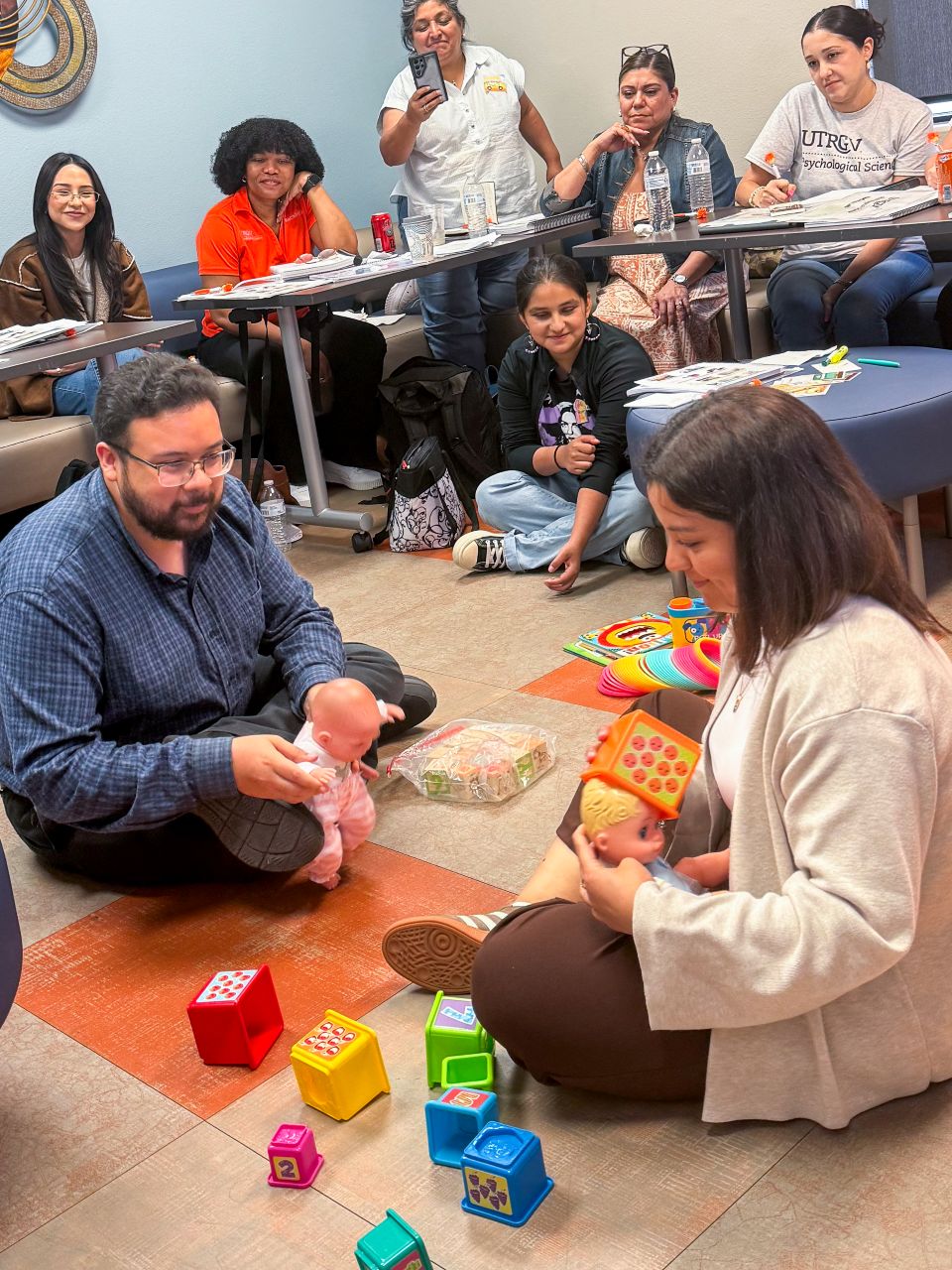
CST teaches parents and caregivers practical, everyday strategies to support the communication, learning, and development of young children with autism or developmental delays by using play-based learning and daily routines at home.
The UTRGV Behavior and Child Development Lab (BeChilDLab) is home to the first Spanish-speaking site in the United States for the World Health Organization's CST program, developed with Autism Speaks. The lab is led by Dr. Cecilia Montiel-Nava, a bilingual clinical psychologist and WHO-certified Master Trainer.
“Samuel graduated high school with letters in ROTC and mariachi, and now attends college,” Vale shared at the training with the other attendees. “These CST workshops are crucial for parents when their child is at an early age to get them on a good path.”
UTRGV researchers plan to reach 400 families by March 2028 through a newly funded project that aims to learn from community members like Vale – and train them to share CST skills with other caregivers of children with autism or developmental concerns.
Vale said she is grateful, as a parent, that early childhood intervention is reaching more families, which will grow the local community support system in underserved areas.
“Parents who attend these sessions share whatever they learn. They'll tell someone else. Share their knowledge, share the wealth,” Vale said. “They’re touching so many people's lives with this.”
REACHING OUT TO THE COMMUNITY
Montiel-Nava and co-investigators Drs. Valeria Yllades, Maria Montenegro, Christelle Garza, and Valerie Neeley were awarded a $650,088 grant in June 2026 from the Texas Higher Education Coordinating Board through its Autism Grant Program.
The grant funded the project, "Comparative Delivery Model of Skills Training for Diverse Populations," which launched with a three-day training clinic July 20-22 in Edinburg.
The project’s goal is to prepare a local team of master trainers and facilitators who will bring CST’s free, evidence-based autism caregiver support to 400 families across the Rio Grande Valley over the next two years. Facilitators will include promotoras from the South Texas Promotoras Association – community health workers whom families across the Valley already know and trust.
“By training local promotoras rather than relying on outside specialists, the project builds long-term community capacity, so that support for Valley families can continue well beyond the life of the grant,” Montiel-Nava said.
CST facilitator training for the promotoras will take place in November. They will begin to lead parent/community groups in early 2027.
The project utilizes in-person, live over Zoom, and a self-paced online course to deliver the program and be able to reach families in largely rural areas.
Montiel-Nava said the parents’ involvement in the project is critical to elevate the standard of care in the Rio Grande Valley.
“It's such a beautiful thing to do work that has direct impacts on the people here – and have the members of the community be proud of contributing to the research,” she said. “We couldn't do it without the parents that trust us to walk with them on their path.”
“I CAN DO THIS”
Rocio Calderon, a mother of five children – three of whom are autistic – trained as a CST Master Trainer and was grateful to contribute her experience with CST to the study.
“They’re learning from our community, not just translating language. It shows a lot of respect for the families,” said Calderon, of Edinburg. “We’re like any other family. We just do things differently. We’ve learned to have joyful moments.”
Calderon said she appreciated that the CST program emphasized accepting each child as a whole person and celebrating their strengths. Centering play and creativity helped deepen the family’s connection in ways she previously thought impossible.
“They’re learning while they play, but more importantly – it made me feel like I was allowing my kids to be kids,” she said.
Calderon said modeling the program’s fundamental tools for parents – such as flexibility and self-regulating – empowers their child to do the same.
“Your child is watching everything you do,” Calderon said. “They’re right there with you, learning to say, “I can do this.”
Montiel-Nava encourages caregivers of children ages 2–9 with autism or developmental concerns to reach out to the lab to participate in the free, evidence-based program.
No diagnosis is required to take part. For questions or to schedule an appointment contact bechildlab@utrgv.edu.
UTRGV — The Valley’s University
The University of Texas Rio Grande Valley is The Valley’s University, deeply rooted in the communities it serves and committed to improving lives and expanding opportunities across the region. From keeping a high-quality education affordable and expanding healthcare services to preparing the workforce, advancing research, and supporting economic growth, UTRGV is putting its people, expertise and resources to work for the Rio Grande Valley. The Valley and UTRGV rise together, building a healthier, stronger and more prosperous region.