
Thursday, September 24, 2026
Health, Student Spotlight, Research, Around Campus
By Heriberto Perez–Zuñiga
RIO GRANDE VALLEY, TEXAS – SEPT. 24, 2026 – The future of medicine is shaped by the questions researchers are willing to ask and by the people determined to find better answers.
September marks Women in Medicine and Science Month, and for three UTRGV School of Medicine students, that pursuit has taken them into research laboratories, national training programs and scientific publications, where they are exploring some of the most complex challenges facing patients today.
Their work spans childhood obesity, cancer research and the biology of blood glucose regulation, but behind each project is a shared commitment to turning scientific discovery into better health outcomes for patients and communities.
Their experiences show how research can expand a medical student's understanding of disease while shaping the physicians they hope to become.
ADDRESSING RGV HEALTH CHALLENGES
As a child, Daniela Salinas de Alba underwent a medical evaluation after hitting her head, during which doctors discovered a mass in her brain. In a frightening moment for her family, she watched as the neurologist combined medical expertise with compassion while guiding her parents through the diagnosis.
That experience stayed with her, and it planted the idea of the kind of physician she wanted to become, one who understands that medicine requires both scientific knowledge and a genuine connection with the people behind each diagnosis.
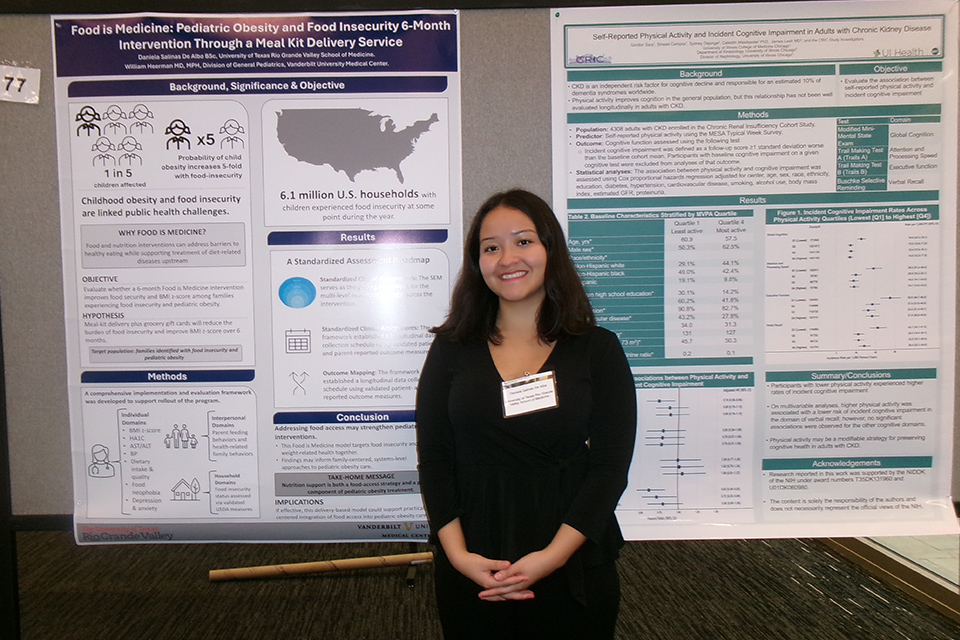
Years later, that idea took shape at Vanderbilt University, where Salinas de Alba, a Luminary Scholar and second-year UTRGV School of Medicine student from McAllen, spent two months this summer conducting public health research on pediatric obesity and food insecurity.
Salinas de Alba was selected through a competitive process for the 2026 Medical Student Research Training Program in Diabetes, Digestive Disease and Kidney Disease at Vanderbilt University School of Medicine. Funded by the National Institutes of Health, the program provides medical students with an intensive summer research experience under the mentorship of established scientists.
As part of the research team, she helped build the evaluation process for a six-month meal-kit delivery intervention designed for families experiencing both challenges at once, conditions that are often connected in communities where poverty limits access to nutritious food and, in turn, shapes long-term health outcomes.
"In the Valley, we have one of the highest rates of obesity and diabetes," Salinas de Alba said. "I'm interested in primary care, and I wanted to do research that would help me better understand the population that we're in."
For Salinas de Alba, the significance of the work goes beyond obesity alone.
The overlap between food insecurity and poverty gave her a chance to examine the circumstances shaping a child's health and consider ways to address more than one problem at the same time.
"The Valley has both obesity and also high rates of poverty," she said. "Understanding both and then trying to address both at the same time, I think, is super important."
The experience also put Salinas de Alba in the position of representing UTRGV and the Rio Grande Valley on a national stage. As the only student from Texas and the only participant from South Texas, she found herself introducing colleagues to a university and a region with which many were unfamiliar.
"I'm happy that I was able to put UTRGV on the map and show that we're an important school," she said. "The only reason I'm able to have all these opportunities is because of this institution."
PURSUING NEW ANSWERS IN CANCER
An interest in cancer research that began in high school has stayed with Nafiza Meher, a second-year UTRGV School of Medicine student from New York City, throughout her medical education.
This summer, that interest carried her into the competitive Penn State Research Training in Oncology and Medicine (PROMISE) Program, where she worked with Dr. Monika Joshi, endowed professor in Cancer Clinical Investigation at Penn State University, to analyze genetic data from clinical trials, deepening her understanding of the biological mechanisms behind cancer while strengthening her commitment to research that can ultimately improve patient care.
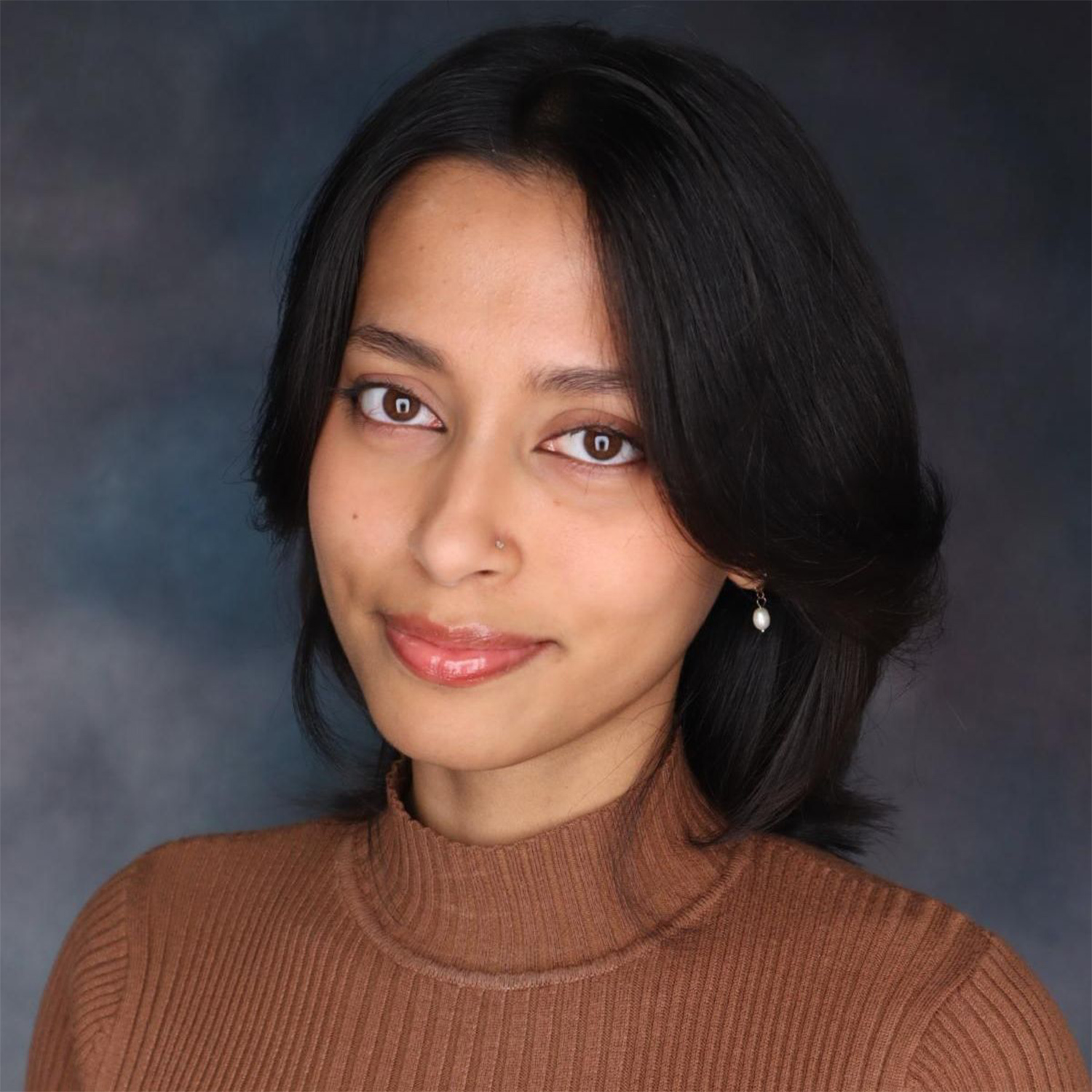
"I have been working within the field of cancer research since high school," Meher said. "My fascination with the biology of tumor suppressors and oncogenetic, the study of the genetic basis of cancer, transformation has led me to pursue a career in it."
But Meher doesn't measure the future of cancer medicine by scientific advances alone. She is equally focused on the public health barriers that keep patients from benefiting from those advances, including access to cancer screenings and health literacy in underserved communities.
Growing up in an immigrant community, Meher watched her family rely on the only Bengali-speaking physician nearby, and she often served as her parents' translator during visits to specialists outside that community. As she got older, she realized she was helping her parents navigate a health care system and ask questions they didn't know how to ask.
"I'm inspired to be a physician who provides that empathy and serves as a bridge for those who feel vulnerable in a doctor's office," Meher said. "I want to become an oncologist who ensures high-level scientific advancement is matched by a commitment to patient autonomy and regional health equity."
THE GUT-GLUCOSE CONNECTION
Long before she considered medicine, Astrid-Ines Foamkom, a third-year UTRGV School of Medicine student from Katy, was captivated by science, a fascination that carried her through an undergraduate degree and a master's thesis in neuroscience.
That same scientific curiosity recently led her to a different kind of discovery.
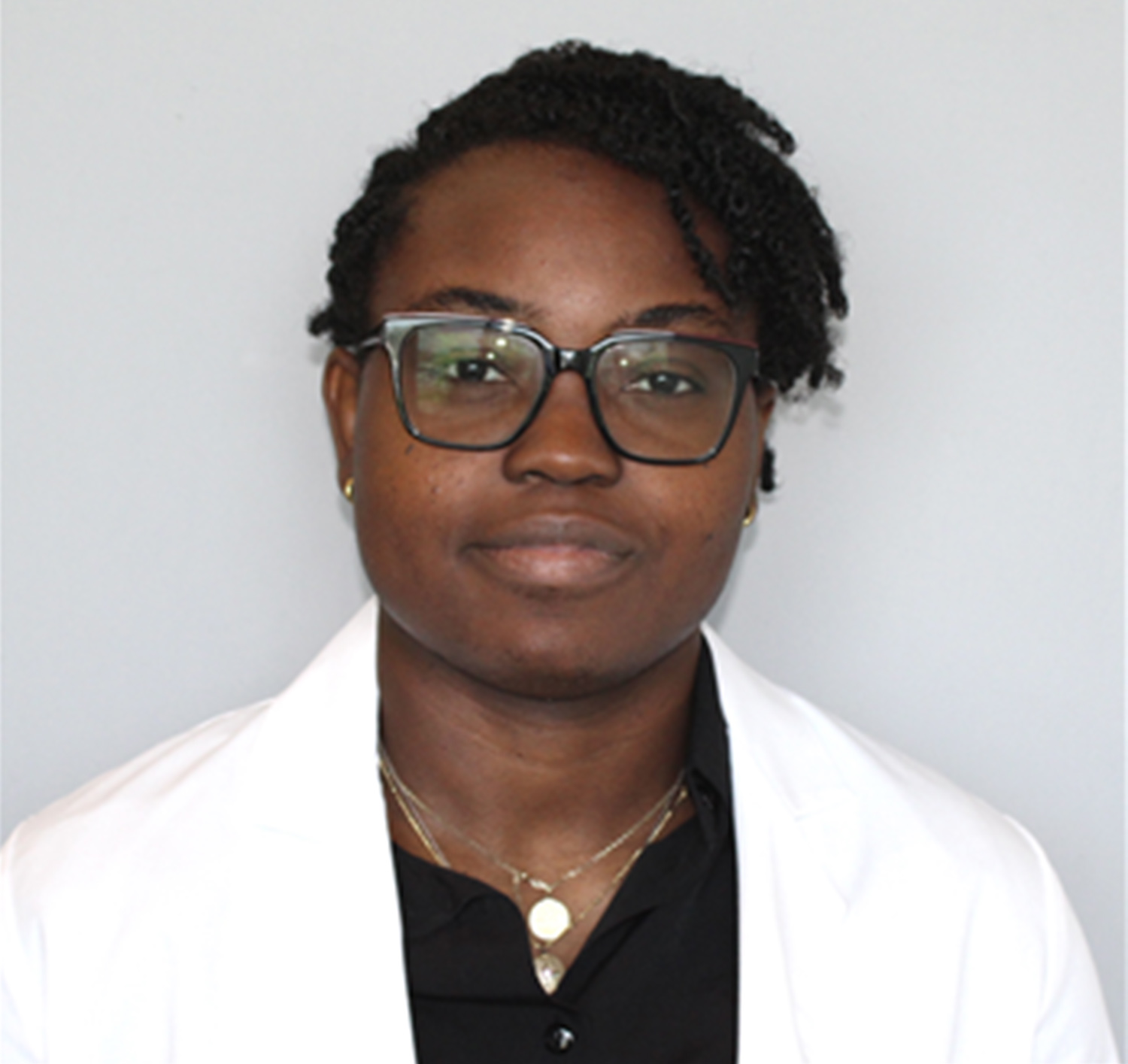
The article explores how calcium signaling may influence the release of glucagon-like peptide-1 (GLP-1), a hormone that plays a central role in regulating blood sugar and appetite.
That question carries particular weight in the Rio Grande Valley, where diabetes rates rank among the highest in the country and where more precise, effective treatment options could make a meaningful difference for thousands of patients.
For Foamkom, the value of research became clearer once she saw it in practice. She credits the hands-on experience and the opportunity to apply skills learned at the UTRGV School of Medicine in a clinical setting with reinforcing her appreciation for the connection between education, research and clinical medicine.
It also sharpened her broader sense of purpose and strengthened her goal of becoming a physician who advocates for patients who may feel unheard or hesitant to trust the medical system and who works to close the distance between science and the people it is meant to serve.
"When I think about quitting, I remind myself why I'm here and why I'm lucky to be here," she said. "I have promises to keep and people to look after. That's why I'm still here."
SHAPING THE FUTURE
The paths taken by Salinas de Alba, Meher and Foamkom are different, but together they show the many ways research can shape a physician's journey.
Their work also captures the broader purpose of academic medicine at the UTRGV School of Medicine, creating opportunities for students to ask questions, pursue discovery and connect what they learn in the classroom with the needs of the patients and communities they will eventually serve.
Dr. Everardo Cobos, dean of the UTRGV School of Medicine, said research plays a central role in shaping the kind of physicians the school aims to produce.
"Research is an important part of developing well-rounded physicians," said Cobos, "These students are learning to ask meaningful questions, pursue answers and think about how their work can ultimately make a difference for patients and communities."
UTRGV – THE FUTURE OF TEXAS
The University of Texas Rio Grande Valley is shaping The Future of Texas by delivering a high-quality, affordable university experience centered on student success, academic excellence, research, healthcare and community impact. With tuition among the lowest in Texas, UTRGV gives its 35,000 students the opportunities of a major university, including Division I athletics and a new football program, while delivering exceptional value for Texas families. The only university in Texas with schools of Medicine, Podiatric Medicine and Optometry, UTRGV serves South Texas across nine communities while driving innovation and developing the talent that will move Texas forward.