By Karen Villarreal
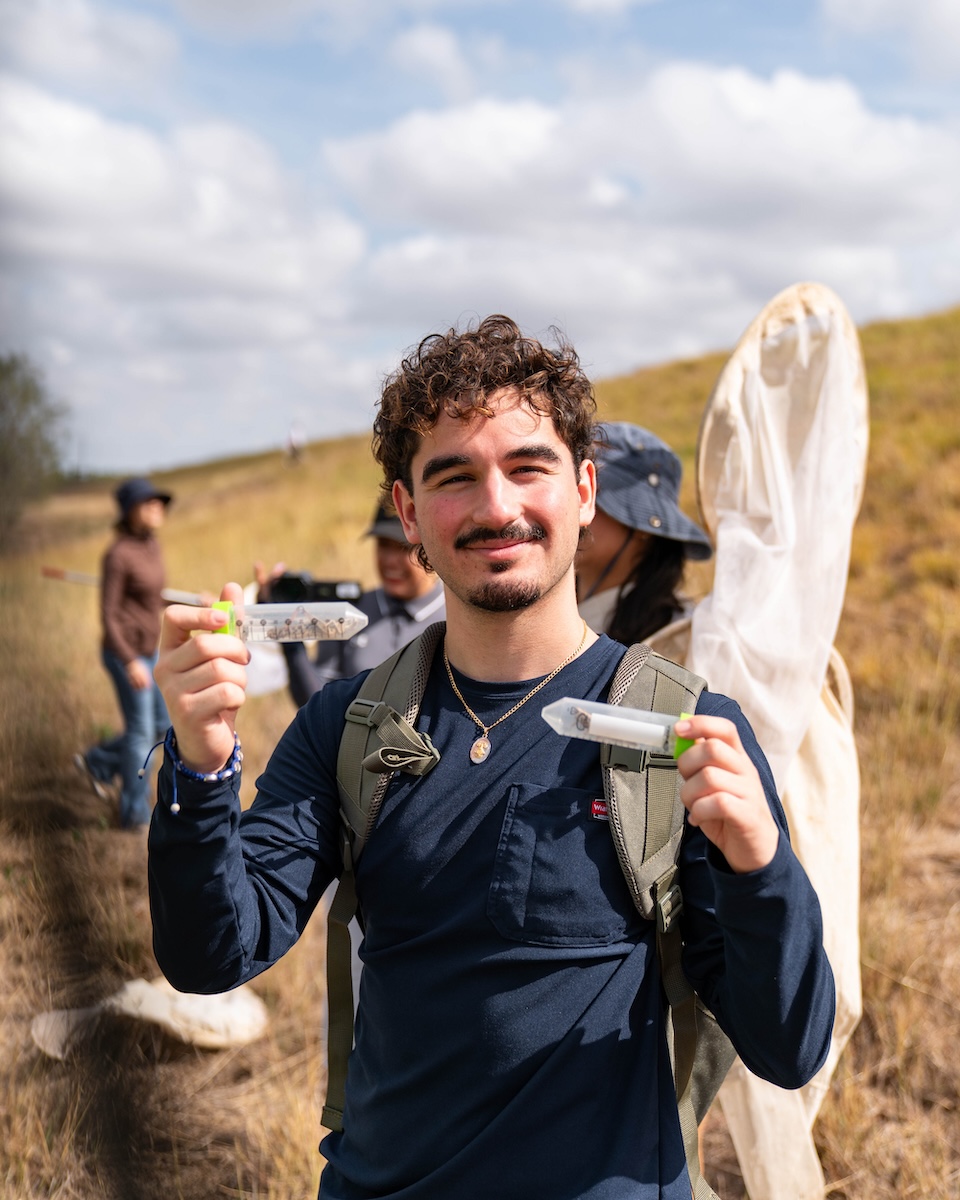
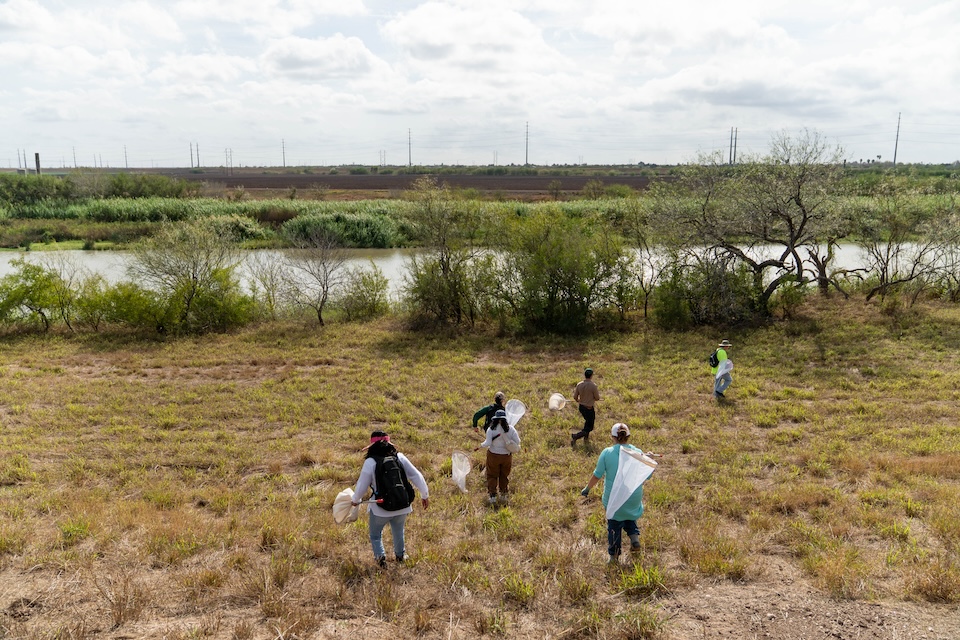
RIO GRANDE VALLEY, TEXAS – JULY 31, 2026 – With bug net in hand, UTRGV environmental science student Luis Salazar keeps his eyes peeled for insects hiding in the South Texas brush of Estero Llano Grande State Park.
A few yards away, Dr. Teresa Patricia Feria-Arroyo, his professor and director of the UTRGV School of Integrative Biological and Chemical Sciences, celebrates a capture by Dr. Gregory Sword, a Texas A&M University entomologist.
The two universities are collaborating on a federal agency’s research project to monitor one species’ movement and predict its future habitats – through a combination of field research, artificial intelligence mapping, and community outreach.
Salazar and his classmates rush over to see the specimen, asking the question driving their field work: “Is it a grasshopper or a locust?”
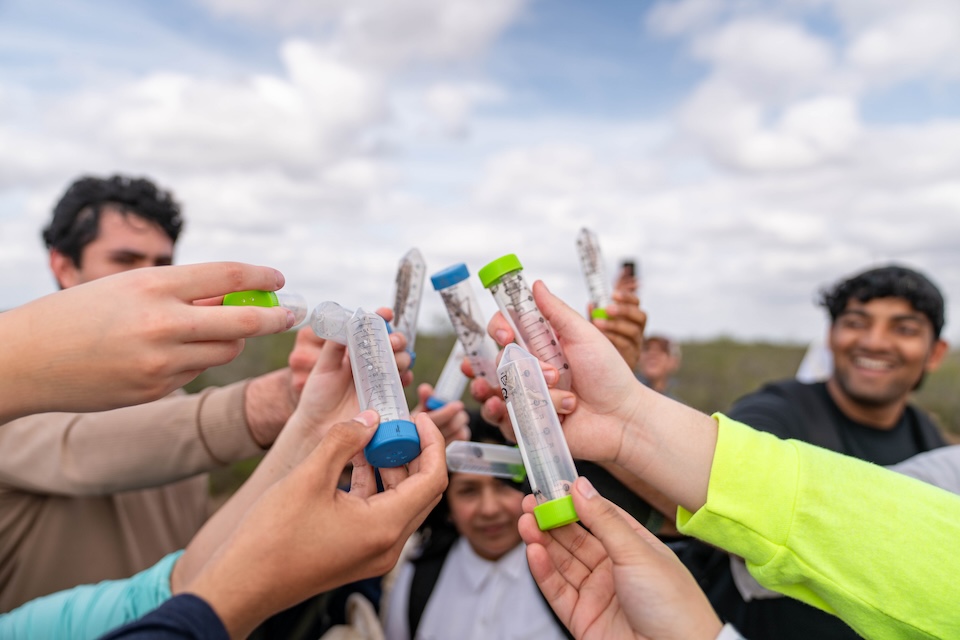
Each grasshopper the research team collects will be genetically analyzed to determine whether it is a local, non-swarming species – the Gray Bird or American Bird grasshopper – or if it has hybridized with the Central American Locust (CAL).
The CAL has been labeled as a national threat to agriculture in Mexico for its capacity for large-scale crop devastation. As recently as 2025, CAL swarms requiring management action have occurred in the Mexican states of Tamaulipas and Nuevo Leon.
Feria-Arroyo said the CAL could one day expand its range into the Rio Grande Valley and threaten one of the region’s most important industries: agricultural crops including cotton, sorghum, corn and sugarcane.
“But there’s a lot we can do to be prepared rather than scared,” Feria-Arroyo said.
She is one of two UTRGV researchers working with Texas A&M’s Sword on the U.S. Department of Agriculture's Animal and Plant Health Inspection Service (USDA-APHIS) project: “Community Engagement for Improved Monitoring of the Central American Locust in the Lower Rio Grande Valley.”
BUILDING A VALLEY-WIDE MONITORING NETWORK
Feria-Arroyo said that while APHIS are experts in preventing, detecting and controlling a potential plague, an informed community plays an important role in monitoring a species across the Rio Grande Valley.
“My lab has the experience to train ‘citizen scientists’ – local people who can contribute helpful data of where they saw a grasshopper to the South Texas Locust Watch’s online database,” she said. “UTRGV students can talk to the communities in non-technical words and take the message to different populations, who can help us build up the CAL-monitoring network.”
Each public report helps researchers identify potential sightings, guide additional field surveys and improve predictive models designed to safeguard South Texas agriculture.
“The more eyes looking for locusts in their backyards or private pastures, the better,” said Dr. Tyler Jay Raszick, a biological scientist from the USDA Insect Management and Molecular Diagnostics Laboratory in Edinburg who is leading the project.
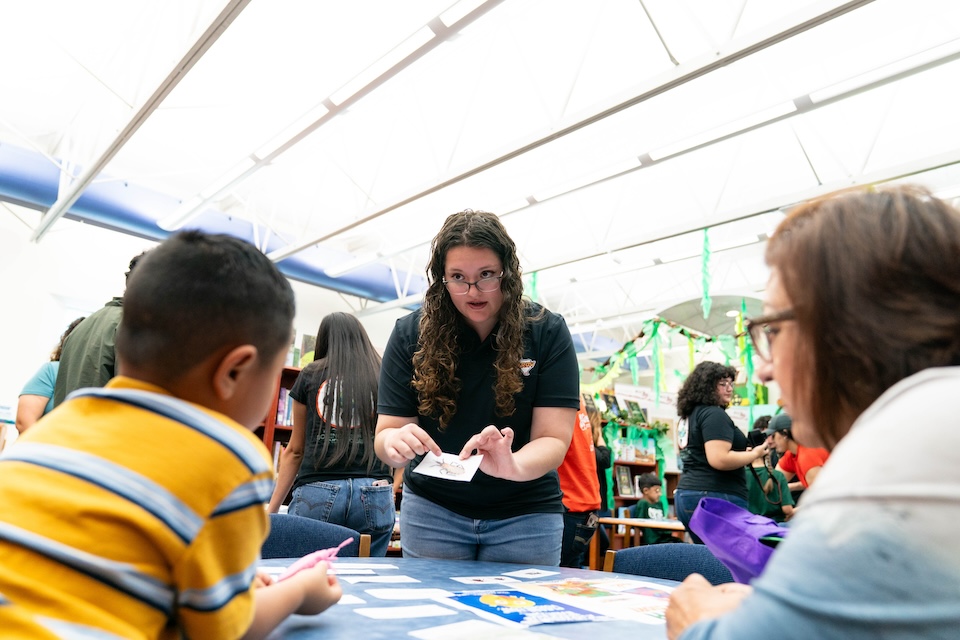
Salazar, community outreach director for the CAL project, helped develop bilingual educational materials for various audiences. He and other CAL students hosted English- and Spanish-speaking presentations during the summer to encourage “citizen scientists” of all ages to report possible sightings.
“We’re promoting to children and families that if they see the locust that they should take a picture and upload it with their cell phones,” Salazar said. “That’ll help us have that data to make our maps.”
USING AI TO PREDICT FUTURE THREATS
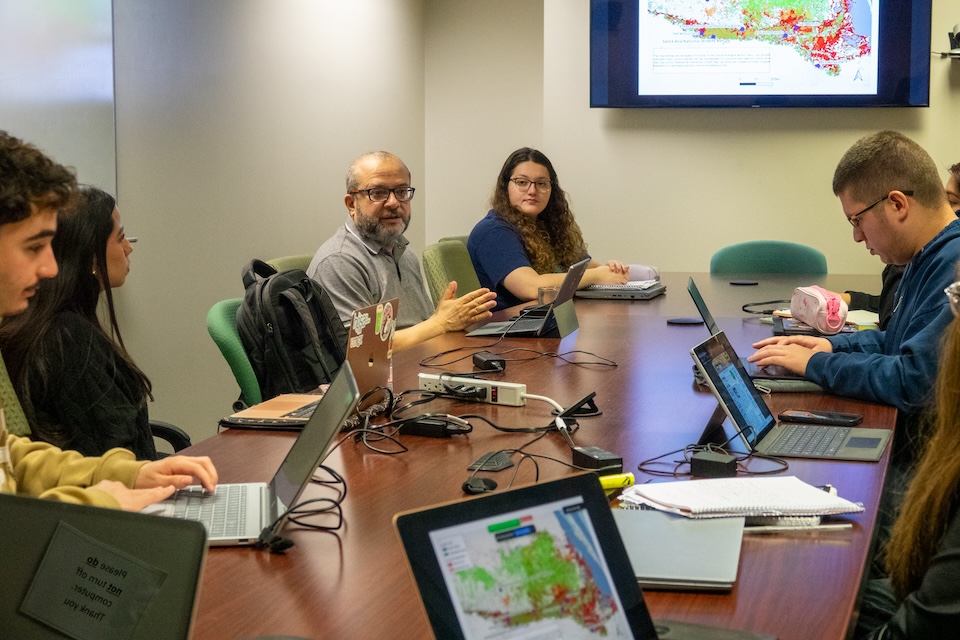
A key component of the project involves training students to use artificial intelligence to create ecological niche models, or maps that identify habitats that the locust finds suitable.
Working with co-PI Dr. Tamer Oraby, associate professor in the UTRGV School of Mathematical and Statistical Sciences, students analyze environmental data such as temperature, precipitation, humidity and vegetation to train an AI model that forecasts where the insect could migrate.
Oraby has applied statistical approaches to a range of real-world problems – like analyzing the presence of mosquitoes in McAllen and Reynosa, and modeling ecology and behavior around the spread of chronic wasting disease among deer in South Texas.
Feria-Arroyo said that once students learn to work with the citizen scientists to model one species, they can apply the same technique to solving other ecological problems.
“We learn from the community, too,” she said. “It's mutual empowerment to train the next generation of scientists to help against food security issues."
Raszick said there’s a large need for these skilled entomologists in the Rio Grande Valley.
“The AI aspect that the students are being trained in is the next level,” Raszick said. “We’re going to need that expertise.”
For Salazar and his classmates, every specimen collected, every AI model refined and every community presentation delivered brings South Texas one step closer to staying ahead of a potential agricultural threat.
HOW THE PUBLIC CAN HELP
Community members can support the project by joining South Texas Locust Watch.
If you spot a grasshopper that resembles the Central American Locust, take a photo, note the location and submit your observation through the online reporting database. Public reports help strengthen efforts to protect South Texas agriculture.
To learn more about the project, educational resources and how to get involved, visit http://www.utrgv.edu/ferialab/cal_project.
ABOUT UTRGV
Celebrating its 10th anniversary during the 2025-26 academic year, The University of Texas Rio Grande Valley is on a mission to serve the Rio Grande Valley and beyond via an innovative and unique education dedicated to student access and success. As one of the country’s largest Hispanic-Serving Institutions and Seal of Excelencia-certified university, UTRGV has earned national recognition for its academic excellence, social mobility, and student success since opening in fall 2015. Ranked among the Best Colleges for Your Tuition (and Tax) Dollars in 2025 by Washington Monthly (No. 7 nationally; No. 1 in Texas), UTRGV continues to break enrollment records, launch new academic and athletics programs, and progress toward achieving R1 research status. Additionally, UTRGV holds the Carnegie Community Engagement Classification, awarded in 2020 and 2025, reflecting its commitment to strengthening community ties and addressing local challenges.
The only university in Texas with schools of Medicine and Podiatric Medicine, UTRGV’s regional footprint spans South Texas — with locations, teaching sites, and centers established in Edinburg, Brownsville, Rio Grande City, McAllen, Weslaco, Harlingen, Laredo, Port Isabel and South Padre Island.