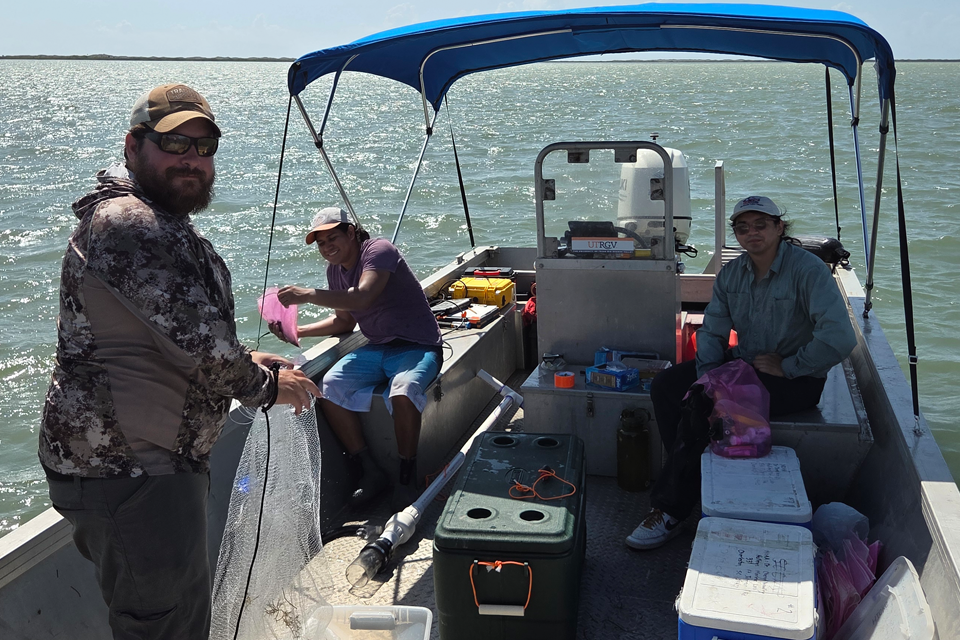
NOAA CCME II undergraduate scholars Jose Cisneros (left), Gaspar Najera (middle), and graduate scholar Emanuel Esparza (right), collect samples at South Bay near Boca Chica, Texas. (Courtesy Photo)

News Release | Success, Research
NOAA CCME II undergraduate scholars Jose Cisneros (left), Gaspar Najera (middle), and graduate scholar Emanuel Esparza (right), collect samples at South Bay near Boca Chica, Texas. (Courtesy Photo)
Thursday, February 26, 2026
Research, Science and Technology, Academics, Community
By Amanda Alaniz
RIO GRANDE VALLEY, TEXAS – FEB. 26, 2026 – The University of Texas Rio Grande Valley’s ongoing partnership with the National Oceanic and Atmospheric Administration (NOAA) Center for Coastal and Marine Ecosystems II (CCME-II) is creating hands-on research opportunities that prepare the next generation of coastal scientists.
Established in 2021 through the NOAA Educational Partnership Program, the CCME‑II is a Cooperative Science Center that builds on two decades of NOAA-CSC work with UTRGV, which joined the consortium in 2011 under legacy institution UT Brownsville.
CCME‑II connects UTRGV students and faculty with NOAA experts across the National Ocean Service, Oceanic and Atmospheric Research, the National Weather Service and other NOAA labs nationwide to conduct applied research on coastal ecosystem and community challenges and to train a qualified, NOAA-ready workforce.
“Environmental science is the future,” said Dr. Owen Temby, UTRGV School of Earth, Environmental and Marine Sciences (SEEMS) professor. “NOAA is the world’s leading organization that governs the place where the most exciting stuff happens – where the air meets the sea meets the land.
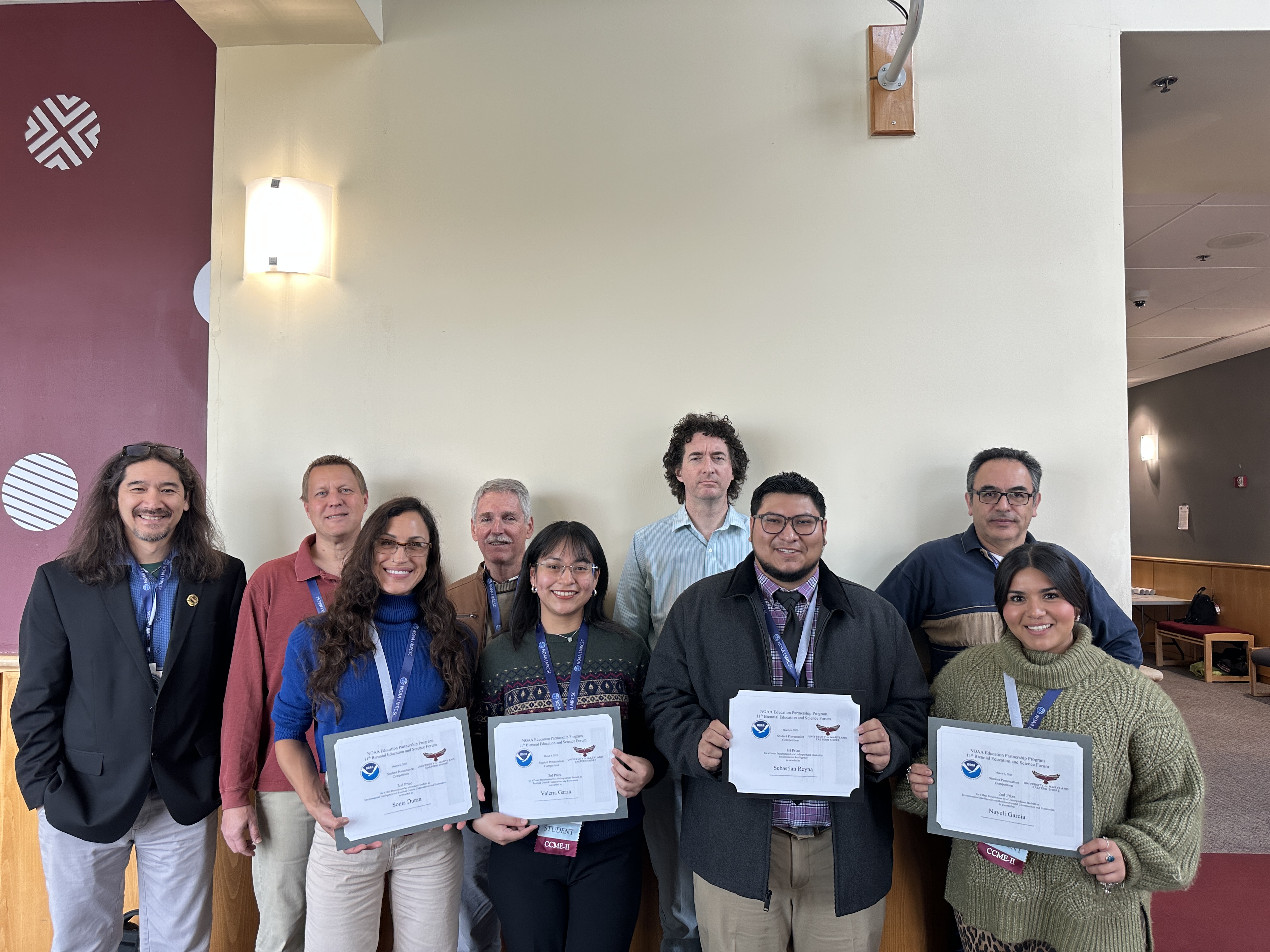
CCME-II research at UTRGV aligns with state priorities, such as aquaculture and managing healthy fisheries. UTRGV faculty collaborates with NOAA scientists and partner institutions to advance projects and train students.
The CCME-II team at UTRGV’s SEEMS includes:
The team is also supported by research associates, Leticia Contreras and Danielle Hewitt.
DEVELOPING FUTURE COASTAL SCIENTISTS
Since 2021, UTRGV has had 19 CCME-II scholars; currently seven graduate students and two undergraduates.
Students selected as CCME-II scholars receive full in-state tuition scholarships, monthly stipends, $8,000 in research supplies, professional development opportunities, travel support for national conferences and mentorship from NOAA scientists.
Graduate students may also undertake a 12-week NOAA Experiential Research and Training Opportunity (NERTO) at a NOAA laboratory, gaining applied experience, professional networking and potential employment pathways.
CCME-II program highlights at UTRGV include:
ALUMNI IMPACT
Dr. David Hicks, and principal investigator, said the program strengthens the NOAA-aligned workforce through research and education.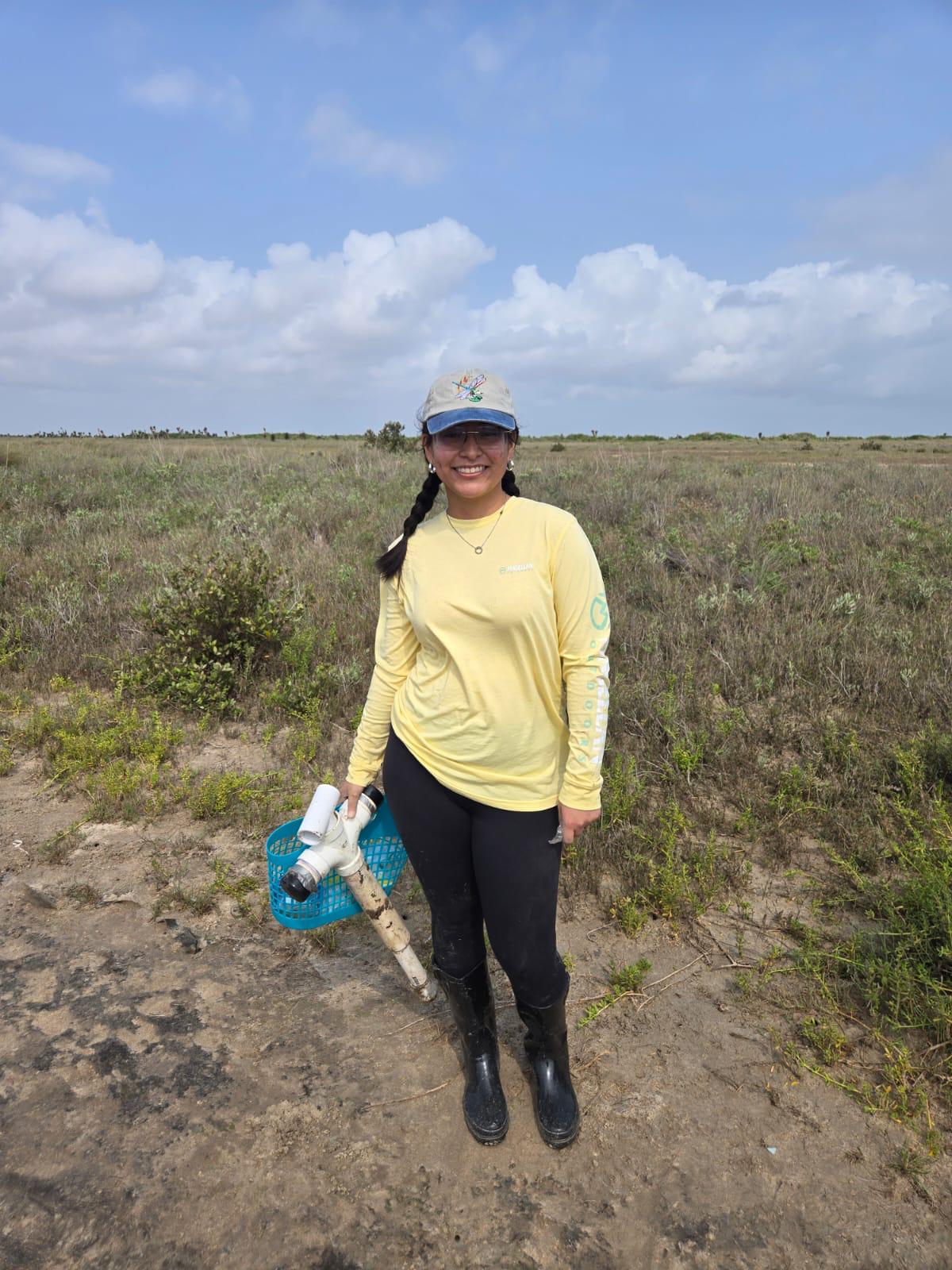 NOAA CCME II Scholar Valeria Garza (cohort 4) visits thesis research field site near Boca Chica State Park, Texas. (Courtesy Photo)
“CCME-II students at UTRGV gain training and experience in NOAA-specific competencies allowing them to be more competitive for NOAA-workforce positions,” he said.
Several CCME-II alumni are now working across the country:
This partnership has strengthened UTRGV’s research capacity and leveraged new opportunities, positioning UTRGV graduates to contribute to coastal resilience, sustainable fisheries and marine stewardship.
To learn more about UTRGV’s CCME-II, visit https://ccme.famu.edu/ws/ccme/about-us/partners/utrgv.html.
ABOUT UTRGV
Celebrating its 10th anniversary during the 2025-26 academic year, The University of Texas Rio Grande Valley is on a mission to serve the Rio Grande Valley and beyond via an innovative and unique education dedicated to student access and success. As one of the country’s largest Hispanic-Serving Institutions and Seal of Excelencia-certified university, UTRGV has earned national recognition for its academic excellence, social mobility, and student success since opening in fall 2015. Ranked among the Best Colleges for Your Tuition (and Tax) Dollars in 2025 by Washington Monthly (No. 7 nationally; No. 1 in Texas), UTRGV continues to break enrollment records, launch new academic and athletics programs, and progress toward achieving R1 research status. Additionally, UTRGV holds the Carnegie Community Engagement Classification, awarded in 2020 and 2025, reflecting its commitment to strengthening community ties and addressing local challenges.
The only university in Texas with schools of Medicine and Podiatric Medicine, UTRGV’s regional footprint spans South Texas — with locations, teaching sites, and centers established in Edinburg, Brownsville, Rio Grande City, McAllen, Weslaco, Harlingen, Laredo, Port Isabel and South Padre Island.