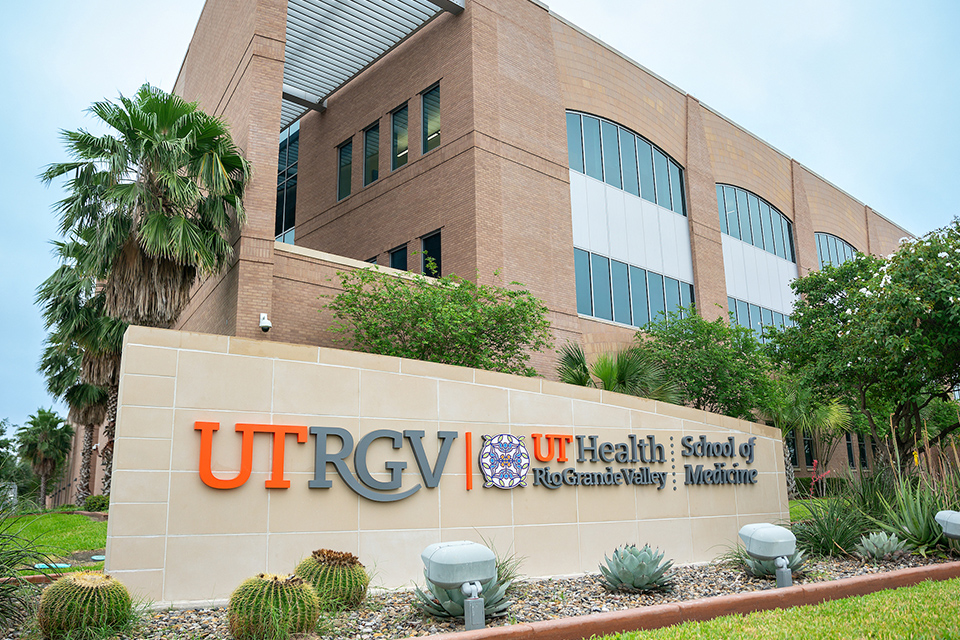
February is American Heart Month, and residents at the UTRGV School of Medicine are transforming their observations into research focused on heart failure care. (UTRGV Archival Photo by David Pike)

News Release | Health
February is American Heart Month, and residents at the UTRGV School of Medicine are transforming their observations into research focused on heart failure care. (UTRGV Archival Photo by David Pike)
Thursday, February 19, 2026
Health, Research
By Heriberto Perez–Zuñiga
RIO GRANDE VALLEY, TEXAS – FEB. 19, 2026 – In the Rio Grande Valley, heart disease is a reality many families know all too well.
A relative who tires more easily than before, a parent managing medications and a loved one returning to the hospital sooner than expected are all stories that have become familiar to many Valley families.
Inside hospitals across the Valley, residents from the UTRGV School of Medicine’s Graduate Medical Education (GME) program witness these stories daily.
For some, what they observe at the bedside becomes the start of something more, sparking questions that lead them into research aimed at changing these narratives for the future.
February marks American Heart Month, a time to raise awareness about cardiovascular health and the steps families can take to protect it. 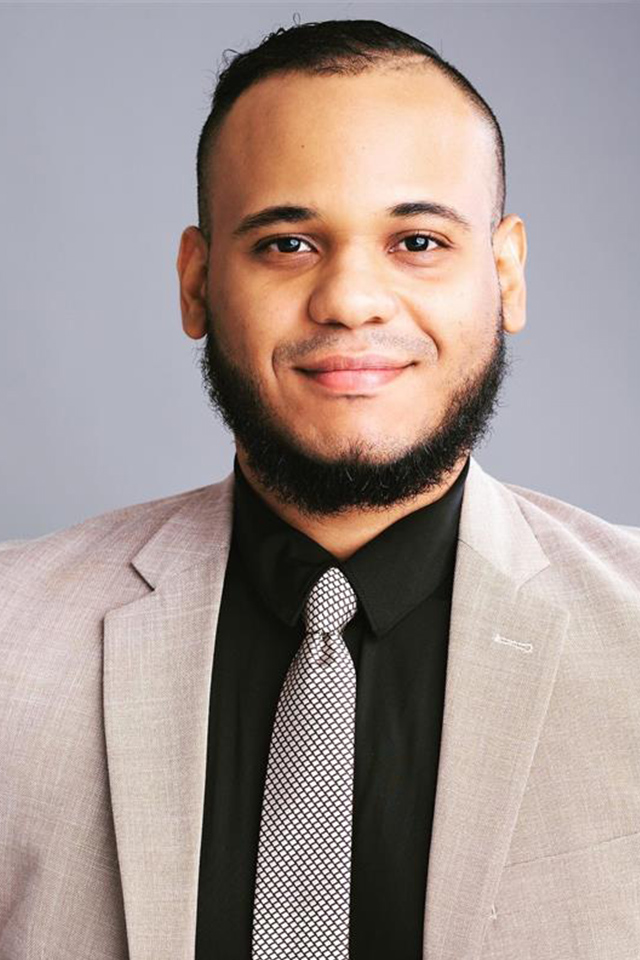 Dr. Osiris Fernandez, PGY-3 chief resident in the UTRGV School of Medicine Internal Medicine Residency at Valley Baptist Medical Center, says his experiences growing up in the Dominican Republic shaped his desire to serve underserved communities. Today, he brings that perspective to his work caring for patients in the Rio Grande Valley. (Courtesy Photo)
At the UTRGV School of Medicine, residents are channeling their observations into research focused on heart failure care, improved follow-up and helping patients maintain their health at home. Dr. Fatimah Bello, associate dean of Graduate Medical Education and designated institutional official (DIO) at the UTRGV School of Medicine, said that curiosity is essential to becoming a physician.
"Research allows our residents to ask how we can do better for the patients we serve," she said. "When that research is grounded in the needs of our community, it becomes especially powerful."
CARE BEYOND THE HOSPITAL
For Dr. Osiris Fernandez, PGY-3 chief resident at the UTRGV School of Medicine Internal Medicine Residency at Valley Baptist Medical Center in Harlingen, heart failure care extends beyond hospital walls.
He has cared for many patients who stabilize in the hospital, only to struggle once they return home – often because navigating follow-up care can be challenging. These experiences led him to investigate what happens after a patient leaves the hospital.
One of his research projects focuses on improving the transition from hospital to home for heart failure patients. By using structured discharge checklists and a mobile app that helps patients track medications and symptoms, the initiative supports patients during one of the most vulnerable points in their care.
"My research aims to directly improve heart failure outcomes in the Rio Grande Valley by addressing gaps in care," Fernandez said.
"Empowering residents with practical tools and supporting patients with accessible, app-based guidance allows us to reduce preventable readmissions and improve continuity of care in a region with limited access to cardiology follow-up."
Fernandez is also leading an educational quality improvement project aimed at enhancing ECG (electrocardiogram) and arrhythmia interpretation among medical trainees. The initiative includes lectures and case-based modules for residents and medical students to review arrhythmias, ischemia and conduction blocks – all vital for recognizing cardiac issues early.
His motivation for this work goes back to his childhood. Growing up in the Dominican Republic, he saw how limited access to care and delayed treatment shaped health outcomes in underserved communities.
"These experiences made me acutely aware of how profoundly circumstances beyond biology influence health outcomes, instilling in me a strong desire to help bridge those gaps, " he said.
At the UTRGV School of Medicine, he found a training environment aligned with his calling. He believes the hands-on training provided has taught him to think beyond a diagnosis and consider the realities patients face outside the clinic. 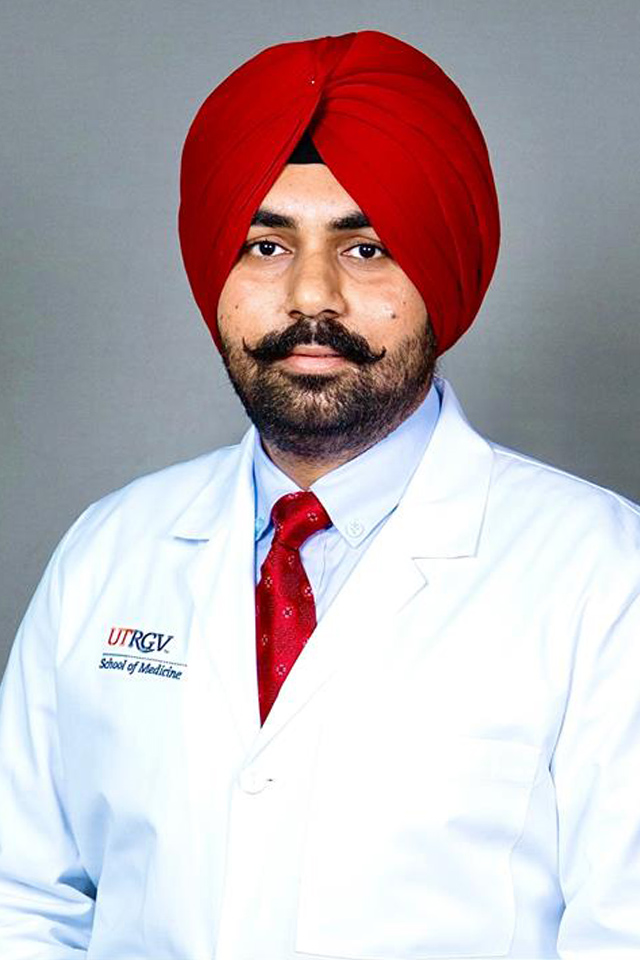 Dr. Ripudaman Singh, PGY-2 resident in the UTRGV School of Medicine Internal Medicine Residency at Knapp Medical Center, says his path to medicine was inspired by the value of “seva,” or selfless service, and by watching his mother work as a nurse. Those lessons continue to guide his care for patients in the Valley. (Courtesy Photo)
ANOTHER WAY TO SERVE
Dr. Ripudaman Singh, a PGY-2 resident at the UTRGV Internal Medicine Residency at Knapp Medical Center in Weslaco, has also seen how heart failure can disrupt patients' lives.
Many of the patients he treats manage multiple conditions, medications and follow-up appointments, often while balancing work and family responsibilities.
His research aims to improve outpatient follow-up and help patients stay engaged in their care after discharge. The goal is to reduce preventable readmissions and make heart failure care more manageable outside the inpatient setting.
"I see how often patients want to do the right thing for their health but face obstacles," Singh said. "Improving follow-up can make a meaningful difference."
Singh's motivation to pursue medicine is rooted in the principle of seva, or selfless service – a value he learned from his faith and his mother, a nurse. Her example left a lasting impression on him.
"Her lifelong dedication to patient care continues to guide and motivate me," he said.
He appreciates the supportive environment at UTRGV, which has fostered his personal and professional growth. When his first child was born during his intern year, he felt that support firsthand.
"My program showed incredible understanding during that time," Singh said. "It felt like being part of a family."
Across the UTRGV School of Medicine, leaders affirm that resident-driven research plays a vital role in improving care in the community.
"Each project, each chart review and each patient conversation contributes to a larger effort to understand what the Valley needs most," Bello said.
"Their work may begin with data, but the people behind the numbers shape it – Valley residents whose stories continue to guide their questions and drive their purpose."
For medical residents like Fernandez and Singh, research represents another avenue for service.
To learn more about the UTRGV School of Medicine, visit www.utrgv.edu/school-of-medicine.
ABOUT UTRGV
Celebrating its 10th anniversary during the 2025-26 academic year, The University of Texas Rio Grande Valley is on a mission to serve the Rio Grande Valley and beyond via an innovative and unique education dedicated to student access and success. As one of the country’s largest Hispanic-Serving Institutions and Seal of Excelencia-certified university, UTRGV has earned national recognition for its academic excellence, social mobility, and student success since opening in fall 2015. Ranked among the Best Colleges for Your Tuition (and Tax) Dollars in 2025 by Washington Monthly (No. 7 nationally; No. 1 in Texas), UTRGV continues to break enrollment records, launch new academic and athletics programs, and progress toward achieving R1 research status. Additionally, UTRGV holds the Carnegie Community Engagement Classification, awarded in 2020 and 2025, reflecting its commitment to strengthening community ties and addressing local challenges.
The only university in Texas with schools of Medicine and Podiatric Medicine, UTRGV’s regional footprint spans South Texas — with locations, teaching sites, and centers established in Edinburg, Brownsville, Rio Grande City, McAllen, Weslaco, Harlingen, Laredo, Port Isabel and South Padre Island.