By Karen Villarreal
RIO GRANDE VALLEY, TEXAS – FEB. 4, 2026 – The statistics are cause for serious concern.
In 2024 in Hidalgo County alone, there were 656 sexual assaults, rapes and human trafficking offenses.
That same year just in McAllen, 50 rapes were reported. Approximately half of those victims were minors.
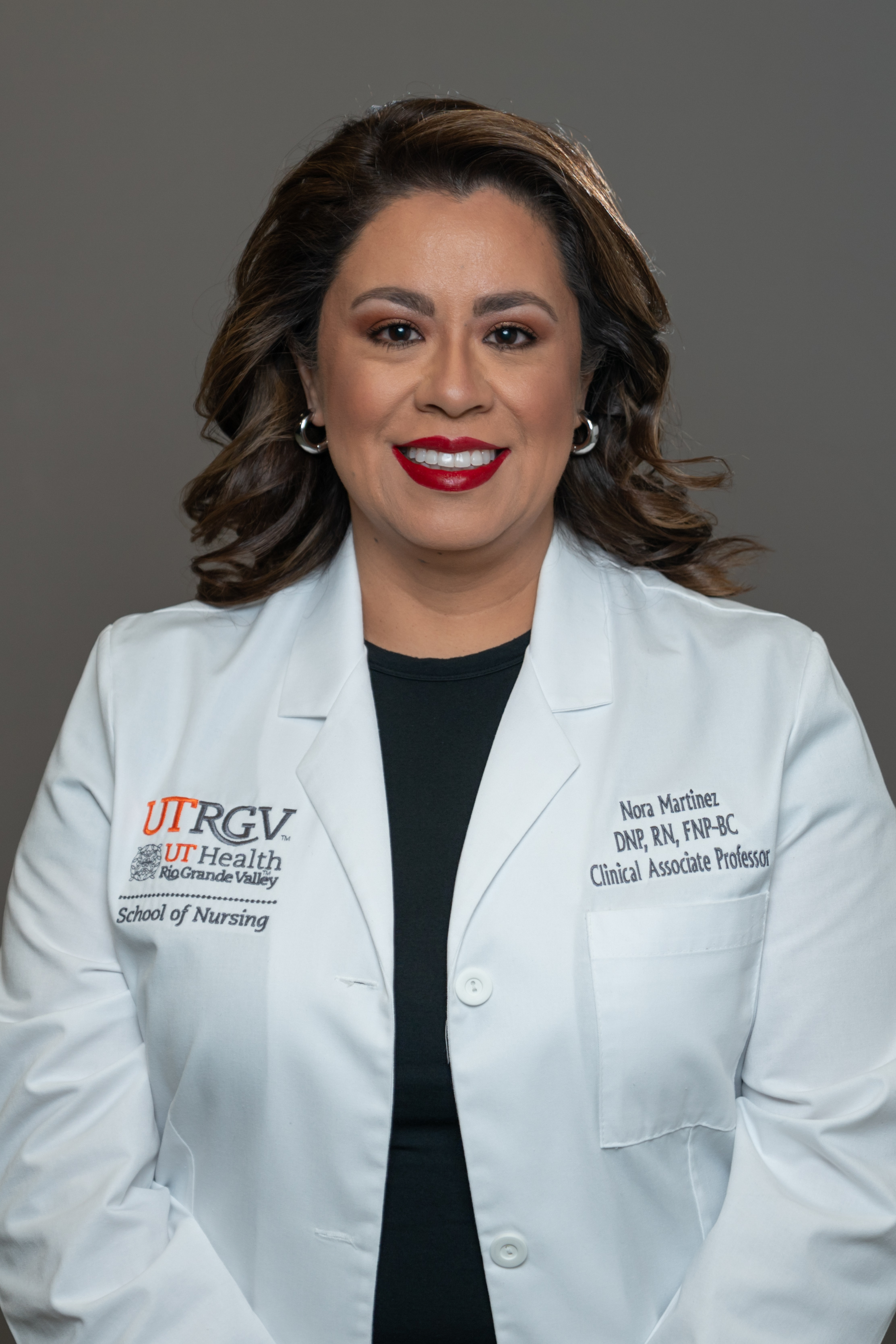
“One sexual assault is one too many. I get emotional thinking about it – as a woman, as a mom, and as a nurse,” said Dr. Nora Martinez, UTRGV clinical associate professor and program coordinator for the BSN program at the university.
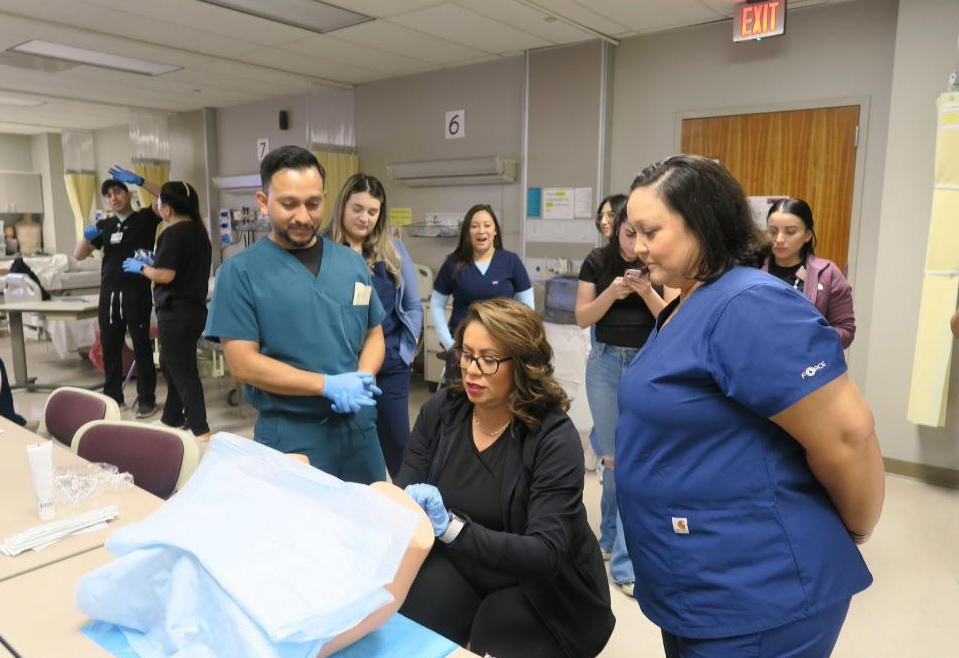
To help address the growing problem of sexual assault, Martinez recently completed a training program in forensic nursing for victims of sexual assault, known as SANE.
“We shouldn't need a Sexual Assault Nurse Examiner – ever,” she said. “But unfortunately, we do.”
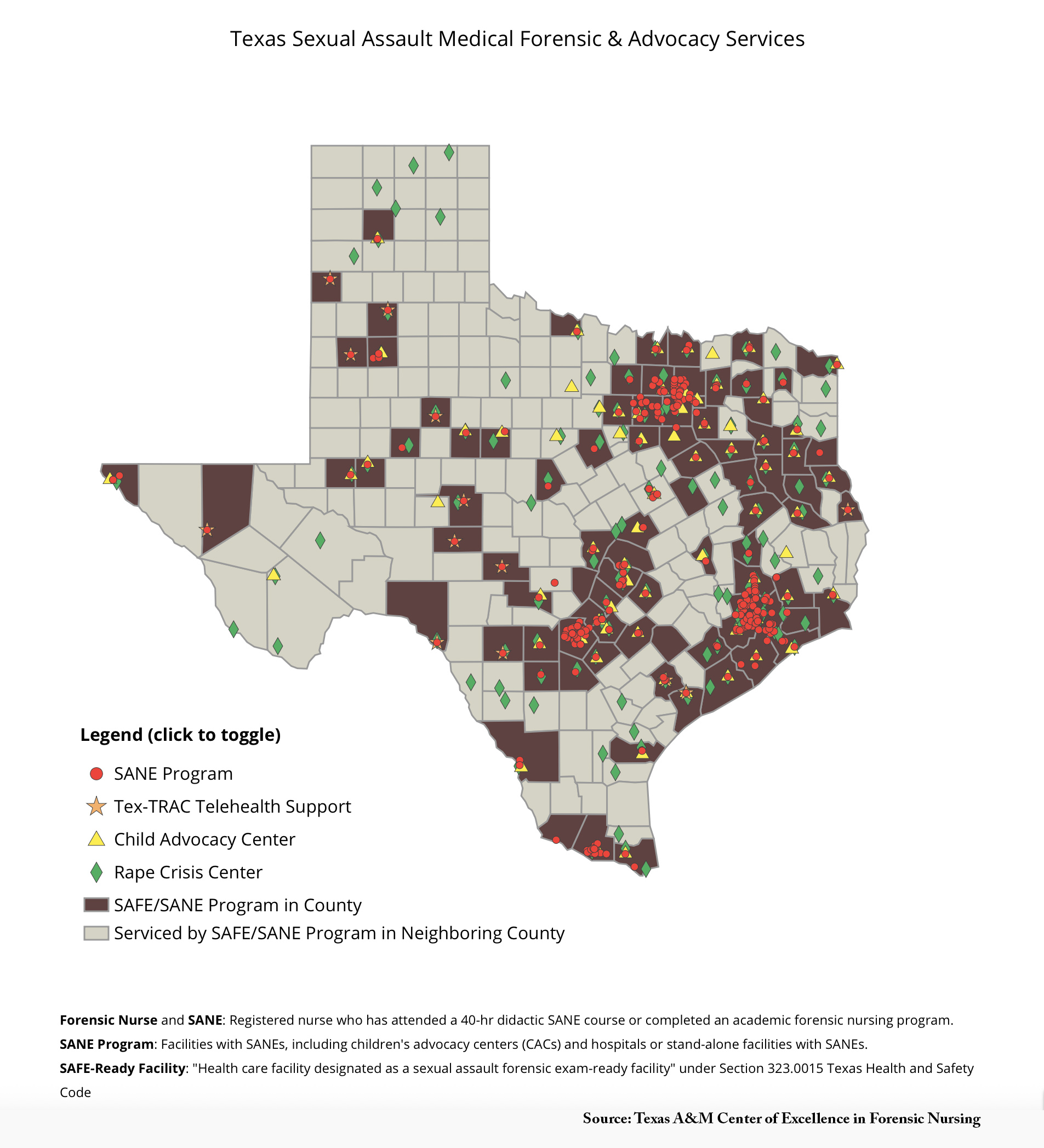
Martinez joins a small number of nurses across Texas who can perform the two- to three-hour evidence-gathering examinations on victims of sexual assault or human trafficking, and who can testify in court to what they saw and documented. From 2019 to today, thanks to training programs like the one Martinez completed, SANE availability has doubled across the state, from presence in only 16% of Texas counties to 35%.
With her SANE certification, she can provide evidence critical to helping police find and prosecute perpetrators.
In the Valley, Doctor's Hospital at Renaissance’s forensic exam center, known as Safe H.A.V.E.N. (Helping All Violent Encounters Now), was based only in Edinburg until they opened a second location in Brownsville in 2025.
“All patients who need a SANE are transferred there,” Martinez said. “That doesn't help a patient, one who has decided to seek help, to be told to go elsewhere to repeat their story all over again. It just adds to their trauma.”
Deciding she wanted to be among those who can help, Martinez sought out the 10-week training program from the Office of the Attorney General (OAG), which she started in July. It was followed by several hours of court observation, and 15 forensic clinical examinations on patients under the observation of a SANE preceptor.
From September to January, Martinez traveled between the Rio Grande Valley and Laredo for training at the Texas A&M Health Center of Excellence in Forensic Nursing, and Driscoll Children's Hospital in Corpus Christi for the required exams.
It was worth it, Martinez said, because now she can give local patients a little bit of comfort while they're going through what can be a traumatic procedure.
“It's very detailed, precise and methodical – but I'm not some cold, robot person that doesn't have any feelings about what just transpired to them,” Martinez said. “They need support throughout this vulnerable time, and I want the person I'll be serving to know that I care.”
EXTENDING COMPASSIONATE NURSING
Martinez is well aware that performing these exams are emotionally taxing, but part of nursing is learning how to take care of yourself to ensure compassion and composure while caring for others, she said.
“I've always taken pride in my bedside rapport and I've felt very compelled to do what's best for the patient,” Martinez said. “Sometimes, what's best is just to sit and listen and offer them compassion.”
Now ready to provide SANE services wherever needed, she hopes to make an impact by encouraging other nurses in the area to complete the training.
“Any nurse that feels a passion and feels like they can do this, they should,” she said. “The State of Texas and the Office of Attorney General are providing specialized trainings and getting more nurses certified.”
She already has successfully recruited fellow UTRGV nursing faculty Tania Morales, who is in the advanced training stage of the program and will be SANE certified in July.
“We’re very proud of our faculty who take it upon themselves to grow in their capacity to care – especially for vulnerable populations,” said Dr. Lilia Fuentes, dean of the School of Nursing. “These are exemplary nurses who set a beautiful example for our students.”
Martinez is also looking into ways to make SANE training accessible for more nurses in the Valley, like seeking a grant for UTRGV similar to the one that the Texas A&M Health Center of Excellence in Forensic Nursing received from the Health Resources and Services Administration (HRSA).
“The goal for us is to educate more nurses of our own community without them having to travel to Laredo or College Station,” Martinez said. “Most of us work and have family responsibilities, so if we can bring that training here, we could get more people certified and hopefully make the service available to more of our community.”
ABOUT UTRGV
Celebrating its 10th anniversary during the 2025-26 academic year, The University of Texas Rio Grande Valley is on a mission to serve the Rio Grande Valley and beyond via an innovative and unique education dedicated to student access and success. As one of the country’s largest Hispanic-Serving Institutions and Seal of Excelencia-certified university, UTRGV has earned national recognition for its academic excellence, social mobility, and student success since opening in fall 2015. Ranked among the Best Colleges for Your Tuition (and Tax) Dollars in 2025 by Washington Monthly (No. 7 nationally; No. 1 in Texas), UTRGV continues to break enrollment records, launch new academic and athletics programs, and progress toward achieving R1 research status. Additionally, UTRGV holds the Carnegie Community Engagement Classification, awarded in 2020 and 2025, reflecting its commitment to strengthening community ties and addressing local challenges.
The only university in Texas with schools of Medicine and Podiatric Medicine, UTRGV’s regional footprint spans South Texas — with locations, teaching sites, and centers established in Edinburg, Brownsville, Rio Grande City, McAllen, Weslaco, Harlingen, Laredo, Port Isabel and South Padre Island.