By Heriberto Perez–Zuñiga
RIO GRANDE VALLEY, TEXAS – FEB. 3, 2026 – If "I feel fine" is the reason you've skipped the doctor lately, you're not alone.
For many people, simply feeling healthy is enough to put off routine checkups. When there's no pain, no apparent symptoms, and life gets busy, scheduling a doctor's visit can easily fall to the bottom of the list.
But just because nothing feels wrong doesn't always mean everything is.
February is National Self-Check Month, and Dr. Daniela Hernandez, an internal medicine doctor at UT Health RGV, encourages residents across the Rio Grande Valley to make routine self-checks and annual wellness visits a habit, especially before minor, silent issues turn into long-term health problems.
"Many conditions don't cause symptoms right away," Hernandez said. "You can feel completely fine and still have high blood pressure or elevated blood sugar. That's why checking in with your doctor at least once a year is so important."
MAKE SELF-CHECKS A ROUTINE
Self-checks don't require medical equipment or a deep dive into medical websites or textbooks. Hernandez said they begin with paying attention to everyday changes and not ignoring them.
Feeling more tired than usual, experiencing frequent headaches, dizziness or noticing unexpected weight changes are all signs worth paying attention to.
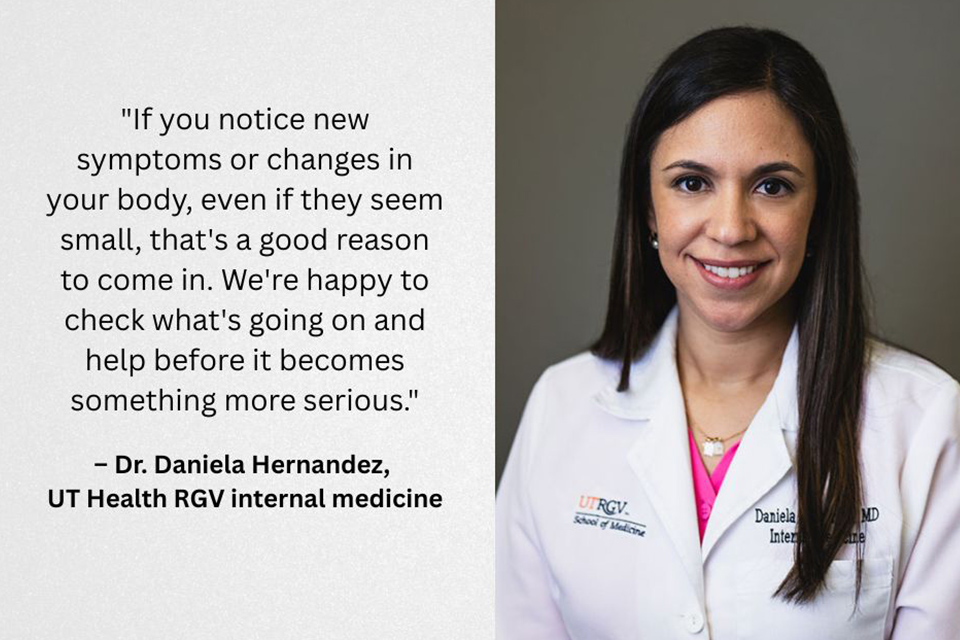
"If you notice new symptoms or changes in your body, even if they seem small, that's a good reason to come in," Hernandez said. "We're happy to check what's going on and help before it becomes something more serious."
Regular checkups also involve monitoring key health metrics such as blood pressure and blood glucose levels, which many people overlook when they're abnormal.
"High blood pressure is one of those conditions that often has no symptoms," she said. "But over time, it can increase your risk for heart disease, stroke, kidney disease and even dementia if it's not controlled."
According to the Centers for Disease Control and Prevention, nearly half of adults in the United States have high blood pressure, and many don't even know it.
This makes routine screenings and self-checks an important first step in prevention.
Hernandez said that blood sugar is another important metric to monitor.
"Poorly controlled blood glucose over time can damage the kidneys, nerves, eyesight and increase the risk for cardiovascular disease," she said.
WELLNESS MINDSET
One of the most common reasons people avoid the doctor is simple: they feel healthy.
In the Rio Grande Valley, that mindset often manifests in the familiar phrase "no pasa nada" [nothing's wrong]. If nothing hurts and life continues, it's easy to assume there's no reason to check in.
However, Hernandez emphasized annual wellness visits remain important, even for those with no obvious symptoms.
"We follow national screening guidelines that recommend routine checkups, especially for adults over 35," she said. "But here in the Rio Grande Valley, we often see chronic conditions like diabetes and high blood pressure start earlier."
Annual visits allow providers to screen for these conditions early, before complications develop.
"Checking your blood pressure, screening for diabetes and addressing lifestyle factors early can significantly improve long-term outcomes," Hernandez said.
These visits are also an opportunity to stay on track with recommended cancer screenings. According to the National Cancer Institute, cervical cancer screening should begin at age 21 for women, while average-risk women are advised to start breast cancer screening at age 40.
For average-risk men, colorectal cancer screening is recommended beginning at age 45. Hernandez notes that these preventive screenings can help detect cancer early, often before symptoms appear, when treatment options are most effective.
FEELING HEALTHY, STAYING HEALTHY
Catching potential issues early is one part of the picture. The other, Hernandez said, is what happens between doctor visits.
She encourages patients to focus on small, consistent habits that support overall wellness. These habits include:
- Getting at least 150 minutes of physical activity each week – about 30 minutes of exercise a day.
- Eating a balanced diet rich in vegetables, fruits and protein.
- Limiting sugary and processed foods.
- Staying hydrated.
- Prioritizing sleep.
"Sleep is very important," she said. "Good sleep, regular exercise and healthy eating all work together to help control blood pressure and reduce cardiovascular risk."
Rather than waiting for symptoms to appear, National Self-Check Month encourages people to take an active role in their health by monitoring their bodies, building healthy habits and maintaining routine checkups.
"Listening to your body and keeping up with regular checkups can make a big difference," Hernandez said. "It's one of the best things you can do for your long-term health."
To learn more about primary care services or to schedule an annual wellness visit, visit UTHealthRGV.org.
ABOUT UTRGV
Celebrating its 10th anniversary during the 2025-26 academic year, The University of Texas Rio Grande Valley is on a mission to serve the Rio Grande Valley and beyond via an innovative and unique education dedicated to student access and success. As one of the country’s largest Hispanic-Serving Institutions and Seal of Excelencia-certified university, UTRGV has earned national recognition for its academic excellence, social mobility, and student success since opening in fall 2015. Ranked among the Best Colleges for Your Tuition (and Tax) Dollars in 2025 by Washington Monthly (No. 7 nationally; No. 1 in Texas), UTRGV continues to break enrollment records, launch new academic and athletics programs, and progress toward achieving R1 research status. Additionally, UTRGV holds the Carnegie Community Engagement Classification, awarded in 2020 and 2025, reflecting its commitment to strengthening community ties and addressing local challenges.
The only university in Texas with schools of Medicine and Podiatric Medicine, UTRGV’s regional footprint spans South Texas — with locations, teaching sites, and centers established in Edinburg, Brownsville, Rio Grande City, McAllen, Weslaco, Harlingen, Laredo, Port Isabel and South Padre Island.