By Karen Villarreal
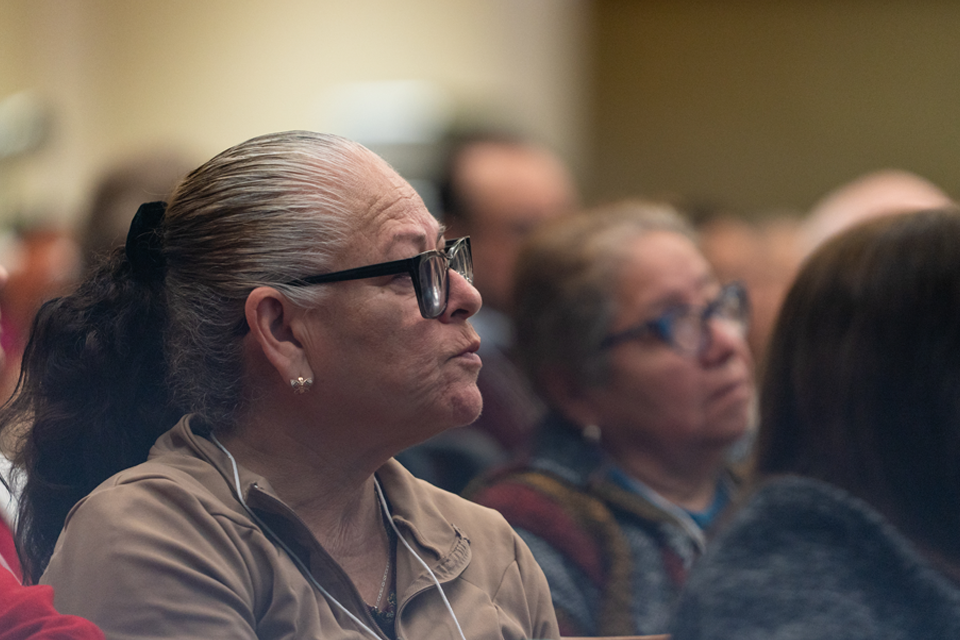
BROWNSVILLE, TEXAS – JAN. 30, 2026 – Returning to her former high school brought back memories of the 1960s, said Lori Marquez, 78, who attended the third annual Memory and Heart Connections event held in the Brownsville ISD Central Administration Building on Thursday, Jan. 29, 2026.
“If these walls could talk!” said Marquez, who attended the event to learn more about preserving her brain health after seeing Alzheimer’s disease in her family.
She said she’s starting to experience some forgetfulness herself and was interested in learning about prevention and management strategies.
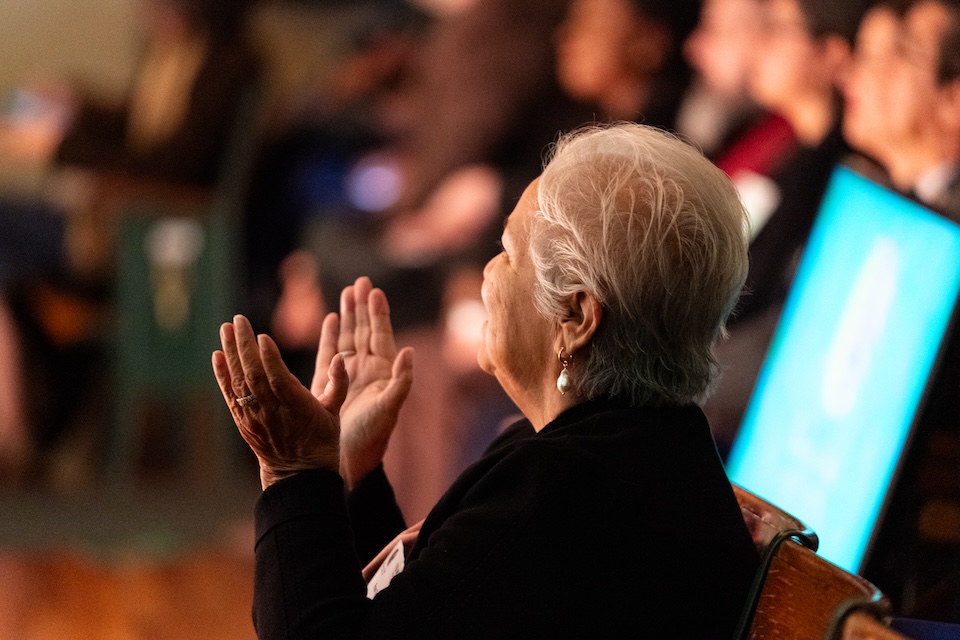
Like the 350 members of the community in attendance, she is not giving up her memories without a fight.
“Nothing could stop me from making it out here,” said Marquez, who drove herself when her invited guests weren’t able to join her. “It was very interesting, very knowledgeable.”
Hosted by the Memory and Aging Center of UTRGV, the free, bilingual event themed, “La Cultura,” brought international experts in Alzheimer’s disease and dementia to the community to share their latest research and discuss how cultural identity is a powerful resource for emotional resilience and collective memory.
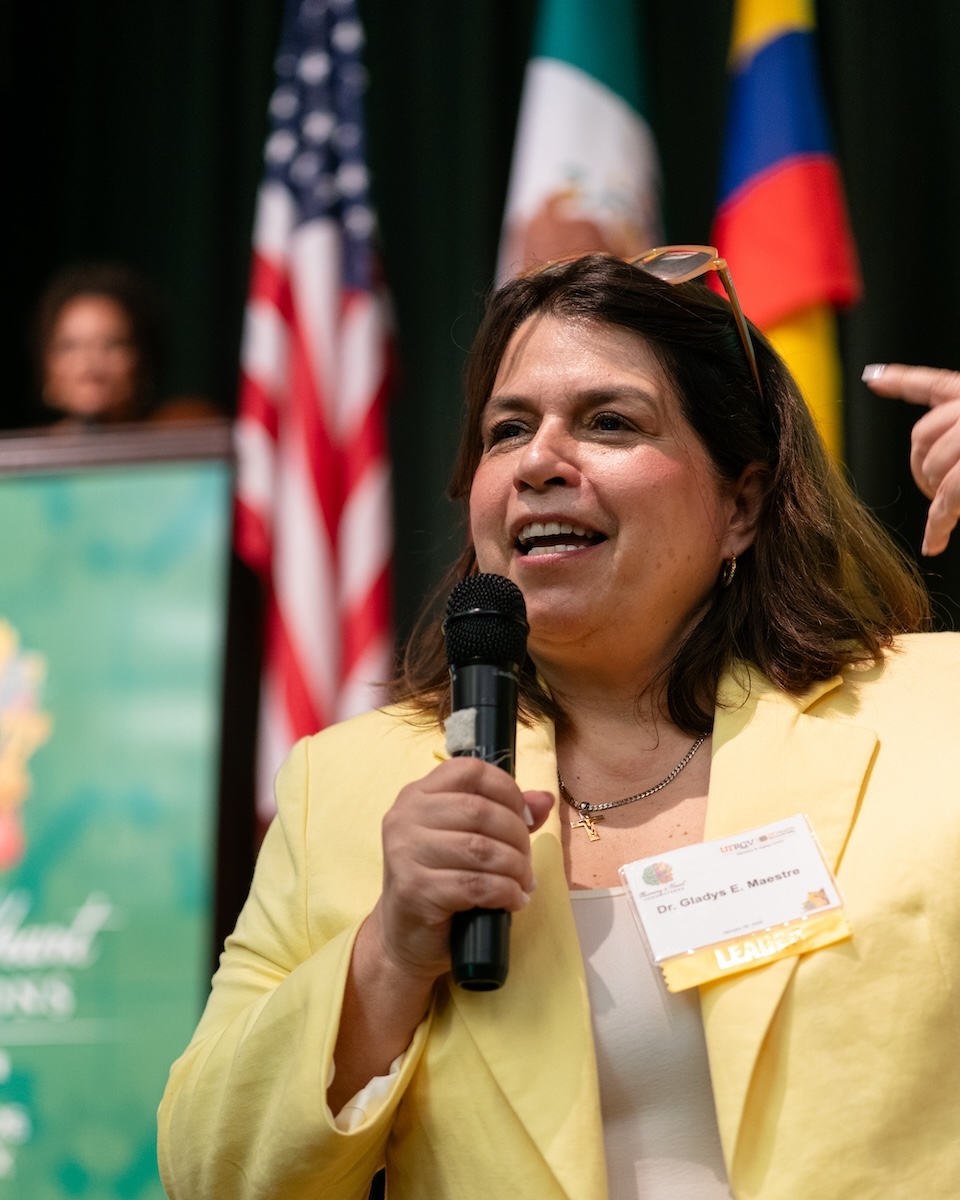
“La cultura shapes our identity, our stories, and our memories,” said Dr. Gladys Maestre, project lead on the Memory and Aging Center and director of the Rio Grande Valley Alzheimer's Disease Resources Center for Minority Aging Research (RGV AD-RCMAR).
“By placing culture at the center of our conversations today, we foster collaborative efforts between researchers and the community,” said Maestre, also a professor of neuroscience at the UTRGV School of Medicine.
As the state enters a new era of brain research investment through the Dementia Prevention and Research Institute of Texas (DPRIT), researchers are investigating strategies that go beyond the individual lifestyle factors – socializing, sleep, exercise, spirituality, and stimulating activities.
Researchers presented new community-driven approaches to dementia prevention, including emerging testing for early detection, environmental health risks, and public and private spaces designed for well-being.
The program also included a performance by Revival of Cultural Arts (ROCA)’s folklorico and Catrines Trio Mariachi, honoring the impact of music and community for brain health.
“Through science and the arts, we can help people age with dignity, connection and hope," Maestre said.
LATEST FROM THE EXPERTS
- Chi Udeh-Momoh, a translational neuroscientist from Wake Forest University in Nigeria, stressed the need for understudied minority populations to participate in research. She shared how advancements in blood and saliva testing can now identify abnormal, dementia-related proteins that deposit in the brain.
“But most of these new tests that have been developed have not been used on patients that represent the majority of the world’s population,” said Udeh-Momoh. “We know dementia affects people differently among cultures and populations, so we need more diverse research participants.”
- Claudia Satizabal from UT Health San Antonio and the Biggs Institute spoke about how Alzheimer’s disease leaves “clues” in the form of biomarkers that can now be measured in the blood – the same way glucose informs us about diabetes.
She shared a major advancement from 2020 – detection of “p-tau217” biomarkers in blood. It resulted in two blood tests clearing FDA approval in May and October 2025, which could replace lumbar punctures and PET scans as preliminary tests.
- “The Role of Place in Memory and Wellbeing,” presented by Andrea Chiba from the University of California, showed the concept of the “memory palace,” a mental map where a person “places” the sensory and emotional memories attached to a physical location. The hippocampus has been studied to find how cells create these “brain maps” to build and hold memories and feelings.
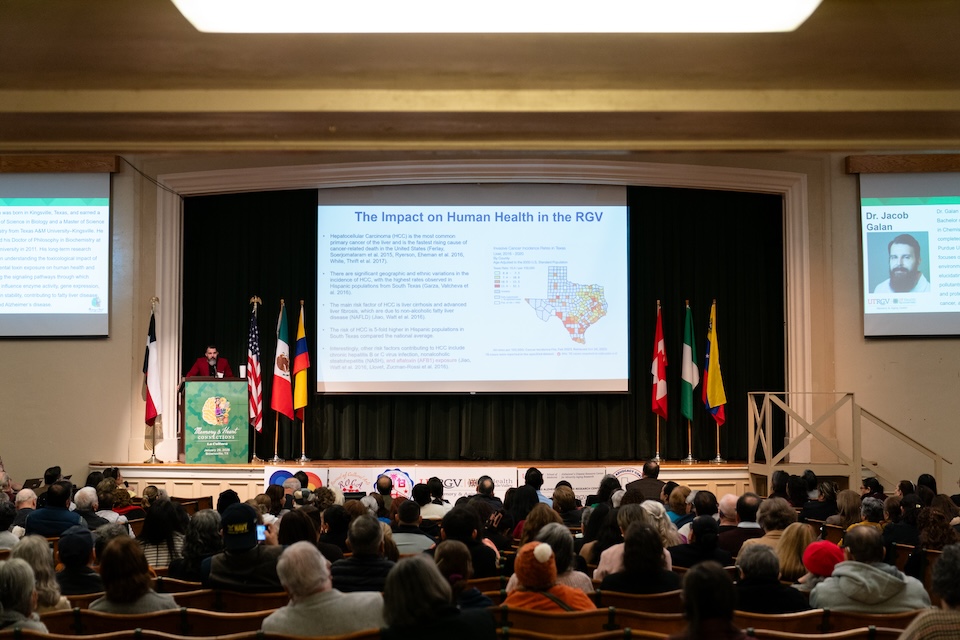
- UTRGV associate professor in genetics, Dr. Jacob Galan, presented how chemicals and toxins from day-to-day products and the environment can affect a person’s genetics.
“The RGV is heavily polluted, in the soil, air and water,” Galan said. He noted that in a pilot study, 21 percent of local participants had aflatoxins levels five times higher than the national average. Aflatoxins are a global health concern.
“This virus is toxic to the liver, and there’s a connection between fatty liver and Alzheimer’s disease,” he said. “Maybe it’s driving fatty liver that we can’t explain through genetics alone.”
- Architect Karina Lozano, from Mexican firm Arquitectura Entorno Energia, presented on the topic of taking care of ourselves through the spaces we inhabit – our cities and homes.
“A city can enable or hinder activities and behaviors, feelings and thoughts, from the way its designed. The spaces can facilitate socialization, access to nature, opportunities to exercise, relax, and move safely,” she said.
To learn more about the research or to participate in studies with the Memory and Aging Center, email memory@utrgv.edu.
ABOUT UTRGV
Celebrating its 10th anniversary during the 2025-26 academic year, The University of Texas Rio Grande Valley is on a mission to serve the Rio Grande Valley and beyond via an innovative and unique education dedicated to student access and success. As one of the country’s largest Hispanic-Serving Institutions and Seal of Excelencia-certified university, UTRGV has earned national recognition for its academic excellence, social mobility, and student success since opening in fall 2015. Ranked among the Best Colleges for Your Tuition (and Tax) Dollars in 2025 by Washington Monthly (No. 7 nationally; No. 1 in Texas), UTRGV continues to break enrollment records, launch new academic and athletics programs, and progress toward achieving R1 research status. Additionally, UTRGV holds the Carnegie Community Engagement Classification, awarded in 2020 and 2025, reflecting its commitment to strengthening community ties and addressing local challenges.
The only university in Texas with schools of Medicine and Podiatric Medicine, UTRGV’s regional footprint spans South Texas — with locations, teaching sites, and centers established in Edinburg, Brownsville, Rio Grande City, McAllen, Weslaco, Harlingen, Laredo, Port Isabel and South Padre Island.