By Heriberto Perez–Zuñiga
RIO GRANDE VALLEY, TEXAS – JAN. 21, 2026 – Every year, more than 300,000 women worldwide die from a disease that is almost entirely preventable.
In the Rio Grande Valley, the rates are even higher.
According to the National Cancer Institute, cervical cancer rates in the Valley are about 55% higher than the national average, making it one of the region's most urgent public health challenges. That’s more than half of the nation's average.
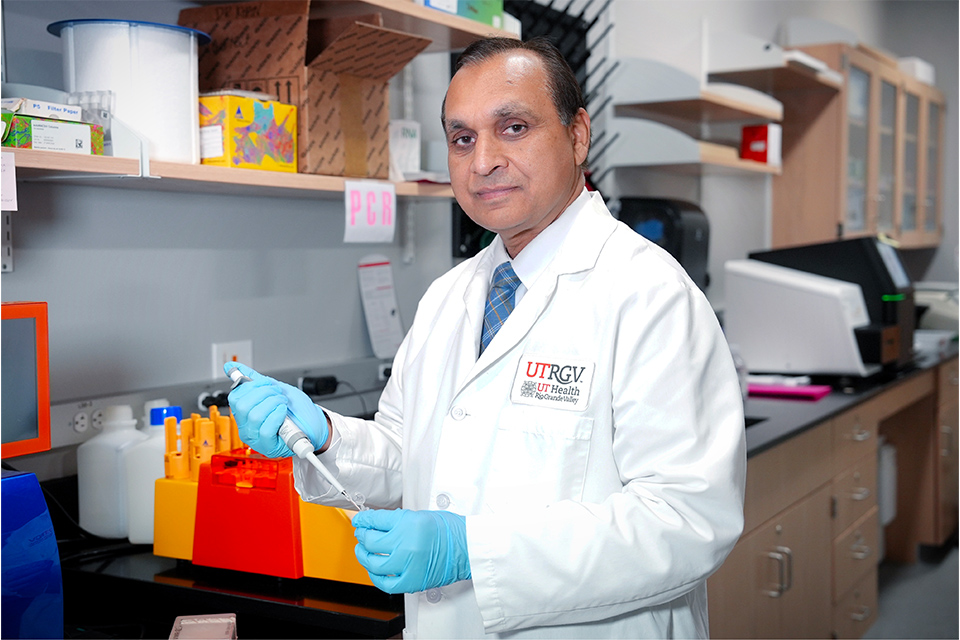
Yet Dr. Subhash Chauhan, director of the UTRGV School of Medicine's South Texas Center of Excellence in Cancer Research, says there is good reason for hope.
"Cervical cancer doesn't have to be a death sentence," he said. "Through education, research and action, we're working to ensure that women in our community have access to life-saving resources. There are effective ways to treat and prevent it."
PREVENTION IS POSSIBLE
Cervical cancer begins in the cells of the cervix, often caused by persistent infection with high-risk types of the human papillomavirus, known as HPV. Without early detection and treatment, it can spread to other parts of the body.
According to the World Health Organization, one in 78 women will be diagnosed with cervical cancer in their lifetime.
In Texas, border regions like the Rio Grande Valley experience some of the highest mortality rates, with many women facing barriers to preventive care such as Pap smears and HPV vaccinations.
"Early detection through regular screenings and prevention through HPV vaccination can significantly reduce the risk of cervical cancer," Chauhan said. "Unfortunately, for many women in the Valley, access to these resources remains a challenge."
The Valley faces some of the highest rates of chronic diseases, including liver, gallbladder and cervical cancers, compounded by factors such as prolonged stress, obesity and diabetes. With nearly one-fourth, or 25%, of families living below the poverty line in the area, healthcare access remains a significant barrier for many.
RESEARCH AND ACTION
At the UTRGV School of Medicine’s South Texas Center of Excellence in Cancer Research, researchers are investigating HPV genotypes and immune responses in Valley women and are working to develop tailored strategies for preventing and treating cervical cancer.
"The research being conducted here at the UTRGV School of Medicine will help us address the urgent health needs we face," Chauhan said. "Like many other illnesses in the region, the actual rates of cancer may be underreported because individuals without health insurance or financial means often don't seek the necessary services or diagnoses."
The UTRGV School of Medicine launched the Cervical Cancer Prevention Action Network, to align with the World Health Organization (WHO)'s global mission to eliminate cervical cancer.
The initiative focuses on community education and emphasizes the importance of HPV vaccinations and routine screenings.
Despite the challenges, Chauhan said, advancing early detection and treatment methods are helping.
"The fight against cervical cancer is far from over, but we're making progress," he said. "We have the tools and knowledge to prevent this disease. Now, it's about ensuring everyone has access to them."
To learn more about the South Texas Center of Excellence in Cancer Research, visit www.utrgv.edu/school-of-medicine/departments/st-cecr.
ABOUT UTRGV
Celebrating its 10th anniversary during the 2025-26 academic year, The University of Texas Rio Grande Valley is on a mission to serve the Rio Grande Valley and beyond via an innovative and unique education dedicated to student access and success. As one of the country’s largest Hispanic-Serving Institutions and Seal of Excelencia-certified university, UTRGV has earned national recognition for its academic excellence, social mobility, and student success since opening in fall 2015. Ranked among the Best Colleges for Your Tuition (and Tax) Dollars in 2025 by Washington Monthly (No. 7 nationally; No. 1 in Texas), UTRGV continues to break enrollment records, launch new academic and athletics programs, and progress toward achieving R1 research status. Additionally, UTRGV holds the Carnegie Community Engagement Classification, awarded in 2020 and 2025, reflecting its commitment to strengthening community ties and addressing local challenges.
The only university in Texas with schools of Medicine and Podiatric Medicine, UTRGV’s regional footprint spans South Texas — with locations, teaching sites, and centers established in Edinburg, Brownsville, Rio Grande City, McAllen, Weslaco, Harlingen, Laredo, Port Isabel and South Padre Island.