By Maria Gonzalez
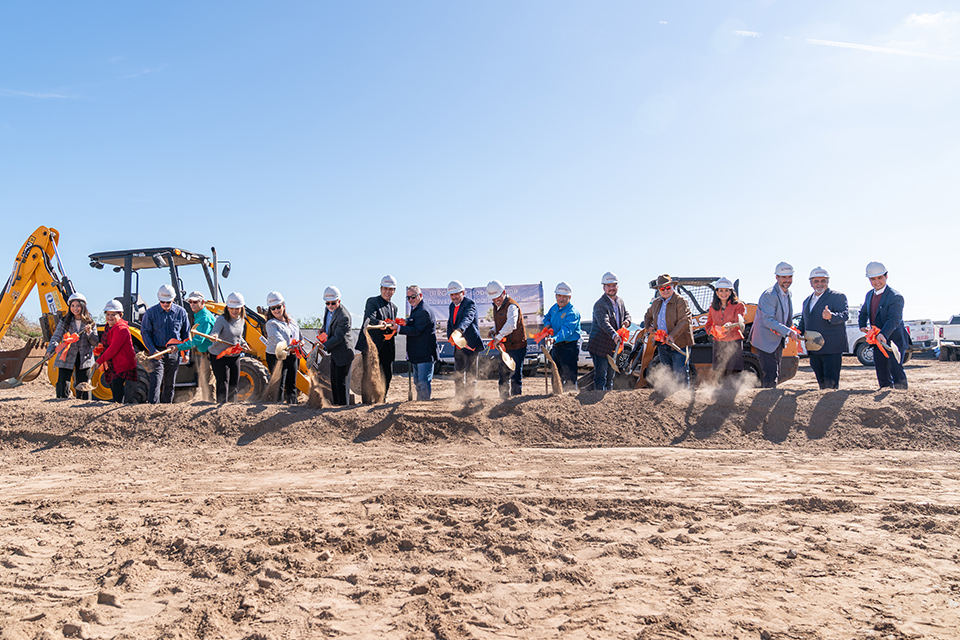
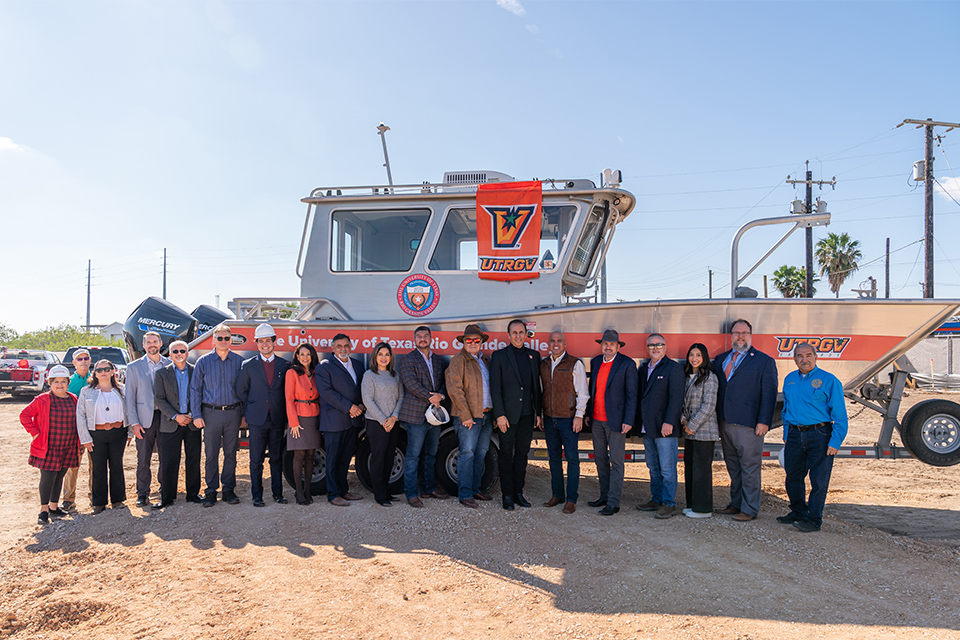
RIO GRANDE VALLEY, TEXAS – DEC. 9, 2025 – The University of Texas Rio Grande Valley held a groundbreaking ceremony on Tuesday for the Marine Ecosystems Research Facility (MERF), marking the start of construction on a $21.5 million coastal research center that will expand the university’s capacity in marine and environmental sciences.
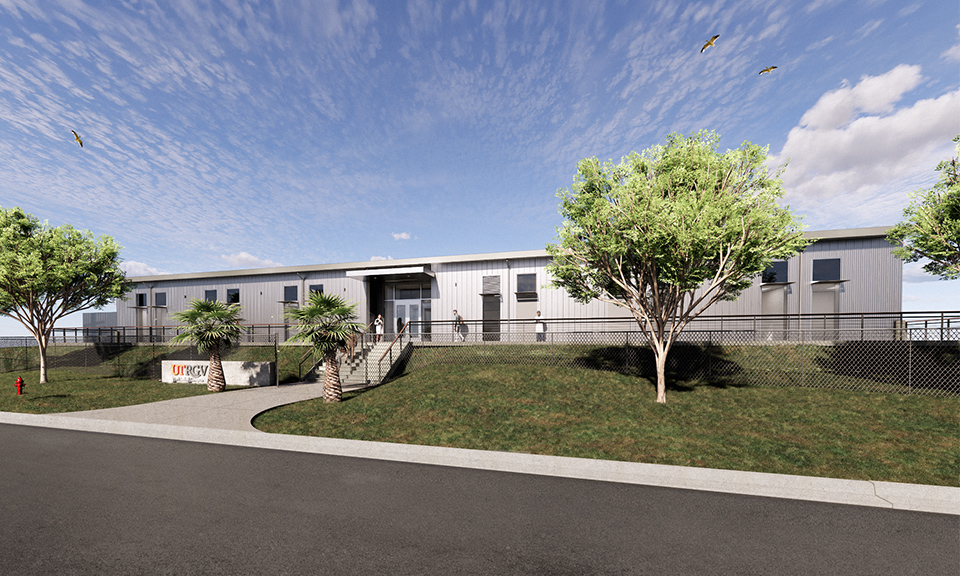
The project was approved earlier this year by The University of Texas System Board of Regents and will be constructed at 905 S. Garcia Street in Port Isabel. The 14,500-square-foot facility will include seven research labs, student workspaces, faculty offices, laboratory support areas and a conference room.
The single-story structure is designed to withstand windstorms and flood surge conditions and will replace five aging portable structures that have been in use for more than a decade.
UTRGV President Guy Bailey said the new facility represents a significant investment in research infrastructure and educational opportunity.
“Today’s groundbreaking represents a major step forward for UTRGV’s research enterprise and our commitment to serving the Rio Grande Valley,” Bailey said. “This facility will strengthen our ability to study coastal and marine environments, expand academic opportunities for our students, and support the region’s long-term sustainability.”
Bailey said MERF also reinforces the university’s broader mission to support both regional needs and long-term academic growth.
“The Marine Ecosystems Research Facility will provide the infrastructure needed to advance the work of our faculty and students for years to come,” he said. “It reflects our continued investment in academic excellence and our responsibility to support the communities we serve.”
Dr. Can Saygin, senior vice president for Research and dean of the Graduate College, said the new facility will play a key role in supporting research activity across the university.
“Reliable infrastructure is essential for research,” Saygin said. “MERF will provide the necessary laboratory capabilities and work areas for our faculty and students to carry out coastal and marine studies effectively.”
He added that the facility will broaden the university’s ability to support ongoing and emerging work in the coastal sciences areas of marine ecosystems and coastal resilience.
“The improved laboratories and field access will support stronger collaborations, facilitate community outreach, and give our researchers the environment they need to advance their work,” he said.
The School of Earth, Environmental, and Marine Sciences (SEEMS) will be the primary academic unit housed at MERF. Dr. Roldán Valverde, director of SEEMS and project advocate, said the facility will substantially improve research operations in Port Isabel.
“MERF will provide SEEMS and UTRGV with stronger visibility at the regional, state, and national levels,” Valverde said. “It will improve access to coastal and marine environments for students, support new areas of research, and help us attract faculty whose work focuses on these fields.”
Valverde said MERF will also serve as a foundation for expanded research coordination across the university.
“The facility will also support the Marine Ecosystems Institute, allowing us to bring together faculty expertise and resources to strengthen research in the region and beyond,” he said. “The improved work areas will help us train more undergraduate and graduate students and develop new lines of research that were not possible in the portables.”
He added that replacing the current facilities is essential for long-term program stability and safety.
“Replacing the portables is a significant necessity,” Valverde said. “The new facility will provide healthier working conditions for faculty and students, help protect sensitive and expensive equipment, and reduce maintenance costs associated with buildings that have exceeded their useful life.”
MERF will also serve as a host site for community outreach activities, student workshops, research presentations and scientific meetings, supporting both academic engagement and regional collaboration.
These functions will be conducted in close collaboration with UTRGV's already existing facilities at the Coastal Studies Laboratory located in South Padre Island.
Construction is expected to begin this month, with substantial completion scheduled for November 2026 and final completion in December 2026.
ABOUT UTRGV
Celebrating its 10th anniversary during the 2025-26 academic year, The University of Texas Rio Grande Valley is on a mission to serve the Rio Grande Valley and beyond via an innovative and unique education dedicated to student access and success. As one of the country’s largest Hispanic-Serving Institutions and Seal of Excelencia-certified university, UTRGV has earned national recognition for its academic excellence, social mobility, and student success since opening in fall 2015. Ranked among the Best Colleges for Your Tuition (and Tax) Dollars in 2025 by Washington Monthly (No. 7 nationally; No. 1 in Texas), UTRGV continues to break enrollment records, launch new academic and athletics programs, and progress toward achieving R1 research status. Additionally, UTRGV holds the Carnegie Community Engagement Classification, awarded in 2020 and 2025, reflecting its commitment to strengthening community ties and addressing local challenges.
The only university in Texas with schools of Medicine and Podiatric Medicine, UTRGV’s regional footprint spans South Texas — with locations, teaching sites, and centers established in Edinburg, Brownsville, Rio Grande City, McAllen, Weslaco, Harlingen, Laredo, Port Isabel and South Padre Island.