UTRGV
Give Apply
UTRGV Logo
  • Directory
  • myUTRGV
  • Maps
  • Give
  • Apply
  • Home
  • About Us Open the About Us Navigation Section
    • Directory
    • Photo Gallery
  • News
  • Projects Open the Projects Navigation Section
    • Students
    • Conferences
    • Mentors
    • EFAS Spotlight
  • Contact Us
UTRGV
The University of Texas Rio Grande Valley
EFAS - Empowering Future Agricultural Scientists
  • Home
  • About Us

    About Us

    UTRGV, the Citrus Center, the Texas citrus industry, Texas A&M College Station and the USDA-ARS-Cattle fever tick lab, Texas A&M AgriLife Research and Extension Center-Weslaco, and Center for Plant Health Science and Technology (PPQ CPHST) Laboratory-Mission, TX, all join efforts in training the next generation of future agricultural scientists to cope with food security and climate change challenges.

    Read More
    • Directory
    • Photo Gallery
  • News
  • Projects

    Projects

    • Students
    • Conferences
    • Mentors
    • EFAS Spotlight
  • Contact Us
  1. Home
  2. Projects

Research Projects by Mentors


Tick-borne diseases

Tick-borne diseases

Mentor: Adela Oliva Chavez

Mentee: Sydney Orsborn, Abagail Leal, Sarah Durski

Deadline: June 10, 2022

Description: Mainly focused on ticks and tick-borne diseases, we have several projects working on improving our understanding of the immune responses of animals to the tick bite and the transmission of pathogens. Although a lot of work has been done to define what happens systematically during sickness with pathogen causing disease in animals, little is known of the events that take place early at the skin level. We are also working towards developing anti-tick vaccines studying novel molecules known as extracellular vesicles. Lastly, we are investigating how epigenetics, a form of gene regulation, on the survival of ticks to winter, regulation of behavior, and adaptations during tick feeding.
Pollinator preferences between a domesticated crop plant species and wild native species

Pollinator preferences between a domesticated crop plant species and wild native species

Mentor: Dr. Alejandro Fierro-Cabo

Mentee: Lizbet Salcedo

Description: The project with mentee aims at comparing pollinator preferences between a domesticated crop plant species and wild native species. This project will use time lapse cameras to document pollinators interacting with flowers including functional grouping of visiting insects, species richness, and relative visitation frequency . This comparative study will take place in the pollinator garden at the Brownsville campus that hosts multiple native species. Okra will be the first crop plant to be established in a small designated area of the garden.

Deciphering the roles of microRNAs in the tick salivary derived extracellular vesicles

Deciphering the roles of microRNAs in the tick salivary derived extracellular vesicles

Mentor: Brenda Galvan

Mentee: Manuel Garza

Deadline: July 18, 2024

Description: Deciphering the roles of microRNAs in the tick salivary derived extracellular vesicles. MicroRNAs (miRNAs) are short non-coding RNAs that post-transcriptionally regulate gene expression. In ticks, miRNAs are known to affect pathogen replication, play a role in important biological processes, and possibly alter a host’s gene expression. EVs are double-lipid membrane vesicles that have shown to aid in pathogen transmission, delay wound healing responses in ticks, and are critical for cell-to-cell communication. In ticks, little is known about how miRNAs are utilized to manipulate a host to ensure a successful feeding event. Thus, this project will investigate the role of tick-derived miRNAs during wound healing responses and active feeding.

Cattle Fever Research

Cattle Fever Research

Mentor: Don Thomas

Mentee: Brian Rich, Bethany Olivarez, Danielle Sanchez, Sydney Orsborn, Manuel Garza

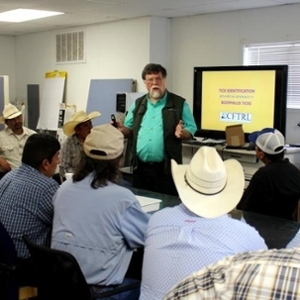
Description: The Cattle Fever Teach Research Lab goals and objectives include to “affirm the mutual interest in, and desire to develop technology and knowledge critical to the success of the APHIS-VS Cattle Fever Tick Eradication Program (CFTEP). Ensure continuity and successful operation of the ARS Cattle Fever Tick Research Laboratory in a secure, quarantined site for research located on APHIS-VS property known as Moore Air Base, Edinburg, Texas.” Cattle Fever Tick Research Laboratory - Moore Air Base - APHIS AIRCRAFT & EQUIP OPERATION (usda.gov)

Special Crops – Native Plants Project

Special Crops – Native Plants Project

Mentor: Gisel Garza

Mentee: Alexa Escobedo, Faith Chua

Description: Use of native plants on both private and public lands in the Valley. Student participants can expect the following: training in field work (collecting and processing native seeds and conducting nursery greenhouse work with thornforest seedlings); lab-based research in seed viability and research into genetic variation among forest species. The answers to these questions will help us to expand restoration of the Valley’s threatened thornforest ecosystem and also the usage of native plants in landscaping in the coming years. They will also help us to better understand how resilient these plantings need to be in order to face long-term challenges like urbanization and climate change in the Valley. This study is conducted in collaboration with American Forest

High performance computing techniques to model the effects of hurricane storm surge

High performance computing techniques to model the effects of hurricane storm surge

Mentor: Jennifer Proft

Mentee: Ira Narang

Description: Dr. Proft investigates the use of high-performance computing to significantly advance the state-of-the-art in environmental fluid mechanics. Her current research deals with numerical models to improve understanding of the mechanisms of flooding and hurricane storm surge involved in tightly coupled wind, waves, circulation, and rainfall. Using high resolution descriptions of the physical domain, she investigates accurate, robust and highly parallelizable numerical algorithms, including continuous and discontinuous Galerkin finite element methods applied to partial differential equations.

Pollinator-Plant Interactions

Pollinator-Plant Interactions

Mentor: Dr. Julie Mustard

Mentee: Lizbet Salcedo

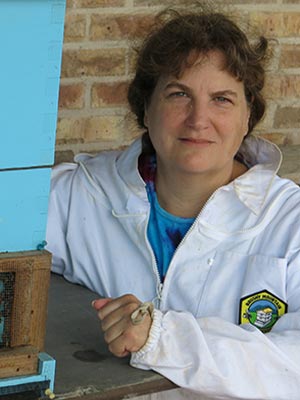
Description: Her research involves using the honey bee (Apis mellifera) to understand the molecular and cellular mechanisms underlying learning and other behaviors. Recently, she has begun working on how secondary compounds and the nutrition of nectar may influence pollinator behavior.

Evaluating Recyclable Glass Material as a Substitute for Soil in Vegetable Cultivation: An Innovative Approach to Sustainable Agriculture

Evaluating Recyclable Glass Material as a Substitute for Soil in Vegetable Cultivation: An Innovative Approach to Sustainable Agriculture

Mentor: Dr. Julie Vanegas

Mentee: Andrea Quezada, Brittany Griggs

Description: Vanegas' work highlights the potential of nanoscience and nanotechnology to revolutionize our approach to material science. It underscores the fulfillment of Feynman's vision, where manipulating matter at the nanoscale opens up unprecedented possibilities for innovation and discovery.

Variation of Fall Army Worm Tolerance in Maize Ancestors and Their Correlation with the Host

Variation of Fall Army Worm Tolerance in Maize Ancestors and Their Correlation with the Host

Mentor: Dr. Julio Bernal

Mentee: Arturo Espana, Carly Skelton

Description: Maize (corn) is the most important crop in the USA and Mexico and is among the most important crops worldwide. Maize was domesticated in present-day Mexico where its ancestral to most modern forms are widespread, from its teosinte wild ancestors and relatives to maize landraces, and to maize modern commercial varieties. Bernal’s research seeks to improve our understanding of the evolution of insect defense and abiotic stress tolerance from those evident in teosintes to those evident in modern maize varieties. By identifying instances where insect defense and stress tolerance how such evolution occurred

Effects of flooding and climate change on agro-ecosystems

Effects of flooding and climate change on agro-ecosystems

Mentor: Katherine Brown

Mentee: Marissa Llamas, Stone Nwamadi

Deadline: June 10, 2022

Description: Our team is part of a University of Texas at Austin Grand Challenge, Planet Texas 2050, that focuses on developing resilience to climate-related events that affect our health and well-being. Our specific project AIM (AI-enabled modelling) brings together expertise in computational and geospatial modelling of activities and events influenced by extreme weather that can affect agro-ecosystems including flooding, the egress of invasive species and emerging microbiota in soil and water. We are working closely with UT RGV to develop models applicable to Texas including the lower Rio Grande Valley and bordering regions, utilizing local, national and global data from a wide variety of sources

Detection and Diagnosis of Plant Pathogens using Modern Molecular Methods at TAMUK-Citrus Center

Detection and Diagnosis of Plant Pathogens using Modern Molecular Methods at TAMUK-Citrus Center

Mentor: Madhura Babu Kunta

Mentee: Isaac Cazares

Description: Training will be provided to the students on recognition of disease symptoms such as Huanglongbing (HLB; bacterial disease) and root/crown rots caused by Phytophthora sp. (fungal) in affected citrus trees and on pre-symptomatic detection of HLB using root samples. Students will be trained in several molecular techniques including nucleic acid extraction (DNA and RNA), polymerase chain reaction (PCR), reverse-transcription PCR (RT-PCR), quantitative PCR (qPCR), and gel electrophoresis. They are expected to become proficient in detecting the aforementioned pathogens causing HLB and root/crown rot as well as other plant pathogens (e.g. virus) causing diseases in citrus using modern molecular diagnostic assays.

Plant virus diagnostics, biological and molecular characterization, and field epidemiology at Texas A&M AgriLife Research and Extension Center.

Plant virus diagnostics, biological and molecular characterization, and field epidemiology at Texas A&M AgriLife Research and Extension Center.

Mentor: Olufemi Alabi

Mentee: Audrey Rodriguez

Deadline: June 9, 2022

Description: Training will be provided to students on recognition of virus disease symptoms relative to symptoms that mimic infection. A major deliverable will be for students to be able to identify characteristic symptoms of virus and virus-like diseases on different plant species, how to sample for accurate virus diagnosis, and determination of disease incidence. Students will also be trained on several techniques, including total nucleic acid isolation, nucleic acid quantification and quality analysis, reverse transcription polymerase chain reaction (RT-PCR) and/or PCR (depending on the nature of the virus genome), and agarose gel electrophoresis of DNA amplicons. Students will be expected to gain proficiency in these methods. In addition, students will be introduced to the development of grower outreach publications such as factsheets and popular press articles.

Weed and Invasive Plant Ecology

Weed and Invasive Plant Ecology

Mentor: Dr. Pushpa Soti

Mentee: Sofia Ayala, Anai Tabera-Cruz

Description: Dr. Soti’s research focuses on the ecology of weedy and invasive plant species within natural and agricultural systems. The goal of my research is to unravel the underlying mechanisms driving plant invasions. Her current research work includes the investigation of complex interactions between plant and soil processes towards integrated weed management providing land managers and farmers with tools to reduce reliance on chemicals. Currently, she is involved in both large-scale field trials and controlled experiments to compare differences in weed and pest suppression, crop performance, and yield following winter and summer season cover crop treatments, which include a three-species cover crop mix and single cover crop trials. We also examine below ground biotic interactions (including mycorrhizae and nematodes) and their ecological implications on soil chemistry as it relates to on-farm productivity and agricultural sustainability.

Ecology of vector-borne diseases

Ecology of vector-borne diseases

Mentor: Dr. Sarah Maestas

Mentee: Romel Hinojosa, Alondra Hernandez

Description: The primary focus of my research is in better understanding the ecology of vector-borne disease. I use a OneHealth approach to investigate the role of animals as hosts and reservoirs and the effects of environmental variables on the presence and abundance of vectors and vector-borne pathogens. My main interest is in ticks, fleas, and associated pathogens, and investigations of vector, host, and pathogen interactions. I combine field ecology and the application of molecular tools to increase our understanding of the ecology of vector-borne zoonoses and for monitoring and surveillance of vector-borne pathogens. My ultimate goal is to help to improve wildlife, companion animal, livestock and human health, and to conduct research that informs wildlife management decisions, land use practices, and vector-borne disease mitigation efforts.

Cactus Moth surveys

Cactus Moth surveys

Mentor: Teresa Patricia Feria

Mentee: Sophia Alvarado

Deadline: June 9, 2022

Description: Cactoblastis cactorum Berg, Cactus Moth, is an invasive species that could dramatically affect prickly pear species in Texas. Cactoblastis cactorum was recently recorded in Southeast Texas, which is an indication of the high risk that prickly pear in Texas are facing. Surveys for this species in the Rio Grande Valley are vital for early detection efforts and eradication. Results from this survey are equally important for New Mexico and Arizona, neighboring states of Texas. Results from this survey are also important for the neighbor country of Mexico because its cactus production could be negatively impacted from the spread of this destructive pest.

Contact EFAS


Edinburg

Teresa Patricia Feria
Director
School of Integrative Biological and Chemical Sciences
ESCNE 2.360
Email: teresa.feriaarroyo@utrgv.edu
Phone: (956) 665-7322

Hours

Monday - Friday
8:00 a.m. - 5:00 p.m.
UTRGV The University of
Texas Rio Grande Valley

Connect with us:


  • CARES, CRRSAA and ARP Reporting
  • Site Policies
  • Required Links
  • Fraud Reporting
  • Senate Bill 18
  • Clery Act Reports
  • Web Accessibility
  • Mental Health Resources
  • Sexual Misconduct Policy
  • Contact UTRGV

©2022 The University of Texas Rio Grande Valley.