Welcome to the Central American Locust Project!
The Central American Locust (CAL) Project includes personnel and students from Texas A&M University, the University of Texas Rio Grande Valley, and USDA-APHIS. The main focus of this project is on understanding and monitoring the Central American locust Schistocerca piceifrons and its potential impacts on the Lower Rio Grande Valley (LRGV) and neighboring regions.
Climate change and land-use shifts are allowing CAL to expand northward, and swarms have already been documented in Tamaulipas and Nuevo León, Mexico, just south of the U.S.–Mexico border.
Although there are currently no swarming locusts in the United States, the LRGV is on the front line of a changing risk landscape. Through research, risk assessment, and community engagement, the CAL Project works to prepare local communities, agencies, and stakeholders for potential locust outbreaks.



A.I. and Machine Learning
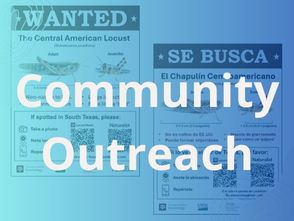
Community Outreach
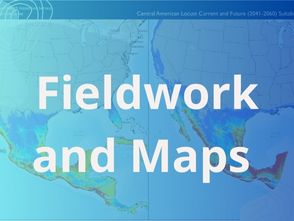
Fieldwork and Maps

Report a Locust!
Help us track the Central American Locust (CAL) in South Texas.
The Central American locust (Schistocerca piceifrons) is a transboundary pest whose habitat could expand into southern Texas. Because CAL looks very similar to the native American Bird Grasshopper (Schistocerca americana), public sightings are essential to guide our monitoring, collections, and diagnostics.
What we’re doing
-
Coordinating UTRGV field teams with partners at Texas A&M University and USDA–APHIS to monitor for CAL along the U.S.–Mexico border.
-
Collecting specimens for whole-genome sequencing and evaluating diagnostic tools (DNA assays, Raman spectroscopy, and computer vision) to distinguish CAL from look-alikes and potential hybrids.
-
Using your reports to prioritize on-the-ground surveys.
How to report a sighting
-
iNaturalist project: South Texas Locust Watch
Submit your observation with date, location, and photos (close-ups if possible) to the following
iNaturalist website:
https://www.inaturalist.org/projects/south-texas-locust-watch -
Email
Send to TexasLocust@gmail.com with:-
When (date/time)
-
Where (address or GPS if available)
-
What (photos or video; note behavior, group size, habitat)
-
We’ll never ask you to collect insects yourself. Your information helps our trained team visit the site safely.
Locations you share will help direct UTRGV/partner teams to collect specimens and validate sightings. Preliminary maps may be shown on our site, but we remove precise coordinates for sensitive areas.
Safety & ethics
-
Do not handle insects unless trained and authorized.
-
Respect private property; report from public areas or your own property.