

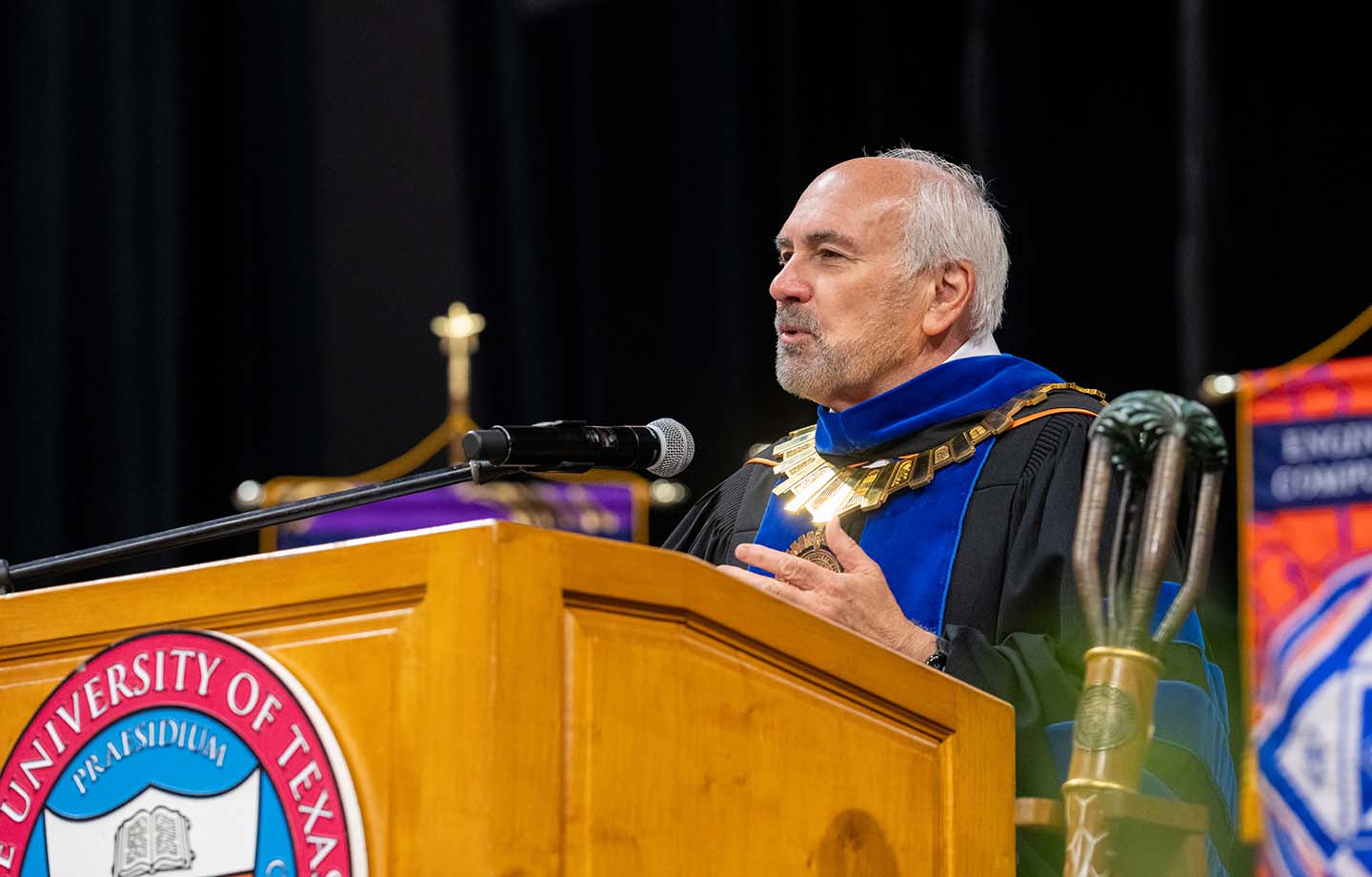
"We proudly celebrate you for your sustained commitment to becoming a physician. Always remember your experiences here at UTRGV and never stop learning nor forget compassion in caring for your patients."
— Everardo Cobos, M.D., F.A.C.P.
Dean, School of Medicine
Mission
We will transform the health of the Rio Grande Valley and beyond by providing advanced academic medicine through these five pillars:
- Innovative Education
- Life-Changing Research and Discoveries
- High Quality Patient-Centered Care
- Serving our Community
- Sustainability and a Culture of Entrepreneurship
Values
In addition to the UTRGV Values of excellence; shared governance; diversity, access and inclusion; leadership; inquiry, discovery and creativity; health and well-being; and engagement and impact; the School of Medicine’s core values include:
- Open Communication & Transparency: Share information openly across all levels (of the school) to engrain a collaborative and trustworthy environment.
- Community Focus: Commitment to improving health outcomes and reducing health disparities of at-risk populations through community and population-based interventions.
- Cultural Awareness: Integration of knowledge, awareness, and empathy to successfully work with the diverse and unique needs of any community.
- Empathy & Compassion: Care for and understand others to provide support and achieve positive outcomes.
- Good Stewardship: Selfless service (for the common good) to promote accountability and a culture of responsibility.
- Innovation & Transformation: Embrace change and promote creativity to shape the future of academic medicine.
- Integrity: Act with honor, honesty, and truthfulness. Know and do the right thing in all undertakings – learning, discovery, patient care, service, and entrepreneurship.
- Respect, Collegiality & Inclusive Citizenship: Treat people with respect and kindness to create a community of inclusivity, cooperation, and connectedness.
History of Medical Education in the Valley
The University of Texas Rio Grande Valley School of Medicine is the realization of the decades-long effort of community leaders, legislators, and countless supporters to establish a first-class medical school in the Valley and provide high quality primary and specialty care in the community.
- In 1997, the Texas Legislature approved the creation of the Regional Academic Health Center (RAHC) under UT Health San Antonio, formerly UT Health Science Center at San Antonio, with sites in Harlingen and Edinburg.
- In 2002, the RAHC started training third and fourth year medical students.
- In 2009, the Texas Legislature approved for The University of Texas System Board of Regents to create a medical school for the Valley in the future, using the resources from the RAHC.
- Three years later, The UT System Board of Regents approved the creation of a new university and medical school in the Rio Grande Valley, using resources from two universities within the UT System — The University of Texas at Brownsville and The University of Texas-Pan American — and the RAHC.
- In 2013, the Texas Legislature authorized the formation of The University of Texas Rio Grande Valley and its School of Medicine.
- In 2015, the UTRGV School of Medicine received preliminary accreditation from the LCME, which allowed the school to recruit its first class.
- The UTRGV School of Medicine welcomed its charter class of 55 medical students in the summer of 2016, which graduated in 2020.
- The UTRGV School of Medicine has now graduated more than 280 medical students and trained over 440 medical residents.
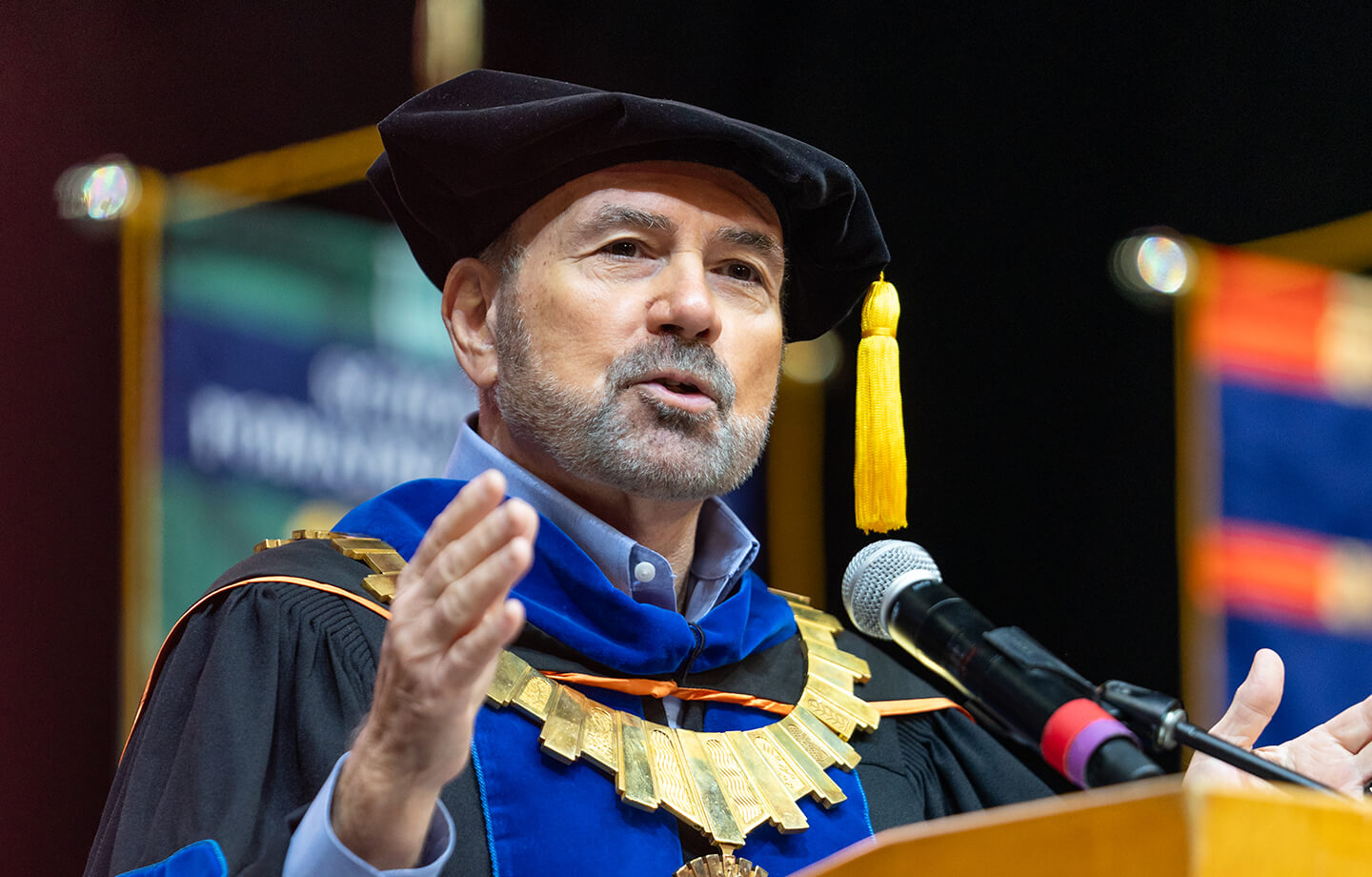
Keynote Speaker
Guy Bailey, Ph.D.
President, The University of Texas Rio Grande Valley
Order of Exercises
- Introduction to Ceremony Wayne Wilson, M.D., M.S., F.A.C.O.G., Associate Professor, Obstetrics & Gynecology; Clerkship Director, Obstetrics & Gynecology; and Course Director, Clinical Skills Year 2
- National Anthem
- Alma Mater
Commencement Exercise
- Presiding Everardo Cobos, M.D., F.A.C.P., Dean, School of Medicine
- Dean’s Greeting and Address Everardo Cobos, M.D., F.A.C.P., Dean, School of Medicine
- Presidential Remarks and Keynote Speaker Guy Bailey, Ph.D., President
- Presentation of Candidates for Doctor of Medicine Degree Everardo Cobos, M.D., F.A.C.P., Dean, School of Medicine
- Conferring of Degrees Guy Bailey, Ph.D., President
- Hooding of Candidates and Presentation of Diploma
- Recitation of Physician’s Oath Andrew Brandon Callan, Class of 2026, School of Medicine
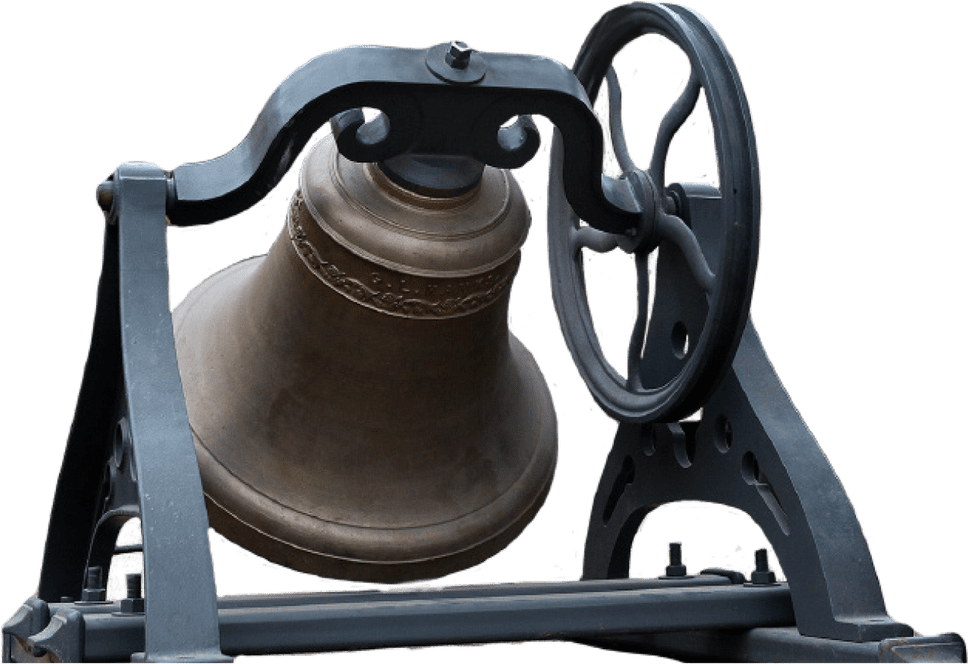
- Ringing of the Bell Kaylin Arpaia and Natasha Quailes, Class of 2026, School of Medicine
- Closing Remarks Everardo Cobos, M.D., F.A.C.P., Dean, School of Medicine
Leadership
Graduates

Doctor of Medicine
- Tabitha Susan Abraham
Houston, Texas - Edwardo Abrego
San Benito, Texas - Yossef Alsabawi
Pearland, Texas - Elias Arellano Villanueva
Edinburg, Texas - Shabba Anthony Armbrister
Killeen, Texas - Kaylin Arpaia
Southlake, Texas - Courtney Jessica Austin
Dallas, Texas - Zayd Mouhab Ayas
Austin, Texas - Santiago Balderas
Edinburg, Texas - Andrew Brandon Callan
Jonestown, Texas - Dominic Chau
McAllen, Texas - Melissa Montserrat Cruz
Tampico, Mexico - Aaron Ibrahim Dadzie
San Antonio, Texas - Hari Das
Houston, Texas - Jose Delgado
McAllen, Texas - Philippe Joseph Dentino
Morgantown, West Virginia - Felipe Diaz Jr.
Brownsville, Texas - Victor Espinoza
McAllen, Texas - Josue Luis Fonseca
Houston, Texas - Emmanuel Franco
Newark, California - John Gaddis
Corpus Christi, Texas - Stephen Michael Garcia
Brownsville, Texas - Hamaad Shahid Gohar
Edinburg, Texas - Yazeth Gonzalez
Hidalgo, Texas - Briana Gonzalez DiGrazia
McAllen, Texas - Brianna Alexis Guillen
Brownsville, Texas - Jonathan Hebert
Houston, Texas - Katie Herklotz
Coppell, Texas - Omar Muneer Karkoutly
Brownsville, Texas - Raquel Lara
Mexico City, Mexico - Miguel Angel Lopez
Edinburg, Texas - Maria Fernanda Lozano Bonilla
Rio Grande City, Texas - Marlon Monayao
Harlingen, Texas - Sophia Lorraine Moon
- Johanna Mora
Brownsville, Texas - Jonathan Muniz Gomez
McAllen, Texas - Surya Namboodiri
McAllen, Texas - Bria Chizoma Okere
Houston, Texas - John-Beloved Osho
Richmond, Texas - Elvia Daniela Palomarez
Flower Mound, Texas - Daniel Alexandro Peña Sanchez
Monterrey, Mexico - Angelica Pham
Cooper, Texas - Anh Ngoc Que Phung
Arlington, Texas - Natasha N. Quailes
San Juan, Texas - Irum Rahman
Parker, Texas - Robert Sanchez
McAllen, Texas - Kirhyn Avery Stein
The Woodlands, Texas - Giani Tah
El Paso, Texas - Juan Diego Torres
Harlingen, Texas - Tyler Torres
Killeen, Texas - Michael Tran
Cypress, Texas - Ahren Leo Treviño
Rio Grande City, Texas - Amanda Wheeler
Boerne, Texas
Regalia & Customs of Commencement
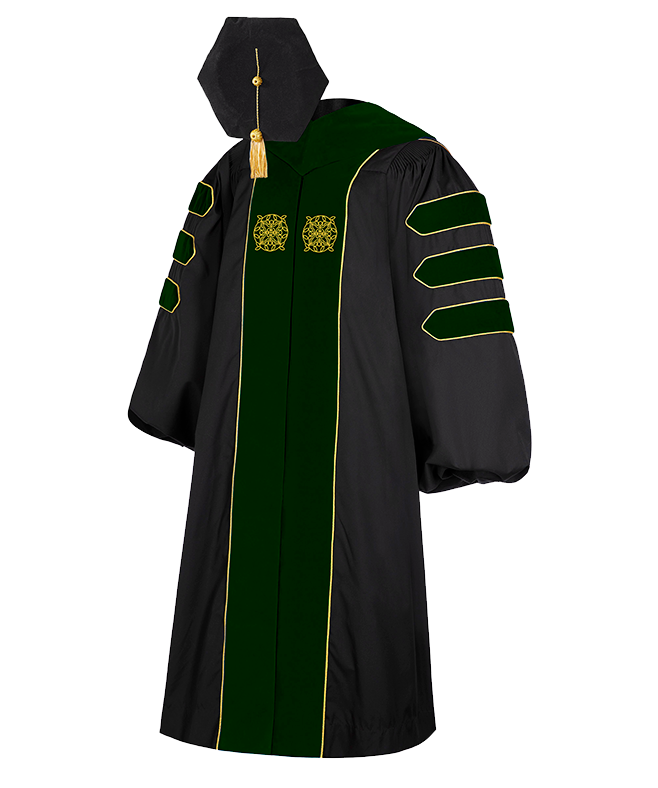
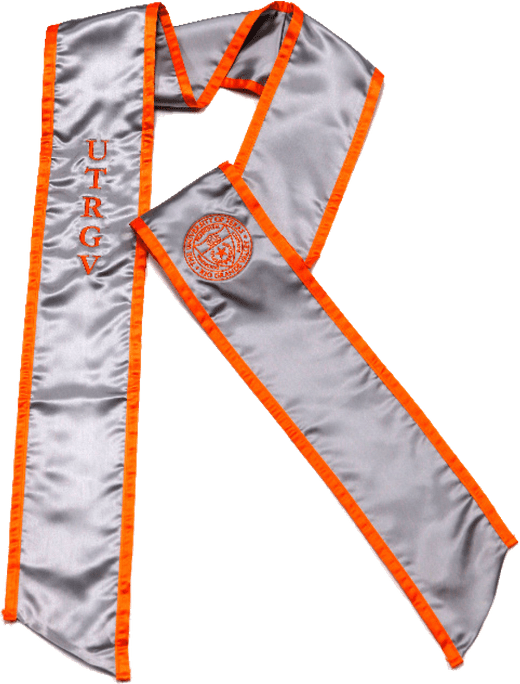
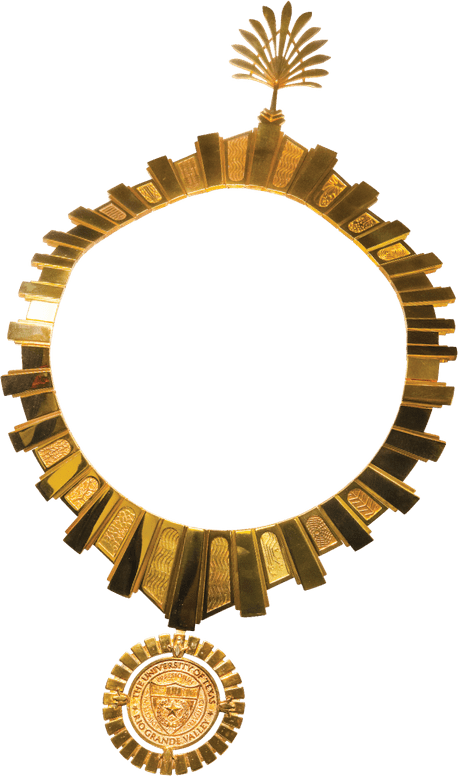
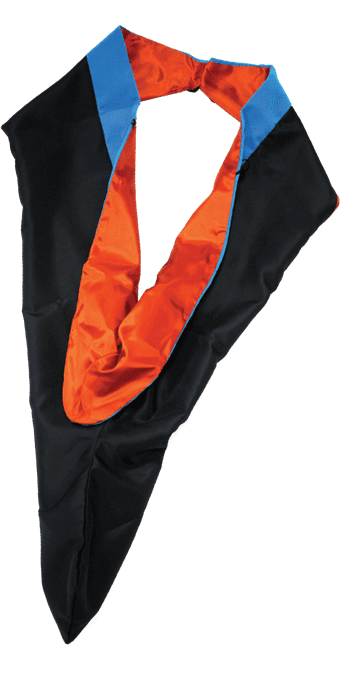
The colorful regalia and traditional customs of college commencements trace their beginnings back to the origins of the contemporary university in medieval Europe. Modern American colleges and universities carry on many traditions that began at Oxford and Cambridge to demonstrate the continuity of learning over the centuries and to emphasize the importance attached to commencement exercises. Academic regalia refers to the distinctive attire worn by students, faculty, and other university officials at commencement.
The origins of academic dress date back to the 12th and 13th centuries, when universities were taking form. The ordinary dress of the scholar, whether student or teacher, was the dress of a cleric. Though the custom of wearing academic dress was brought to America in colonial times, it was not until 1895 that a standardized code of academic dress was established and followed by most colleges and universities. The gown, hood, cap, and additional ornaments are the main categories of academic regalia and are distinctive for each degree.




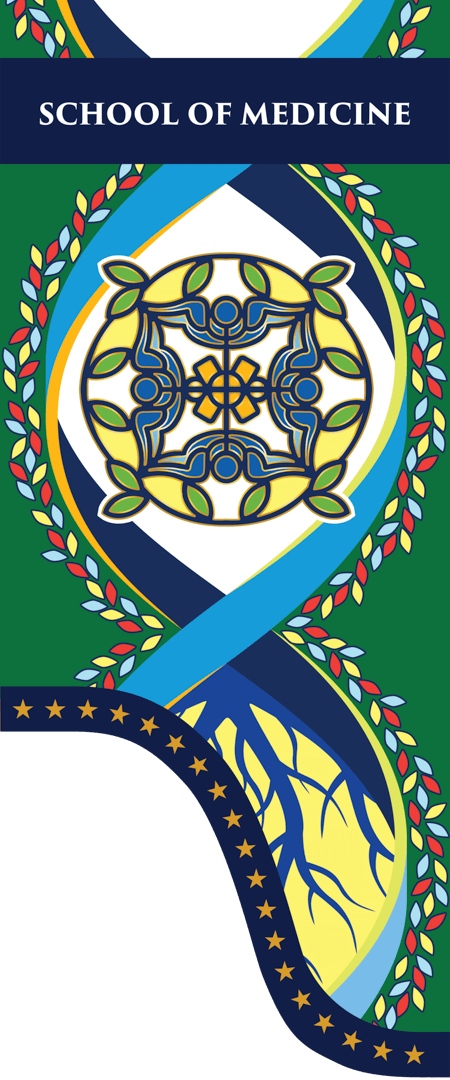
School of Medicine’s Gonfalon
The college gonfalon—or banner—with roots in the Middle Ages, was a symbol of units or family groups. Today, gonfalons are used at official university ceremonies as heraldic devices and are frequently carried during processionals at commencement.
At UTRGV, each college has a custom-designed banner signifying its academic unit. Each flag is rich in unique symbolism while also showing unity through size, shape, and color. The swoop at the bottom of each gonfalon represents the border of Texas, and the field of blue with gold stars of Texas represents the distributed nature of UTRGV—from Rio Grande City to South Padre Island.

Hippocratic Oath
I do solemnly swear, by whatever I hold most sacred: That I will be loyal to the profession of medicine and just and generous to its members. That I will lead my life and practice my profession in uprightness and honor.
That into whatsoever house I shall enter, it shall be for the good of the sick to the utmost of my power, holding myself far aloof from wrong, from corruption, from the tempting of others to vice. That I will exercise my profession solely for the cure of my patients, and will give no drug, perform no operation for a criminal purpose, even if solicited; far less suggest it. That whatsoever I shall see or hear of the lives of all persons which is not fitting to be spoken, I will keep inviolably secret.
These things do I swear. While I continue to keep this Oath unviolated, may it be granted to me to enjoy life and the practice of the art, respected by all, in all times. But should I trespass and violate this Oath, may the reverse be my lot!